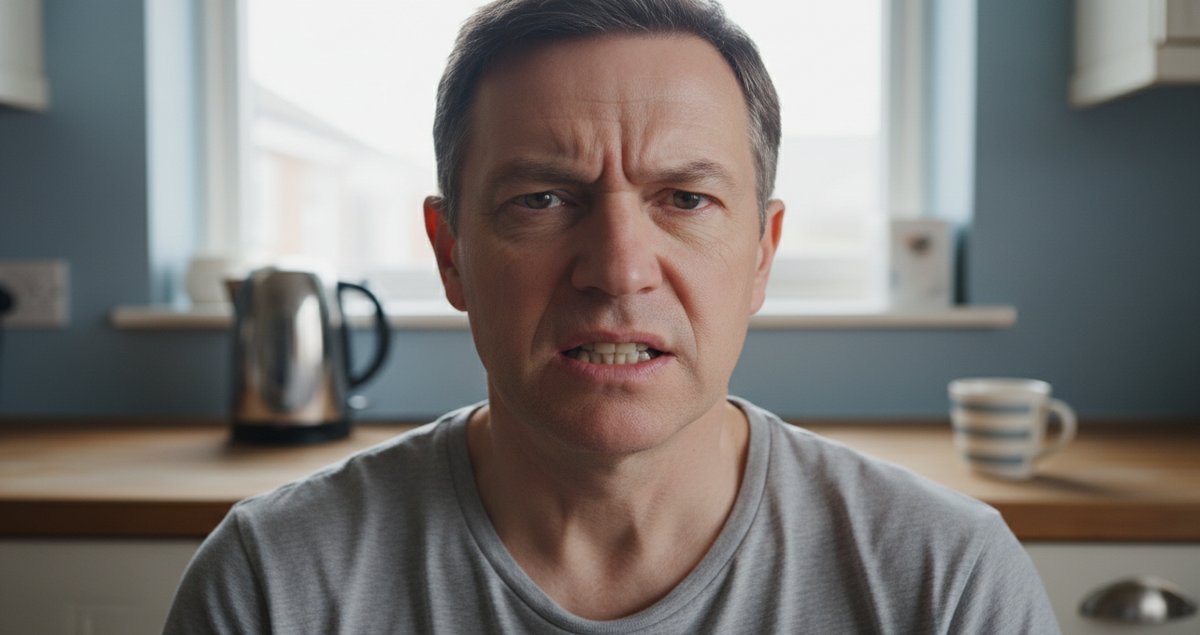
There is a special kind of rage that comes not from argument or injury but from the soft clack of a pen or the wet smack of someone eating two seats away. It is sudden. It is disproportionate. It can make someone feel stranded in a world where other people seem casually indifferent to a sound that, for them, feels like an assault.
Not just irritation but a different wiring
Call it misophonia or call it by another label. The experience is unmistakable: a small repetitive sound becomes intolerable and then personal. Scientists have shown that this is not merely about being thin skinned. Brain scans reveal altered processing in regions that decide what matters to us. In other words the brain decides certain everyday sounds are hyper important in a way that the rest of us do not.
“For many people with misophonia, this will come as welcome news as for the first time we have demonstrated a difference in brain structure and function in sufferers.” — Dr Sukhbinder Kumar, Institute of Neuroscience Newcastle University and Wellcome Centre for Human Neuroimaging UCL.
That line from a leading researcher still feels like a permission slip. It tells sufferers they are not simply rude or dramatic. It tells families and colleagues that the reaction is anchored in biology even as it lives out in messy social scenes.
Why specific sounds and not others
What puzzles people most is selectivity. Babies crying, a drill, or a distant thunderstorm are not necessarily triggers. The offending noises are often mouth oriented or rhythmically human: chewing, lip smacks, sniffing, throat clearing, the metronomic tapping of a keyboard. The neuroscience points to networks that link hearing to emotion and body awareness. When those links misfire they amplify signals that should remain background noise.
One useful way to think about it is that the brain is doing triage all the time. For most people the triage algorithm filters out chewing as irrelevant. For others the filter flags it as urgent, and once urgency is assigned everything else follows: arousal, anger, the desperate need to escape or retaliate.
Not purely audio. Context matters.
Sound is never raw. It arrives threaded with scene memory, with relationship history, with expectation. The same crunch from a beloved partner can feel mild while the exact same crunch from a stranger at a meeting can detonate fury. That difference is not trivial. It shows misophonia is braided with psychology and social meaning as much as with auditory pathways.
I have watched friends retreat from meals, clutching a cold coffee and pretending to scroll because confronting the person making the noise felt impossible. Social life becomes a navigation of sounds and shame. This leads to avoidance patterns that can look like personality quirks to outsiders but feel like survival strategies to those living them.
Physical reactions that insist they are real
When a trigger sound hits there is a bodily reply: heart racing, flushing, a hot prickle under the skin. These are not theatrical choices. Physiological markers measured during scanning sessions line up with the subjective fury. The brain does not merely note a noise. It recruits the autonomic system, preparing the body as if threatened.
“I hope this will reassure sufferers. I was part of the sceptical community myself until we saw patients in the clinic and understood how strikingly similar the features are.” — Professor Timothy Griffiths, Cognitive Neurology, Newcastle University and UCL.
That second quotation matters because it comes from someone who admits scepticism and then changed his mind. It suggests the data are robust enough to transform opinion rather than merely support a tired hypothesis.
Not all anger looks the same
Some people explode, others go internal, some want distance, some lash out verbally. The outward form of the reaction depends on personality, past trauma, learned coping strategies and the immediacy of the situation. I have seen a calm colleague turn crimson and sulk for hours after a triggering snack. I have seen someone deliver razor sharp sarcasm the moment a pen starts clicking. Both are expressions of the same mismatch between perceived threat and appropriate response.
If you think the solution is silence you are only partly right. Removing the sound may stop the immediate storm but it rarely alters the underlying sensitivity. The brain remembers how urgent that chewing felt; the context and the physiology can prime the next encounter.
Why this matters beyond individual misery
Our cultural emphasis on shared spaces means noise is political in a quiet way. Open plan offices are modern test sites for misophonia. Family meals become drama for the person who cannot stand certain noises. There is a social cost that is invisible until someone loses a job, a friendship, or a shared kitchen over repeated incidents. That is not melodrama. It is a predictable outcome of misunderstanding and neglect.
We have an ethical choice here. We can treat harsh reactions as moral failings and punish them socially. Or we can build small allowances and better shared norms so people do not have to move through life constantly calculating how to avoid being set off.
A few uncomfortable truths and open questions
First uncomfortable truth: labeling the reaction does not make it tidy. Diagnostic clarity does not equal easy fixes. Second: not every loud reaction is misophonia and not every misophonia needs medical intervention. A great deal remains unsettled about causes and treatments. Genetics might play a role. Early childhood experiences might tune the salience network. We do not yet have a simple origin story and that ambiguity is unsettling for sufferers and clinicians alike.
I do think we should stop pretending normal social etiquette is sufficient remedy. Saying please eat quietly is not a cure. Social friction will continue unless we accept a more textured response—one that combines practical changes to environments, honest conversation and targeted interventions from professionals who actually listen to the lived experience.
What to take away right now
Sound can be weaponised by biology. When everyday sounds trigger anger in some people the cause is a mix of altered brain connectivity, body responses that accompany emotion, and the social meanings attached to noises. This triangular view—neural wiring, physiology, and context—explains why quick moralising does nothing and why simplistic solutions fail.
There is consolation in complexity. It means there are multiple points where lives can be improved. But it also means there is no single tidy fix. And perhaps that is the hardest lesson: some puzzles refuse quick closure.
Summary table
| Key idea | What it implies |
|---|---|
| Altered brain response | Certain sounds are tagged as unusually salient driving strong emotion. |
| Physiological arousal | Heart rate and sweating show the body prepares for threat. |
| Context sensitivity | Relationship and scene change whether a sound triggers anger. |
| Social cost | Work and family life can fracture if sensitivity is misunderstood. |
| No single cure | Multiple approaches are needed including environment changes and professional support. |
FAQ
What exactly counts as a trigger sound?
Trigger sounds are often repetitive and human produced. Common examples include chewing sniffing pen clicking throat clearing and lip smacking. The defining feature is not the acoustic profile alone but the reaction it provokes in a particular person. Two people can hear the same noise and one may barely notice while the other experiences intense anger. What matters is the felt significance of the sound not its objective loudness.
Are people with these reactions just overdramatic?
No. Research shows measurable differences in brain activity and physical arousal when triggers occur. The sensation is anchored in bodily responses and neural circuits. Describing the reaction as melodrama dismisses the real distress and often worsens social isolation for the person affected.
Will moving away or avoiding noisy people help long term?
Avoidance can reduce immediate distress but it does not necessarily rewire the brain. Avoiding situations can also shrink a person’s world and increase loneliness. Practical adjustments are useful short term, but many people benefit from approaches that address both the emotional response and their ability to function in social spaces.
How should friends or colleagues respond?
Start with believing the person and asking what helps. Small reasonable changes often make big differences. Instead of ridiculing or insisting on normalcy try negotiating seating arrangements sound reducing strategies or agreed signals. Dismissing a person as plain difficult usually worsens the harm.
Is this only about sensitivity?
No. Sensitivity captures part of it but not the networked nature of the problem. The interplay between perception emotion and bodily reaction is what escalates a harmless noise into a crisis. Understanding that complexity opens more humane responses than simply branding someone as thin skinned.
There will never be a single tidy moral for this condition. You can be annoyed at a click and still be kind. You can be baffled by another person’s rage and still make small adjustments that matter. That kind of attention is both practical and rare.
