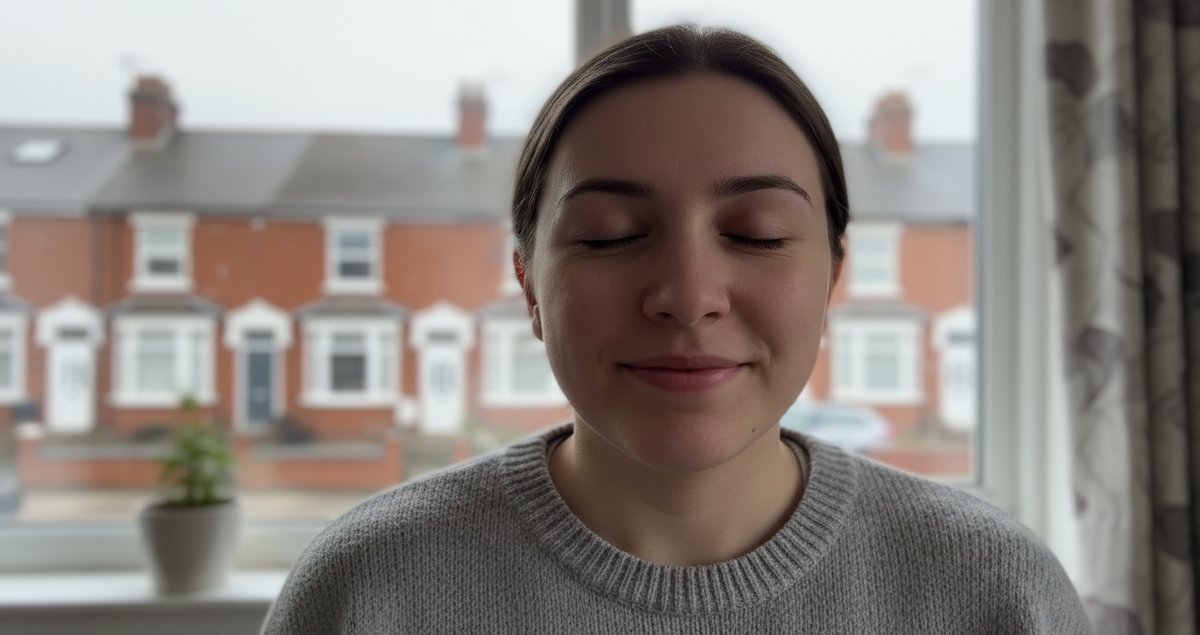
There is a private, slightly ridiculous delight in recognising a sound and feeling the world tilt back into place. It happens when a particular kettle whistle insists it is time for tea or when the exact cadence of a parent s laugh knocks a jagged thought into neat little piles. This is not just nostalgia doing showy work. It is a nervous system recalibrating itself to predict safety. In short form that is the core truth behind why familiar sounds calm the nervous system.
How a pattern becomes permission to relax
When the brain hears a sound it does more than decode pitch and rhythm. It runs an old file of experience to ask whether that noise belongs in the folder labelled safe or the one labelled urgent. Familiar sounds usually land in the safe folder. That classification is not decorative. It changes how the central nervous system decides whether to raise an alarm or to allow the slower processes of digestion and rest to run their course.
Predictive processing is the quiet engine
Our sensory systems are prediction machines. That is a phrase you will see a lot in scientific writing and for good reasons. The idea is practical. If a sound repeats reliably and nothing bad followed it before then the brain learns to lower its gain on that input. Lower gain equals less startle. Less startle equals fewer stress hormones. This is not moralising about coping. It is the brain economising on attention.
What the brain hears depends on what is seen in addition to specific sounds. The same sound can mean different things inside the brain depending on the situation. Robert Froemke PhD Assistant Professor NYU Langone Medical Center
That quote is not ornamental. It sits at the technical heart of why the same door slam can be terrifying in one place and negligible in another. Context matters. Familiar sounds are safe because they sit within a web of context the brain already recognises.
Not all familiar is comforting
I want to be blunt here. Familiar does not automatically equal helpful. A sound forged in a traumatic context carries the memory of danger. A particular ringtone may still trigger panic in someone who got bad news while that ringtone played. Familiarity is a vector. Its value depends on the valence attached by past events. That complication matters when you try to curate a soundscape for emotional regulation.
There is craftsmanship in choosing what to make familiar
People who use sound intentionally are not performing a new age trick. They are doing behavioural conditioning in simple humane terms. A shower playlist that plays the same short sequence each night can act as an arrival cue. A recorded voice message from someone you trust when you are away from home can lower alert levels because it reactivates the safety template. These practices are small acts of rehearsal. The brain learns new associations through repetition. We can craft small rituals that teach the nervous system that certain auditory signatures equal safety.
Why silence is not the only path to calm
There is a cultural myth that quiet equals peace. That myth ignores the social reality of sound. Many of us live by background hums. The hiss of a radiator. A distant train. The rhythm of a caf scene. Those sounds become a scaffolding. They stop novelty from dominating attention. When the surrounding aural texture is steady and predictable the brain can spend fewer cycles on surveillance and more on thinking or resting. The absence of sound can be an absence of information that forces the mind to invent threats where none exist.
Concrete examples that feel familiar
Think of a commuter who uses the same two minute audio clip on the morning tube to steady their breathing. Or the person who keeps a handful of childhood songs on a private device to help sleep during travel. These are not gimmicks. They are pragmatic habits that exploit the very mechanism the brain gives us to reduce noisy prediction error.
Social sounds compress individual anxiety
There is a communal component too. Shared familiar sounds produce synchrony. A crowd singing helps strangers fall into a similar physiological rhythm. The neuroscience label for this is intersubjective entrainment. The lived experience is simpler. One familiar chant reduces the sense that you are alone with your anxiety. That is a social regulation of the nervous system. It is not magic. It is biology and a social contract bundled together.
Use and misuses
It is tempting to treat familiar sounds like a universal cure. They are not. They are one lever among many. Over reliance can become avoidance. If you only ever seek comfort from a sound you risk narrowing the contexts in which you learn to tolerate novelty. Balance is not an instruction manual. It is a personal experiment that asks you to try small things and notice what changes in your breathing.
I find that admitting this uncertainty is useful. When a sound is chosen for regulation it should be tested not assumed. Play it in mildly unsettling contexts first then note how your body reacts. If your shoulders drop a fraction then it is doing useful work. If tension persists or if a memory spikes then the association is not safe and should be edited out of your routine.
Small practical moves that people miss
People often mistake variety for sophistication. Random playlists do not create familiarity. Repetition does. Another overlooked move is to co locate a sound with a tactile cue. Pairing the same sound with the same physical ritual increases the associative strength. This is not mystical conditioning. It is simple associative learning. It also helps explain why some old smells or textures feel as regulating as a tune.
What research invites but does not finish
Scientific inquiry has traced strands of this phenomenon but many questions remain. How do cultural sound codes shape which noises become calming? How do individual histories of trauma rewrite the map of familiar versus threatening? There are pockets of solid evidence and long stretches that are speculative. That is the space where listeners and practitioners can experiment and report back. The brain tells us what worked. It is noisy but informative.
The promise of familiar sounds rests on a simple truth. The nervous system likes patterns. Not all patterns are equal. We can choose some of them deliberately. The stakes are ordinary. Better sleep. Shorter panic episodes. Less background churn during work. None of this is miraculous. It is practical human engineering applied to the biochemistry of attention.
Summary table
| Idea | What it means |
|---|---|
| Predictive processing | The brain uses past patterns to label sounds as safe or dangerous. |
| Context matters | The same sound can soothe in one situation and alarm in another. |
| Intentional repetition | Creating familiar cues requires consistent use not occasional playlists. |
| Social synchrony | Shared familiar sounds can align physiological states across people. |
| Not universally benign | Some familiar sounds carry trauma and need careful editing. |
FAQ
How do familiar sounds reduce nervous system arousal
Familiar sounds lower arousal because they reduce prediction error in sensory processing. When the brain recognises a pattern it downregulates attention to that stream. That translates into fewer rapid heart beats and less adrenal signalling in many scenarios though the precise bodily changes vary from person to person.
Can any sound become comforting if repeated enough
Many sounds can accrue comforting value through repetition when they are paired with non threatening contexts. However sounds tied to negative events may be resistant. Personal history is crucial. Repetition helps but it is not a universal rewrite tool especially where strong emotional memories are attached.
Is silence better than a curated soundtrack
Not always. Silence can amplify internal noise for some people. A curated soundtrack that is predictable and personally meaningful can be safer for attention. The optimal choice depends on the individual and the context so experiments are necessary to find what actually reduces tension for you.
How do I test whether a sound helps me calm down
Try the sound in a mildly stressful but controlled situation. Notice breathing rate shoulder tension and mental chatter before and after a short exposure. Small physiological shifts are meaningful. Keep the practice consistent across several sessions to let the nervous system form a new association.
Can shared familiar sounds change how groups feel
Yes. Shared familiar audio can synchronise breathing and attention which produces a sense of collective regulation. This is visible in many cultural rituals and in everyday situations like sports crowds. The social layering of familiar sounds creates a temporary communal nervous system that is often gentler than solitary anxiety.
