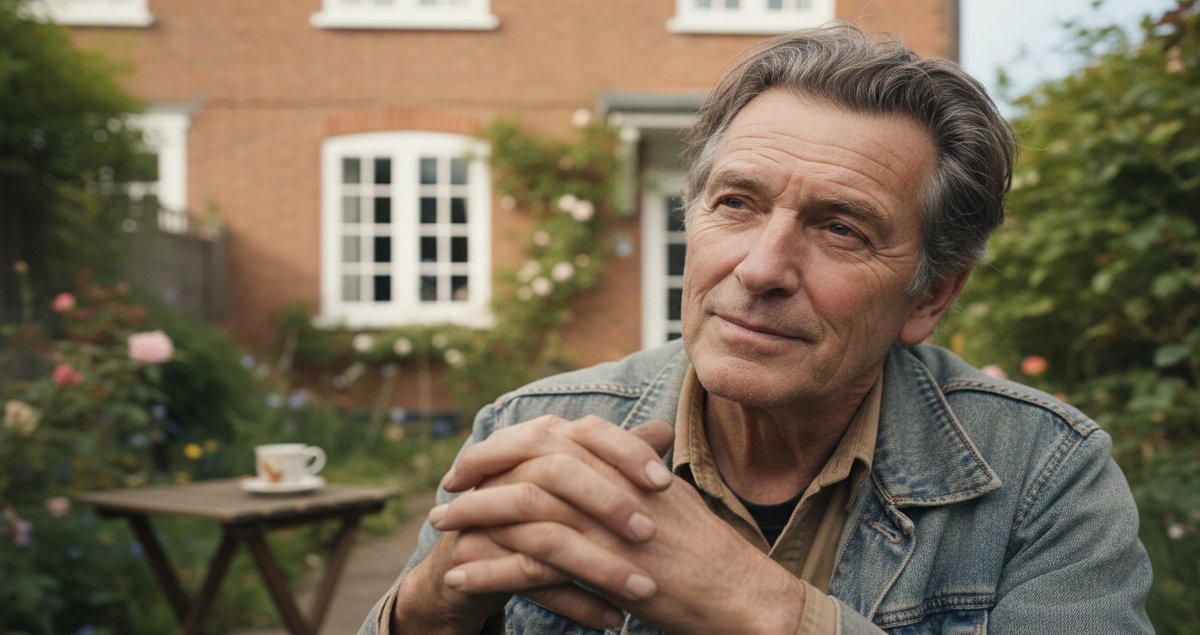
I have an image in my head of a small back garden in provincial Britain where a child is told to sort out a stubborn bicycle chain. There is no screen to ask for help no automatic tutorial no group chat. Someone gets grease on their hands learns to fidget and to fix something that resists them. That particular stubbornness built more than a repaired wheel. It quietly taught a kind of self trust that survived marriages mortgages job losses and the odd national crisis. This essay is not nostalgia. It is an attempt to name why being raised in the 1960s and 1970s often produced a long term self confidence that many younger people now envy or misunderstand.
The shape of confidence that era produced
Not flashy bravado. Not performance for an audience. It was steady and technical. People learned to be useful to themselves before they learned to be visible to others. The childhoods of those decades were full of low level friction and low expectations of instant rescue. You waited for a letter you learned to read maps you fixed radios and you were allowed to fail in ways that forced repair rather than cancellation. Over time these small repairs aggregated into a belief that you could manage things you had not been taught to manage.
Self reliance taught as a default
What we call self reliance often arrived without grand coaching. Parents and communities assumed children would try things and muddle through. There was a cultural economy of practical trust. When teachers or neighbours assumed competence kids internalised it. That internalisation matters. It is not that every child from that era became resilient. Plenty did not. But the architecture of childhood was different enough that a meaningful proportion ended up with a robust internal sense of agency.
Why the slow parts matter more than we admit
Today culture rewards the quick fix and the visible triumph. The 60s and 70s rewarded patience in a structural way. There were fewer notifications fewer immediate validations fewer curated snapshots. Waiting taught a form of steadiness that reads as confidence later because it was practice at not being fragile. When you are practiced at waiting at being bored and at repairing you accumulate competence that is not performative. It becomes a habit of mind. You discover you can be alone with a problem and that your presence is enough to begin solving it.
A different relationship with risk
Risk in that period looked pedestrian. Riding a bike without a helmet climbing a tree trying your first job at sixteen. The risks were not reckless theatre. They were invitations to a measured trial. Facing them in real time without curated safety nets meant that children learned to evaluate hazards pragmatically and carry on. That pragmatic hazard appraisal feeds confidence because it teaches you that fear is often a map not a jail.
Very often, it is from a lack of belief that you can do something. Somehow, I was able to sustain the belief that I could.
Angela Duckworth’s observation about belief and perseverance matters here because the 60s and 70s offered countless microchances to learn that belief by doing. The teacher who let you try the plumbing the employer who trusted you with a shift the older sibling who showed you how to patch a tyre all carried unadvertised lessons in confidence.
Social contours that reinforced identity without performance
Social media did not exist and so identity construction happened in person and in smaller circles. That meant fewer curated selves but also fewer constant comparisons. Identity was less a product marketed and more a series of repeated behaviours. When your selfhood is built in action rather than in broadcast it feels more stable. This is not romanticising the past. It is pointing out a structural difference with clear psychological consequences.
Community expectations were blunt but predictably steady
The expectations of a local church school a pub landlord or a shopkeeper were often straightforward. You pitched in or you did not. The feedback if it came was immediate practical and usually linked to real consequences. That kind of social calibration forced the development of competence. You could not outsource your reputation to an algorithm. You had to show up.
What modern readers confuse about this confidence
There is a test that often trips people up. Those raised in the 60s and 70s can sound stubborn to those raised in an era of rapid recalibration. Stubbornness is sometimes praised as principle and sometimes excoriated as inflexibility. Long term self confidence in that cohort looks like an ability to hold a course despite noise. That can be beautiful and it can be brittle. I would not defend every choice made under that ethic. I am saying it produced a baseline steadiness that many now call resilience.
As you begin to understand the fixed and growth mindsets you will see exactly how one belief leads to another how a belief that your qualities are carved in stone leads to a host of thoughts and actions and how a belief that your qualities can be cultivated takes you down an entirely different road.
Dweck’s framing of mindset illuminates what happened when the hands on trial and error of that era met a social expectation of competence. Repeated small successes built a growth oriented narrative simply because practice was the path to improvement not a PR stunt.
Where this confidence fails us now and where it still helps
This kind of confidence can be overconfident about contexts it does not understand. It sometimes struggles with emotional fluency or the language of therapy. It can dismiss help as weakness and that is a cost. Yet the same trait allows people to rebuild careers to learn new trades late in life and to tolerate ambiguity when bureaucracies fail. It is a useful stubbornness for a world that still breaks in unpredictable ways.
Practical residue in adulthood
Adults who grew up then are more likely to attempt repairs to household items manage pensions with pragmatic patience and tolerate procedural boredom in ways that younger people do not. That may look dull. It also means they can live with the unknown for longer without collapsing into panic buying or dramatic life changes. Their confidence is procedural not performative. It is a slow muscle that flexes when complexity accumulates.
Final thought that I cannot tidy up completely
The culture of those decades did not create perfect people. It created patterns. Some patterns serve us now some do not. The useful question is not whether the past was better but which fragments of that upbringing we would do well to borrow today. Not the blind imitation of austerity or stoicism but the quiet practice of repair the refusal to outsource every small capacity and the willingness to be alone with a problem until it yields. That alone has its own strange dignity.
Summary
| Idea | Why it built confidence |
|---|---|
| Practical trials | Repeated problem solving built a habit of self efficacy. |
| Slow feedback loops | Waiting and delayed results trained patience and steady expectation management. |
| Community calibration | Clear local standards taught reliable competence rather than curated identity. |
| Measured risk | Small everyday risks taught appraisal not theatrical fearlessness. |
| Procedural confidence | Skills accumulated into a durable sense of ability separate from performance. |
FAQ
Did everyone raised in the 1960s and 1970s get this confidence?
No. Social class geography gender and family circumstances produced very different outcomes. The pattern I describe was common enough to be noticeable but far from universal. Many children then experienced harshness neglect or systemic barriers that did not translate into healthy confidence. The distinction is between structural tendencies and individual narratives.
Can someone raised now build the same kind of confidence?
Yes. The mechanisms are replicable. Let tasks take time. Look for small repairs rather than constant upgrades. Encourage repeated low stakes problem solving and stop praising only outcomes. Those practices rebuild procedural confidence whether or not you own a single vinyl record.
Is this argument anti modernity?
Not at all. I am critical of features of modern life that erode practical competence but I do not reject the benefits of technology. The point is selection not rejection. Choose tools that augment practice rather than replace it. Use a map app after you have learned to read a paper map at least once in a while.
Does this ignore emotional intelligence?
It can. The era I describe often prioritized stoic repair over emotional naming. That is a limitation. The most useful model borrows both procedural competence and current insights about emotional literacy so people can be effective and compassionate at once.
How do communities recreate these habits?
Create opportunities where people must try small challenges alone then seek help. Value learning over immediate success. Provide predictable and practical feedback. These are cultural shifts rather than shortcuts but they work because they turn competence into a lived habit.
