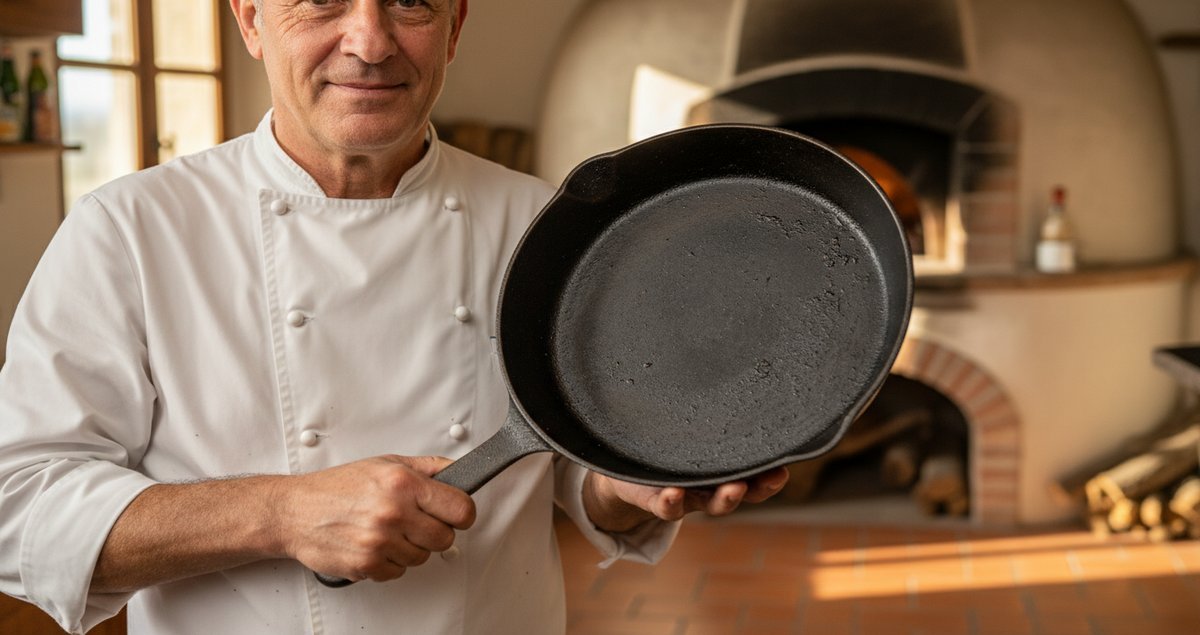
I am stubborn about my pans. Not in a performative way but in the tidy private manner of someone who has watched a skillet survive three kitchens and still hate being shouted at by flames. The phrase seasoning cast iron at low heat lasts much longer is not a slogan it is a practice I have seen quietly defended by cooks who have actually paid rent with a lunch service.
What most people get wrong about seasoning
The internet loves dramatic fixes. A single oven marathon looks decisive on video. It produces clouds of smoke and thumbs up from creators who treat every repair like a reveal on a cheap reality show. Restaurants work differently. They live inside repeating cycles. Pans are used every day. The chefs I know do not want a surface that looks impressive once and then betrays them a week later. They want something that keeps going. That is why, when they talk about seasoning cast iron at low heat lasts much longer they mean something specific and non theatrical.
Slow heat is chemistry not mysticism
At the core is polymerization. Apply heat to a whisper thin layer of oil and the fat molecules break and reconnect into long chains that adhere to the iron. Do that patiently and you get a bonded film that resists flaking. Do it by blasting the pan to smoke and crack and you can produce an ugly brittle crust that looks impressive until it flakes into your next omelette.
Seasoning in this case has nothing to do with salt or spices. Instead it describes a hard protective coating that’s formed by heating incredibly thin layers of fat like oil on the cast iron. As the fat is heated it bonds to the metal and to itself in a process called polymerization as the fat converts into a form of plastic.
Daniel Gritzer Editorial Director Serious Eats.
Why lower temperatures give the oil a chance to behave
At high heat the oil can degrade in uncontrolled ways. Instead of reorganising into neat cross linked chains it chars bubbles and forms brittle pockets. Those brittle spots separate from the metal when the pan flexes and the next thing you know the surface is shedding. When the same oil is allowed to warm slowly it can travel into microscopic valleys in the metal and bond across more surface area. The resulting film is thin but continuous which makes it less likely to crack under thermal stress or mechanical contact.
Lessons from working kitchens that no tutorial mentions
There are three habits chefs rely on that you will not see in a lot of shiny how to videos. First is economy of oil. The coat should be so thin it is almost invisible. Not satisfying to hefty application people but practical. Second is frequency. Instead of once a month spectacle seasoning is folded into cooking. A batch of roasted vegetables a gentle wipe and a minute on the hob becomes another incremental deposit of seasoning. Third is forgiveness. Chefs accept small mistakes and fix them gently. Thick globs of re seasoned oil are how flakes start. They are corrected not celebrated.
A candid observation
I have watched a line cook redecorate his pan with a can of oil in the middle of service and then panic when it became sticky. He had done the thing everyone wants to avoid. He sought a single session to fix months of neglect. The kitchen simply moved on and someone else quietly rubbed the surface with a tissue and let the pan sit for twenty minutes on the lowest flame. It was not glamorous but it worked. That low heat touch up held through a night of frantic searing and a morning of eggs. The incident stuck with me not because of the lesson but because it revealed how often we confuse speed with competence.
Not all oils behave the same but the method matters more
Debates about flaxseed grapeseed or rendered fat often dominate forums. They matter but less than how you apply them. Oils that polymerize cleanly at modest heat points give you margin for error. Oils that carbonise quickly at modest temperatures punish sloppiness. That is why the chefs I respect will recommend a neutral refined oil and the thinnest smear you can manage over dramatic claims about miracle oils.
Practical rhythm to try tonight
Start with a clean dry pan. Rub a whisper of oil and buff it until the surface does not glisten. Warm the pan on low heat or pop it in a low oven for forty five minutes. Let it cool. Repeat once or twice over a couple of days if you want to build insistently. Or simply cook with it. Each gentle roast or shallow fry in moderate heat layers the surface without scarring it. That is the point. This is maintenance not punishment.
A contrary point
There is still a place for higher heat. For the first aggressive bake to straighten a ruined surface or when you need to sterilise a pan that has stubborn carbon you will sometimes blast it. But think of the high heat as a surgical tool not a default. Use it rarely and deliberately. Otherwise expect the film to be showy and short lived.
Why this matters beyond pans
The argument for low heat seasonings extends beyond durability. It changes how you cook. You become less impressed by spectacle and more curious about small gains. You stop treating cookware as disposable marketing and start treating it as infrastructure. That shift is boring in the right way. It saves you money and friction. It gives you a pan that you reach for without hesitation.
There are things left unsaid in every conversation about cast iron. How long is long enough. Exactly which microstructure forms inside the metal. The answers depend on metal composition wear and countless small variables in kitchens. That uncertainty is fine. It means seasoning is less a recipe and more an apprenticeship. You will learn by doing and by listening to pans that are stubborn or generous. The real authority is experience backed by a little chemistry and a lot of repetition.
Summary table
| Idea | Why it works | Chef tested tip |
|---|---|---|
| Low heat seasoning | Encourages even polymerization and penetration into metal micro pores. | Apply ultra thin layer of oil and heat gently for 45 to 60 minutes. |
| Frequent light sessions | Builds continuous layers that are flexible and durable. | Fold seasoning into normal cooking routines like roasting or shallow frying. |
| Minimal oil | Prevents sticky blobs and brittle thick crusts that flake. | Buff oil until the surface is barely glossy before heating. |
| High heat sparingly | Useful for resets but damages delicate layers if overused. | Reserve for stripping and re seasoning not routine maintenance. |
FAQ
Does low heat mean I can never sear or use high flame?
No. Low heat for seasoning and routine maintenance does not prevent occasional high temperature cooking. The point is not to eliminate heat but to avoid using extreme heat as your default way to build or repair seasoning. High heat cooking can still be part of service but rely on gentle maintenance to preserve the film.
How thin is too thin when applying oil?
Too thin is when you cannot tell the surface was wiped. That is good. Too thick is when the oil pools or leaves a tacky residue after heating. If in doubt buff more aggressively with a paper towel. Less is more because only a tiny fraction of what you apply actually polymerizes into the hard coating.
Will the seasoning be ruined if I occasionally use soap?
A properly polymerized seasoning is chemically bonded and resilient. Occasional washing with soap will not destroy a well built surface. What you want to avoid is prolonged soaking and poor drying. Dry promptly and touch up with a whisper of oil while warm to replace any thin layer that was removed.
How quickly will low heat seasoning show results?
You will see incremental darkening after a few sessions but durability is cumulative. The visual change is less dramatic than a single high heat bake but the practical non stick improvements will be noticed as eggs slide free and sauces no longer cling. Think weeks not minutes for reliable transformation.
Can I repair flaky seasoning with low heat alone?
If the flakes are superficial then a few gentle thin oil cycles can smooth and re bond the surface. If the coating is thick and powdery you may need to strip to bare metal and start again. Use low heat rebuilding afterwards to avoid repeating the same mistake.
That is the practical end of a longer story. Treat your cast iron like something that will outlast you if you let it. Slow warmth stubborn tiny oil. Come back in a few days and cook something good.
