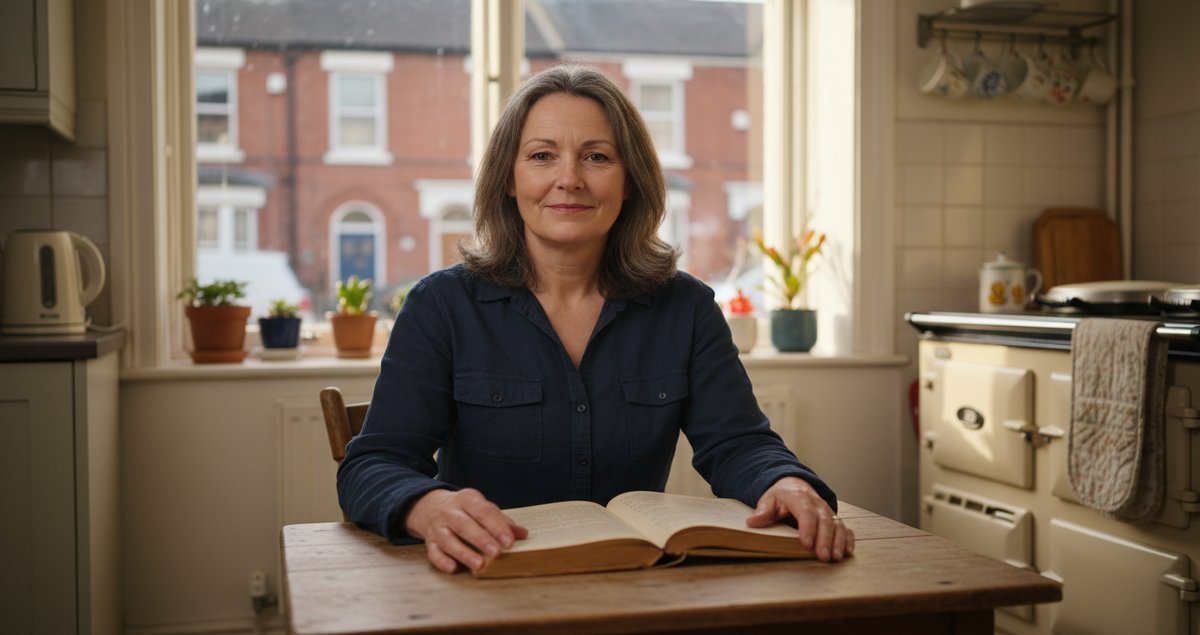
There is a soft hum under the chatter of timelines and trending reels. Not a protest or a manifesto but a slow cultural lean toward an era people describe as steadier. Call it the 70s turn. Not everyone means the decade literally. Often it is a shape a memory takes a set of textures that promise a slower pulse and a sense of continuity. When anxiety feels like the default setting people reach for other times as if they were tools. The 1970s has become one such tool.
Unpacking the itch to look back
If you listen to conversations at markets in northern England at lunchtime or to the quieter corners of online forums where people swap recipes and photographs of old trains you notice two things. First people are less interested in resurrecting fashion for spectacle and more interested in adopting habits that produced a predictable rhythm laundry, meals, routines, communal rituals. Second this is not about escaping complexity. It is about anchoring against it.
Why the 70s and not the 90s or the 50s
There are practical reasons. The 70s sits awkwardly between pre digital life and our present. It is recent enough for many adults today to have direct memory or family stories but distant enough to feel like another social contract. The decade offered visible and mundane institutions that feel repairable independent shops clearer places for social life and domestic practices that emphasised presence not performance. That matters when performance culture wears people thin.
There is also an aesthetic that does emotional work. Textures and sounds from that period signal smallness and craftsmanship a living room lit by a single lamp rather than a hundred notifications. These cues do something to the nervous system even if that effect is mostly symbolic.
The quiet science that underwrites homesickness for a different age
Psychology has moved past caricatures of nostalgia as mere indulgence. It is a tool for self continuity and social bonding. We dip into it and come out steadier. “You dip in nostalgia, you dip into the past,” said Tim Wildschut professor of psychology at the University of Southampton. “to motivate yourself, to pursue important goals, to imbue life with meaning, to feel connected. And then you go on and life takes over, you know, until the next time.”
That mix of brief immersion and return to the present is important. The 70s turn is not a retreat into an imagined idyll. It is often a selective rehearsal that restores a sense of narrative cohesion. People tell themselves I have been here before and I survived which, frankly, can be a useful counterweight to perpetual uncertainty.
New rituals born from old routines
What fascinates me is how people reinvent rituals rather than recreate them wholesale. Sunday cooking might be framed now as mindfulness rather than necessity. Local co operative shops become curated spaces for shared songs and conversations not just places to buy bread. The 70s provides a scaffolding on which new practices hang; the logic is familiar but the ends are contemporary.
Economics empathy and the illusion of control
There is also a political reading to this trend. When markets, media and policy feel volatile the past appears to offer clearer rules. Yet nostalgia does not magically restore those rules. Instead it convinces people that certain visible social practices produced social coherence and that they may be attainable again through small behavioural shifts. This matters because people crave agency even if it is symbolic.
I admit I am partial here. I believe ritual and continuity can be stabilising without being reactionary. But there is always a risk of aesthetics masking inequality. The temptation to romanticise must be resisted especially when real structural problems demand public solutions. Looking back for emotional stability is not a substitute for organising for fairness; it is a complementary coping architecture.
Technology as a prompt not a replacement
Ironically the digital platforms that accelerate anxiety also manufacture the resources for the 70s turn. Tiny communities stitch back analogue practices into the present with guides for preserving food, photography that mimics film grain and playlists that feel like a radio show. But these are prompts. The real change occurs when people carry an analogue habit into a digital life and let it alter their day to day presence.
That crossover is where the cultural shift is interesting. It is not a mass rejection of progress. It is a sophisticated selective borrowing: keep the benefits of modern medicine and communication but adopt certain practices that allow for slower affective processing. It is a hybrid approach to living in unsettling times.
What we miss when we look back
There is a comforting story that if you want calm you should adopt older domestic rhythms. I am sceptical of any tidy moral in that. The 70s were not universally stable. For some groups the decade was violent exclusionary and precarious. When the modern nostalgia market sanitises that past it risks reproducing a false sense of safety that never existed for many people.
Still there is value in the attempt. The desire to recover communal spaces for conversation to cook without pressure to perform and to work with slower craft based practices is not inherently reactionary. It can be nourishing. The test is whether these movements are accompanied by a politics of support or whether they become a privileged refuge.
Personal note
I find myself buying secondhand hobs and old recipe books not out of posturing but because they cut the flotsam of decision making. I spend less time on micro choices when the margin for ritual is expanded. It is a small pragmatic rebellion against a life designed to sell my attention. That smallness is dowdy and fragile yet effective.
What this means next
The 70s turn is likely to persist because it is low friction and high meaning. It scales socially: one person cooking for neighbours becomes a reproducible social practice. It also scales commercially which is where it risks being coopted into aesthetics without substance. The meaningful version will be local modest and anchored in reciprocity. The hollow version will be a curated nostalgia sold in expensive jars.
We should ask what we are restoring beyond textures. Are we recovering a sense of mutual obligation or simply rebranding solitude? The answers will vary by community and context. For some the 70s turn will be therapeutic. For others it will be a passing stylistic phase. I prefer to wager on the communities that turn ritual into shared care rather than tidy instagrammable corners.
Conclusion
The inclination to look back is not uniform nor is it purely backward looking. The 1970s offers a palette of practices that help with emotional regulation and social coherence in a noisy present. If harnessed carefully and critically it can supplement political action rather than substitute for it. If treated as a slogan it becomes harmless window dressing. Between those extremes there is work to do and lives to steady.
| Core idea | Why it matters | Risk |
|---|---|---|
| Selective nostalgia | Provides short term emotional continuity and motivation | Can gloss over historical injustices |
| Ritual revival | Creates predictable rhythms that reduce decision fatigue | May be coopted into consumer aesthetics |
| Hybrid living | Combines modern benefits with older practices for wellbeing | Not a substitute for structural change |
FAQ
Is this trend the same as general nostalgia?
They overlap but are distinct. Nostalgia is a broad emotional tendency. The 70s turn is a culturally specific configuration of that tendency where people adopt visible practices associated with the decade to create stability. The former is an emotion the latter is a set of behaviours and aesthetics that channel that emotion.
Does wanting older routines mean someone dislikes modern life?
Not necessarily. Many people who pursue older routines do so to reduce friction rather than as a wholesale rejection of technological or social progress. It is possible to value modern medicine and rights while choosing a slower domestic rhythm. The motivation often looks like pragmatism not moral repudiation.
Can nostalgia be politically dangerous?
Yes nostalgia can be weaponised to justify reactionary policies or to obscure injustices. When public narratives claim a mythical golden age they erase minority experiences. The antidote is critical curiosity ask what is being restored for whom and whether the move accompanies commitments to fairness and inclusion.
How do communities benefit from this shift?
Communities gain when shared rituals reintroduce obvious points of contact. Regular communal meals local markets and skill exchanges create weak ties that become support networks. Those networks can reduce loneliness and provide practical aid. The benefit multiplies when rituals are inclusive and not nostalgic enclaves for a few.
Will this trend fade once platforms stop promoting it?
Some aspects will fade because much cultural energy is platform driven. But practices that reduce daily anxiety and are cheap to maintain tend to persist. The difference between fad and durable change is whether practices become embedded in social norms and local institutions rather than remaining curated aesthetics.
