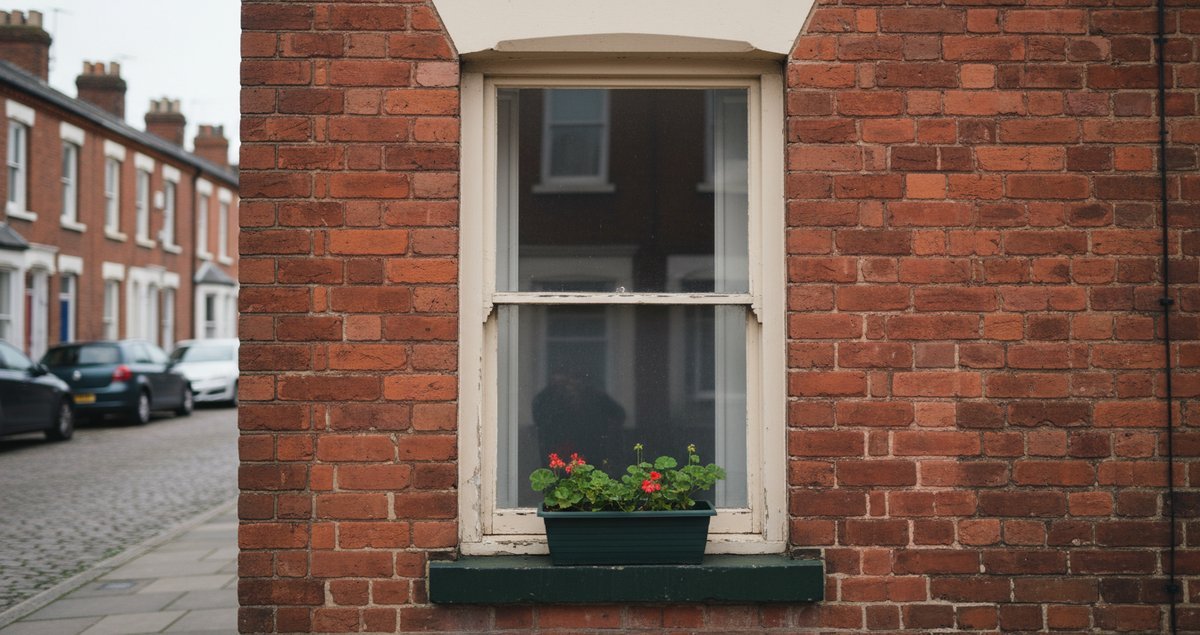
There is a stubborn truth in many British streets lined with terraces and stone cottages. Older homes often felt airier not because their builders were wiser than ours but because their design accepted a basic fact about living with weather. That acceptance is missing in many modern builds. This piece is part memory lane part design critique and a pinch of outrage at how we lost some practical humility about how houses breathe.
Not nostalgia but a structural fact
People talk about draughts as if they were enemies to be eradicated. Yet draughts were part of a larger strategy. Large chimneys, sash windows that could open at the top and bottom, timber floors with gaps, airbricks and layered room plans all contributed to a continuous though messy exchange of indoor and outdoor air. That exchange diluted smells and moisture. It helped regulate temperature across rooms without pumping electricity through a box. Those houses did not aim for sterile air. They relied on the building itself to do some of the work.
What older fabric did for free
Functionally, older fabric offered a predictable path for evaporated moisture and cooking fumes to leave the house. Where a modern detached box might trap humidity until condensation forms in a corner, a Victorian or Edwardian plan moved air through stairwells and chimneys so moisture could escape. The result was less time spent wiping mould from tiles and less time negotiating with damp plaster. There was a cost in heat loss, yes, but people accepted it because the tradeoffs felt honest and visible.
A shift from visible to hidden engineering
Sometime in the late 20th century designers and regulators started prioritising airtightness and insulation and then assumed that mechanical systems would pick up the slack. The tidy idea was airtight box plus controlled mechanical ventilation equals best of both worlds. In practice many houses landed halfway between these two ideals. They lost the accidental ventilation of old fabric without gaining properly designed mechanical ventilation. The result is stale corners and frustrated owners who open windows at inconvenient hours to chase fresh air.
Where the calculation went wrong
It is technically true that energy efficiency drove this change. But efficiency as an ideology shuttered a useful informal intelligence about living with weather. People used to tilt windows to create a subtle pressure gradient. They left micro gaps so the house could breathe. The modern obsession with sealing everything tight turned a human adaptive behaviour into something labelled wasteful. Instead of learning from traditional patterns we simply tried to suppress them, banking on gadgets to restore what we took away.
Before now this level of efficiency could only be achieved in new construction.
Ali Malkawi Professor of Architectural Technology Harvard Graduate School of Design.
The quote above highlights an important paradox. High performance can exist in both old and new, but not by erasing the useful qualities of either. The best path is a hybrid approach that respects how old houses handled air while using modern tools where they genuinely help.
Unexpected strengths of old ventilation that still matter
Older ventilation was resilient because it was distributed. Chimneys, underfloor voids and staircases acted like a web, not a single point of failure. If a vent blocked the house would still move air through other gaps. That redundancy is rarely built into contemporary systems where a single failed fan can leave an entire home stuffy. A hard lesson in reliability is that complexity sometimes wins when the alternative is brittle simplicity.
Comfort without automation
There is another side to this story that designers rarely admit: people tuned houses. They opened windows, moved curtains, lit fires, or used trickle vents. This tuning is not a failure. It is expertise of occupation. We lost some of that clay under our feet when standardized mechanical systems encouraged passive occupants who expect a set and forget service. Habit turned into an expectation and expectations turned into disappointment when systems were poorly specified.
Practical lessons for retrofits and new builds
Start with humility. Inspect what a house already does well and work with it. Reuse chimneys as passive stacks where possible. Keep the distributed paths of ventilation in mind and do not replace them with a single plastic box unless you are confident it will be maintained. Designers should stop pretending that people will read maintenance manuals. The system must survive some neglect.
Practical retrofits can incorporate passive stack systems that mimic old flow patterns while adding heat recovery where it actually benefits occupants. On new builds, design with breathable junctions and operable windows that are pleasant to use rather than purely ornamental. Make the default state of the house forgiving, not fragile.
My own house taught me this
I moved into a small terrace that had been tightened up in the 1990s. Initially I praised the warmth until mould appeared in the bathroom. The moment I reintroduced a modest trickle vent and re-opened a redundant chimney flue the damp settled and the house felt less like a sealed box and more like a lived-in place. That trade felt better than a machine pretending to replace that slow exchange of air.
Design ethics and the future of fresh air
There is an ethical dimension here. When housing policy pushes for energy targets without parallel attention to ventilation it creates scenarios where low energy becomes low quality of life for many. Designers, builders and regulators need to count fresh air as part of the human value equation. Efficiency is not only about numbers on a bill. It is about the daily experience of breathing in a home.
I am not asking for a return to draughty misery. I am asking for a restoration of practical wisdom. Use thermal performance intelligently and respect the old ways that worked in ways that machines still struggle to replicate.
Conclusion
Older homes handled fresh air better for reasons that were pragmatic rather than romantic. They traded visible energy loss for reliable ventilation and resilience. Today we have materials and technology that are powerful tools. They become humane only when deployed in a way that accepts the messy reality of people living in houses. If we want the comforts of modern standards without the stale air that so many of us now complain about, we need to learn to design for both controlled systems and the forgiving unpredictability that made older houses feel alive.
Summary table
| Aspect | Older Homes | Many Modern Homes |
|---|---|---|
| Ventilation style | Distributed accidental paths through fabric | Centralised mechanical or overly sealed |
| Resilience | Redundant flow paths | Single point failures risk |
| Maintenance expectation | User tuning and small fixes | Dependence on mechanical upkeep |
| Comfort tradeoff | Visible heat loss but fewer damp problems | Lower heat loss but potential for stale air |
FAQ
How did old houses move air without modern systems?
They relied on a combination of design cues and simple physics. Chimneys created vertical pressure differences, sash windows allowed top and bottom openings for stack effect, and permeable construction with small gaps let low level air enter and higher level air escape. This was not elegant engineering in the modern sense but rather an integrated set of features that together produced steady though variable airflow.
Would improving insulation ruin ventilation completely?
Not necessarily. Improving insulation changes how a house behaves but it does not force you to lose ventilation. The smarter approach is to combine increased airtightness with a planned ventilation strategy so the air exchange is intentional rather than accidental. That requires assessment and sometimes modest mechanical assistance in places where natural paths cannot be replicated.
Can chimneys be used for ventilation today?
Yes in many cases chimneys can be repurposed as passive stacks. They are long vertical channels that can help create upward flow. But they need evaluating for safety and effectiveness and must not be left as the sole ventilation route if there are combustion appliances present. A careful retrofit professional can advise on when and how to reuse them.
Why do modern systems sometimes fail to deliver good air?
Modern systems can fail because of poor specification, inadequate maintenance, or because they replace distributed natural paths with systems that require active user attention. A fan that is noisy or expensive to run will be turned off. A heat recovery unit that is badly sized will produce stale corners. Reliability and habit matter as much as technical capability.
What should homeowners prioritise first?
Start with observation. Spend time noticing where moisture collects and which rooms feel tired. Fix obvious failures like blocked vents and ensure that mechanical components are serviceable. Then bring in targeted upgrades that respect the building fabric and the ways people actually use rooms. The goal is to create a forgiving environment not a brittle showcase of technology.
