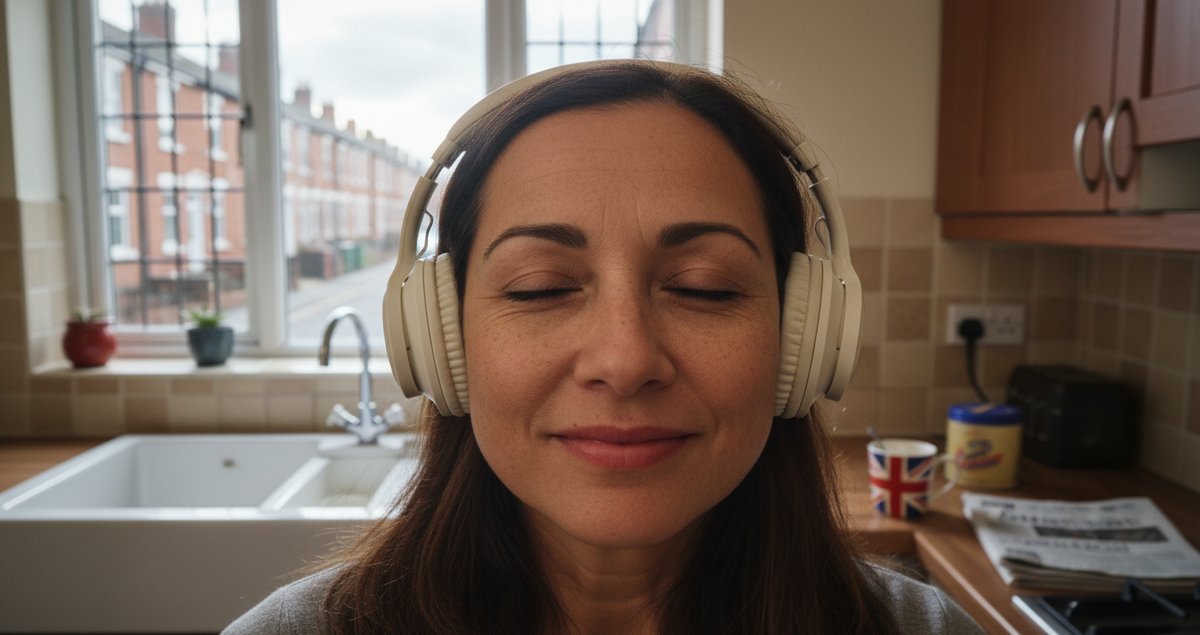
Some mornings a particular kettle click will slow me down. Other times a neighbour humming an old tune changes the shape of my breathing without me thinking about it. There is a small, stubborn truth here that most writing skirts or sweetens. Familiar sounds instantly soothe the nervous system not because they are pretty but because they carry a specific history of safety. That line between history and biology is what I want to pull at in this piece.
What we mean by familiar sounds
Familiar sounds are not merely songs you know. They are the acoustic signatures your life has annotated with meaning. A grandad whistling a tune. The particular creak of a front door after many winters. A radio voice you used to fall asleep to. These sounds carry patterns of repetition and context. They are tiny audio anchors that tell the brain the world in this moment has already happened before and returned intact.
The nervous system does bookkeeping
The autonomic nervous system is a pragmatic clerk. Faced with a sound it decides quickly whether to allocate resources to comprehension or survival. Novel inputs tend to demand metabolic attention. Familiar inputs conserve it. This is not sentimental. It is triage. If a sound has a track record of arriving in safe contexts then the brain reduces alarm and reroutes energy to other tasks. I see people underestimate how often this quiet reallocation shapes their moods across a day.
Why immediacy matters
There is a visceral immediacy to the calming effect of known sounds. You may experience it as a softening between the shoulders or a slowing of breath. In biological terms the auditory pathway links to brainstem nuclei that interface with vagal circuits. Those circuits are intimately involved in heart rate, digestion, facial expression and social engagement. Put bluntly the ear is a door to state change. You do not have to narrate the effect for it to occur.
The SSP basically presents modulated vocalization that function as the distilled essence of trust. The sounds occur in the frequency band of a mother’s lullaby. Certain frequencies our nervous system can’t refuse.
Stephen W. Porges PhD Distinguished University Scientist Indiana University.
That quotation comes from an interview with the scientist who developed a formal listening intervention rooted in these mechanisms. It is one clear anchor I return to because it demonstrates the bridge from lab observation to intentional practice. I do not think every familiar sound is a cure all but the directionality is important.
Context is not optional
Familiarity without safety can be complicated. A tune that comforted in one chapter of life can become a trigger in another. This is where the story becomes messy and human. The same acoustic pattern can reconstitute different narratives. The nervous system does not read labels. It reads outcomes. If the outcome previously paired with a sound was distressing the sound will not soothe. That complexity is a reason why blanket advice about listening rarely lands.
Less told observations
I want to offer a couple of original, awkward observations that did not come from a paper but from watching people in waiting rooms and in kitchens. First, the most potent familiar sounds are often low fidelity. A voice muffled through an old radio has more regulatory power than a polished studio recording. The interference seems to carry authenticity. Second, familiarity that emerges from routine production of sound rather than passive consumption holds stronger sway. A kettle that you have always boiled yourself feels more binding than a playlist you played once.
These are the kinds of small findings that make clinical work and everyday life feel different. They are not tidy enough to appear on banners but they matter when you try to design a morning that is hard to derail.
Why the ear outruns the mind
Sound processing is preconscious. The auditory system flags and filters before the frontal lobes have a chance to speak up. That is why a familiar chord can change your body faster than you can say I am fine. The speed of this pathway is not a loophole. It is an evolutionary feature. In Britain it means the voice of a loved one calling your name in a noisy pub will register as more important than the clatter of glasses long before you intellectually pick which drink to order.
How culture and memory braid into biology
We often separate cultural meaning from physiology but they tangle. Accents, the timbre of local radios, and the rhythms of speech embed into an organism over decades. That embedding creates layered signals of belonging. A soundscape that reads as local tells the nervous system you are among familiar rules. This is one reason migrants often report an odd hollowness hearing the radio of home played abroad. It is not nostalgia only. It is an immediate recalibration of regulatory circuits.
The ethical little knot
There is an ethical dimension that gets left out of most conversations. Corporations and designers now mine this logic. Apps that loop micro familiar sounds to improve attention work because the nervous system responds. That can be useful. It can also coerce. I find myself suspicious of any product that promises to fix concentration by quietly shaping your listening environment without you noticing. Familiar sound as therapy feels fine. Familiar sound as manipulation deserves scrutiny.
Practical patterns I trust
I will be frank about preferences. Morning rituals that include the same piece of speech or the same radio program help me begin a day in a recognisable state. I do not mean bland repetition. Rituals that are too rigid collapse. Instead choose a small set of sounds you actually engage with and that have benign histories attached. Keep them low in sensory polish if you want them to thread into the body quickly. Try making rather than only consuming sound. It anchors differently.
Where research still fumbles
There are many careful studies on auditory input and autonomic markers. The research is revealing but not conclusive on who benefits most and when. We lack nuanced mapping between types of familiarity and the exact vagal responses they provoke across diverse populations. That gap is important because it is where good clinical nuance and street wisdom can meet.
I do not resolve the open questions here. I point them out because they matter. Familiar sounds can soothe. How they soothe and for whom is a question worth pulling at in lived experiments not just in labs.
Summary table
| Idea | What it implies |
|---|---|
| Familiar sounds are contextual anchors | They signal safety by repeating past safe outcomes. |
| Auditory pathways act fast | The ear can change body state before conscious thought intervenes. |
| Quality matters | Low fidelity and self produced sounds often soothe more reliably than polished recordings. |
| Familiarity is not universal | Past trauma can flip a comforting sound into a trigger. |
| Ethical caution | Designers can exploit this mechanism so transparency matters. |
Frequently asked questions
How quickly do familiar sounds change the body state
Responses can be almost immediate. The auditory system connects to brainstem regions that influence heart rate and breathing so the body may register a change within seconds. The subjective feeling of calm might trail slightly behind the physiological shift. People differ in how noticeable the shift is but the neural pathways that enable it operate on short timescales.
Are some kinds of familiar sounds more effective than others
Yes. Familiar sounds tied to repeated safe contexts are most effective. That often means human voices especially those with prosodic qualities similar to caretakers. Sounds you produced or that are low fidelity can exert stronger calming effects than highly produced audio. Context and the listener’s history shape these differences in important ways.
Can familiar sounds ever do harm
They can. If a sound is associated with past harm it can trigger a stress response rather than calm. This is why personal history matters. What soothes one person may unsettle another. Sensitivity to these differences is where therapeutic listening must tread carefully.
How should someone experiment with using familiar sounds in daily life
Experiment gently and observe. Pick one reliable sound that feels mundane and non invasive. Use it at moments you want to shift state and note changes in breathing or posture. Prefer sounds you have produced or that arrive in low fidelity. Avoid gadgets that promise instant fixes without explaining how the sounds were chosen. Keep experimenting and be ready to stop if a sound begins to feel wrong for you.
What are the ethical considerations when using familiar sounds in public spaces
Designers should be transparent when they use familiar audio cues to influence mood. Public use of such cues should respect consent because subtle soundscapes can alter behaviour without people realising. There is a thin line between ambience and manipulation and it is increasingly relevant in our sound saturated environments.
There is an ordinary kind of power in discovering how a single neighbour hum or the tone of an old radio can reorganise your day. It is not replacement for other supports. It is a tool. I prefer using it with curiosity and a small appetite for experimentation rather than as a prescription or a panacea.
