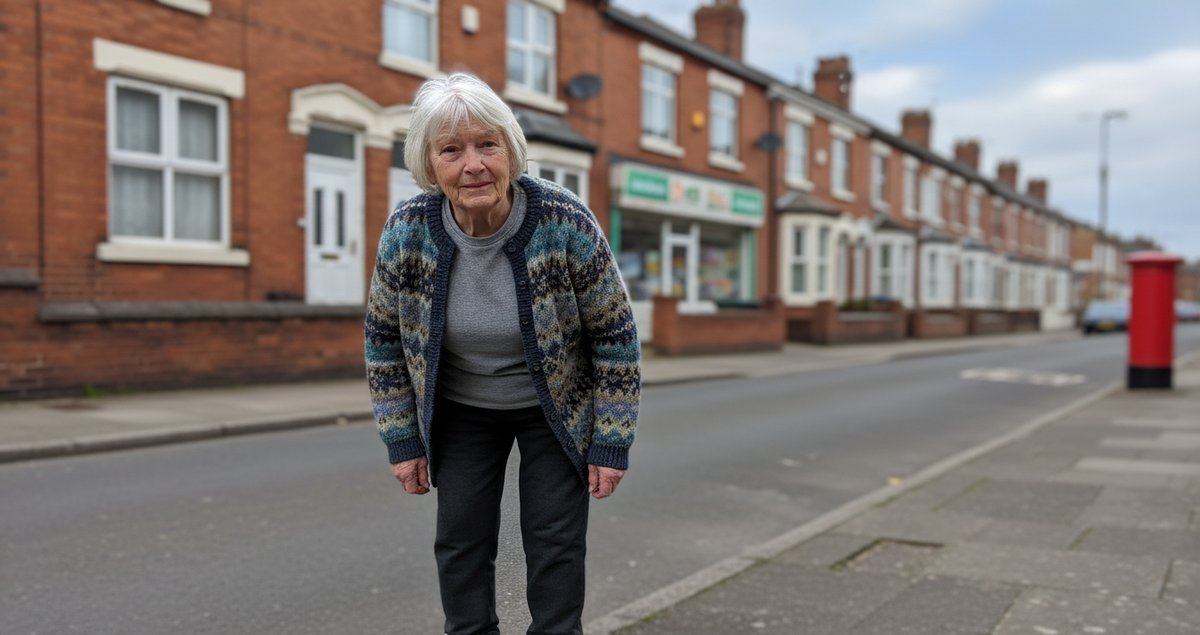
People who grew up in the 1960s and 1970s carry an odd mixture of stubborn optimism and rueful realism about people living near one another. That era taught them things no algorithm can copy and that no civic consultant can bottle. This is not a nostalgia piece. It is an attempt to hear what those lessons actually sound like when said out loud by the people who lived them and then to ask whether those lessons still have purchase in towns and estates and high streets across Britain.
How daily proximity turned into durable obligation
There was a very particular texture to neighbourhood life in those decades. Neighbours were not simply acquaintances with whom you swapped small talk. They were small social institutions in themselves. You learned who could be relied on when the boiler broke at midnight. You learned who would knock on the door if your child did not come back after school. Those behaviours were ordinary because the living arrangements and rhythms of work supported them.
That sense of duty was not always noble. It could be exclusionary, petty and brittle. Yet it produced patterns of care that are often missing now: rapid mutual aid, shared child supervision, and a quiet intolerance for neglect. When you were raised in that milieu you internalised simple civic acts as personal habits rather than as scheduled tasks on an events calendar.
Not ritual but muscle memory
What I keep returning to when I talk with people born in the 1960s and 1970s is that community felt less optional. They describe it as muscle memory. You did small things because you had done them before and because it would be noticed if you did not. That is not a romantic claim about moral superiority. It is a practical claim: routine interactions with neighbours made cooperation cheap and familiar.
Institutions that pulled people into one another
Local institutions mattered then in a way that many of us barely notice today. The school, the church hall, the local pub, the scout hut, the factory canteen even the corner shop were nodes where networks overlapped. Each node served as a rehearsal space for public life. This overlapping reduced friction when someone needed help or when a local problem demanded a response.
Institutions are often boxed as formal things only. But in those decades institutions were also informal practices embedded in daily routines. They trained people to act collectively without requiring a formal meeting. That training is not measured in membership lists; it is measured in the instinct to knock on a neighbour’s door when a car is abandoned for weeks or to show up at a funeral even when you barely knew the deceased.
Where the lesson breaks
Not everything that emerged from those networks should be preserved unchanged. The same bonds that produced help also produced suspicion of difference and a tendency to gatekeep. Class and race hierarchies were reinforced by the way networks reproduced themselves. So any attempt to resurrect the positive features of that era must be explicit about what we reject as well as what we recover.
Practical reciprocity beats moral grandstanding
A recurring theme in interviews with people from the period is that their community obligations were practical, not ideological. Help was given because it solved a problem. That practicality discouraged virtue signalling and encouraged sustained generosity. People were more likely to trade labour or lend tools than to perform public declarations of goodwill.
There is a political point hidden here. When public life becomes a display it empties out the small reciprocal acts that actually keep neighbourhoods functioning. The 1960s and 1970s taught an almost subversive lesson: small acts of help can be more politically meaningful than grand moral postures.
Quote from an expert
There was less joining of all sorts PTAs churches fraternal groups less time with families less time with friends knowing neighbors less well giving less and trusting less.
Robert D. Putnam Professor of Public Policy Harvard University.
Putnam’s observation about the decline of these habits is not a moral verdict. It is a factual sketch that helps explain why people who grew up in the 1960s and 1970s remember community differently.
Unfashionable skills that once mattered
One thing rarely written about is that people from those cohorts acquired practical community skills: fixing fences together, organising a street fête on a shoestring, or mediating between feuding neighbours. These were skills learned by doing not by following a checklist. They created a dispersed capacity to solve minor crises locally rather than escalate them into larger problems.
We have lost a lot of those informal training grounds. The result is that when a problem arises many communities now default to waiting for a council team or a charity rather than improvising a local response. That shift is partly structural and partly cultural. And it is reversible, but only if we value the messy apprenticeship of communal life again.
Small economies of trust
Trust in that era often showed up as credit extended across social lines. A grocer might keep a family afloat for a week. A neighbour might water your plants without a formal arrangement. These were small moral economies built on repeated interaction not on signatures or forms. They are fragile but efficient. We underestimate how costly their absence is until we need them.
Lessons for a fractured present
If you ask someone who grew up in the 1960s or 1970s what they would change about modern life they rarely ask for the past wholesale. Instead they ask for specific recoveries: better street-level public space, fewer anonymous transactions, more overlapping institutions where different social circles can meet. They want towns where acquiring trust is easier and quicker than it is now.
That prescription is partly nostalgic. It also contains sensible policy and social nudges: invest in places where people can gather informally, make civic life less bureaucratic, and recognise the value of small acts of reciprocity. But the central point is cultural. You cannot legislate muscle memory. You can only create the conditions where it might re-emerge.
What to keep and what to jettison
Keep the routinised kindness. Keep the places where chance encounters happen. Jettison the gatekeeping that excluded and policed difference. That is messy, because the good and bad were entangled. The work ahead is to disentangle them without pretending the past was uniformly benign.
Ultimately people raised in the 1960s and 1970s teach us one stubborn truth: community is an acquired art not a branding exercise. It is built by repetition and proximity not by petitions or clever online campaigns. Whether that art can be relearned depends on whether we make the daily structures that encourage it again. That is an open question.
Summary table
| Lesson | What It Meant Then | Why It Still Matters |
|---|---|---|
| Routine reciprocity | Everyday neighbourly help without formal roles | Reduces friction and speeds local problem solving |
| Overlapping institutions | Schools churches pubs and shops as meeting nodes | Creates shared contexts for cooperation |
| Practical habits | Skills learned by doing for communal benefit | Enables local improvisation in crisis |
| Boundaries and exclusions | Networks that sometimes reproduced class and race divides | Must be acknowledged and actively corrected |
FAQ
How were communities in the 1960s and 1970s different from today?
Communities then were structured around locally overlapping daily routines. People worked nearer their homes more often and local institutions carried more social weight. That gave rise to habitual interactions that converted into obligations. Today mobility and digital life have fragmented many of those routines so similar interactions happen less frequently and often in different spaces.
Can those older forms of community be revived?
Partly yes. Revival requires building places and practices that encourage repeated face to face contact. It also requires letting go of exclusionary habits. Local councils charities and residents groups can help by prioritising informal public spaces and enabling low friction local action. But cultural change is slow. You cannot simply legislate trust into existence.
Were there harms in those older communities?
Absolutely. The same social closeness that produced mutual help also enforced conformity. Many communities were homogenous and could be hostile to outsiders. Any attempt to retrieve useful elements from that time must unpick these harms rather than reproduce them.
What practical steps can people take now to rebuild community?
Start small and local. Host a simple street coffee morning in a neutral public space. Help an elderly neighbour with a task without making it an event. Support multiuse venues where people from different backgrounds can meet. The point is to create repeated low stakes contact not to stage spectacles.
Is nostalgia the right lens to view this era?
Nostalgia is a trap if it blinds you to exclusion and inequality. But if used critically nostalgia can point to lost practical capacities that are worth recovering while avoiding romanticisation. The useful question remains practical not sentimental: what routines helped and which should be left behind.
How do policy and ordinary practice interact in rebuilding community?
Policy can shape the conditions for community by funding shared spaces and reducing bureaucratic friction for small local projects. Ordinary practice fills in the content of community by how people behave day to day. Both matter. A well designed policy with no everyday follow through will do little. Conversely grassroots goodwill without supportive structures often burns out quickly.
