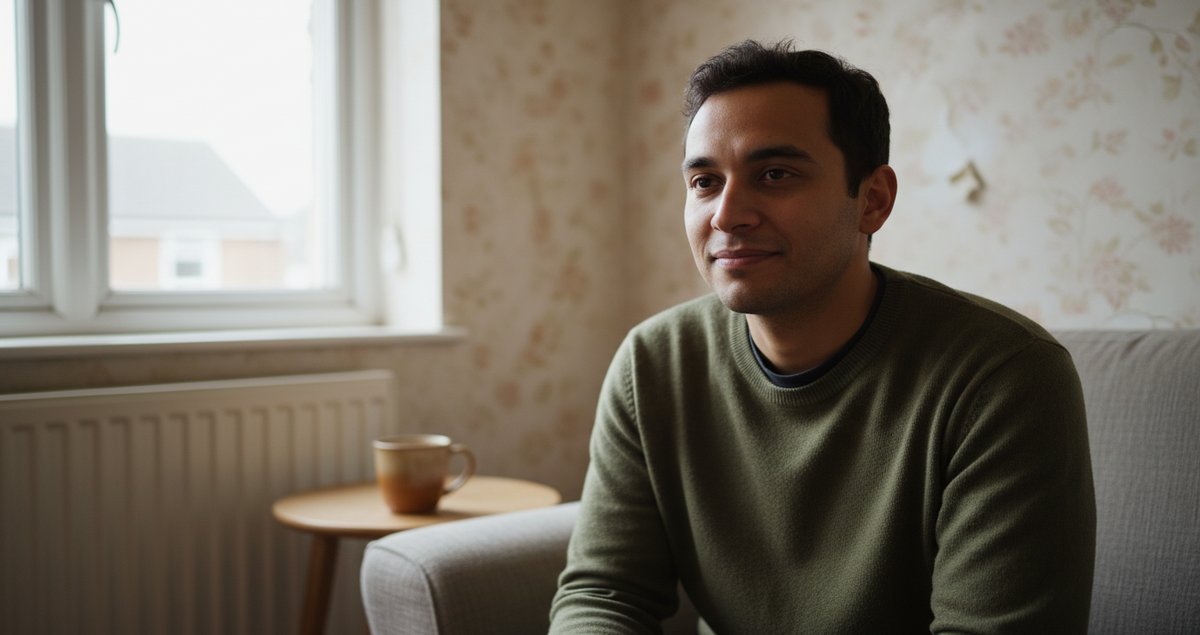
I used to apologise reflexively for turning down nights out. It was quicker than explaining the way my chest quieted when I walked through my front door and the world became manageable again. People labeled me lazy. Colleagues muttered thinly veiled disappointment. Friends assumed I was aloof. None of that accounted for the actual feeling: a slow, necessary uncoiling that only happens in private.
The difference between choice and need
There is a cultural shorthand that equates being visible with being valuable. Meeting rooms and bars function as stages where productivity and sociability are measured. But not all choices to stay in are the same. Sometimes staying home is a matter of preference. Other times it is a regulation of resources. Imagine the brain as an account with limited bandwidth rather than as a clock you must spend in public. For many people staying home is the act of protecting that bandwidth.
Why that protection looks like withdrawal
Withdrawal gets misread easily. When someone declines an invitation the social script is to interpret that withdrawal as moral failure or lack of ambition. In reality the behaviour often reflects a defense mechanism. The sensory input of social environments requires prediction and response in real time. That anticipatory load accumulates. Not all people have the same tolerance for it. Being home reduces unpredictability and restores a baseline where the inner conversation can be heard again.
Psychological need is not an excuse it is an explanation
Admitting the need to stay home invites suspicion from both sides. Employers may worry about reliability. Friends may suspect indifference. And the person themselves may feel guilt. But naming the need reframes the conversation. It removes moral judgment and introduces practical negotiation. If staying home is a requirement for mental refreshment then it is also a signal for rhythms and boundaries that can be shaped rather than scorned.
The social penalty for private repair
There is a social tax attached to private repair work. We reward visible hustle and punish invisible maintenance. That skew produces strange incentives. People burn themselves out to demonstrate worth. Or they hide their quiet repairs and are judged for the resulting behaviour when they fail to perform. We need new vocabularies that recognise repair as work and boundaries as competence.
When staying home is adaptive and not avoidance
Adaptation and avoidance live on a spectrum. Staying home to plug into a hobby to finish a project or to be alone for recalibration are adaptive acts. Staying home because the idea of any social contact triggers panic is different and may need help. The line between the two is not a moral line. It is practical. It asks what staying in allows you to do differently. Does it restore capacity or does it hide you from opportunities you want? Both answers are true for different people.
People really need to prepare for self isolation. It is not enough to stock up on toilet paper. They need to think about what they are going to do to combat boredom. Because it is important on a community scale that people adhere to self isolation.
The quote above was spoken in the context of a public health crisis yet it highlights a point that endures: staying home sometimes demands planning and intention. The line between flourishing and stagnation at home is often determined by how the time is structured and whether the decision to be at home is respected by the self and by others.
Home as a pragmatic architecture of identity
People build the self in the spaces they occupy. For some the externalised identity is a professional persona. For others identity forms in domestic rhythms and quiet rituals. Both are real and both deserve legitimacy. The problem is when one form is treated as superior. A society that privileges extroverted presence undermines those who preserve energy through absence.
Not all solitude is the same
Solitude can be nourishing or corrosive. The difference is not determined only by amount but by quality. Quality is about agency. Choosing to be alone for a few concentrated hours to reflect differs from retreating because the outside world feels hostile. The policy question here is simple: how do we create spaces where choosing home feels like agency not like exile?
Practical honesty beats performative availability
It is kinder to say I need the night to myself than to supply a performative excuse. The latter preserves social nicety at the cost of wasting personal bandwidth. Honest language about needs forces negotiation. It normalises rhythms and gives those around you a chance to accommodate real human patterns rather than the curated ones we usually present.
On parenting and the stay at home paradox
Society tends to flatten the complexity of staying home with children into tidy narratives. Many people who stay at home do so with a surplus of labour not a surplus of leisure. The emotional labour within the walls of a home is often invisible. Recognising staying home as a need helps reframe domestic labour as legitimate work rather than as a passive retreat.
I am not saying staying home is always healthy
Let me be blunt here. Staying home can become a shelter that calcifies into fear. There are scenarios where isolation does harm. I am not romanticising solitude. I am insisting on nuance. For a lot of people the occasional withdrawal is a necessary hygiene practice. For others it is a sign the environment outside needs repair. The two realities coexist and require different responses.
Some things we must stop saying
We should stop equating being seen with being valuable. We should stop turning polite invitations into moral tests. And we must stop using laziness as the catchall explanation for a wide array of psychological states. Language shapes our responses and our policies. If we change the language we can change the penalties attached to living differently.
Privileging visible labour makes for good copy and bad communities. Protecting private repair makes for resilient people. If you want to stay home remember that your behaviour may be a clue to an internal economy at work. Treat it with curiosity not contempt. You might find that the people who insist you are lazy are the ones who have never needed to defend their quiet.
Closing thought
There is a modest revolution in owning one simple phrase. I need tonight to restore myself. It shifts the debate from judgement to negotiation. It asks others to step into a practice that acknowledges flux and recognises repair. That sentence is small but consequential. It reframes how we value presence and absence, and it does so without theatricality. It changes the world one evening at a time.
Summary table
| Idea | What it means |
|---|---|
| Staying home as need | Protection of psychological bandwidth rather than moral failure. |
| Visibility bias | Society rewards visible activity and often penalises quiet repair. |
| Adaptive versus avoidance | Withdrawal can restore capacity or signal distress depending on context. |
| Language matters | Honest phrasing about needs invites negotiation and reduces stigma. |
| Domestic labour complexity | Staying home often equals invisible work not leisure. |
FAQ
How do I tell if staying home is a need or avoidance?
Look at outcomes. If staying home consistently leaves you feeling restored able to act and connected to priorities then it is serving a restorative need. If it leads to boredom rumination and a sense of being trapped then it may be avoidance that benefits from small external experiments. There is no single diagnostic moment only patterns over time.
Won’t saying I need to stay home damage my reputation?
Sometimes it might. But framing is everything. Presenting it as a strategy for productivity and wellbeing rather than as an excuse helps. Also practice small boundary experiments in environments where trust exists. Reputation shifts slowly once people see consistent reliability coupled with honest limits.
How can I respect my need for home without becoming isolated?
Designate times and formats that meet both needs. Small rituals with friends low stimulation social options and scheduled public tasks can maintain connection while protecting downtime. The principle is deliberate mixing rather than random avoidance.
Is preferring home the same as being introverted?
They overlap but are not identical. Introversion indicates where you draw energy from. Wanting to stay home can be introversion but also can be tied to sensory sensitivity stress recovery or practical life demands. Labels help but they should not constrain the next step which is pragmatic adjustment.
What if people still call me lazy?
That response often reveals more about their assumptions than about you. Responding with clarity about your needs or simply moving on are both valid. Over time consistent behaviour and small disclosures often shift perceptions more effectively than debate.
