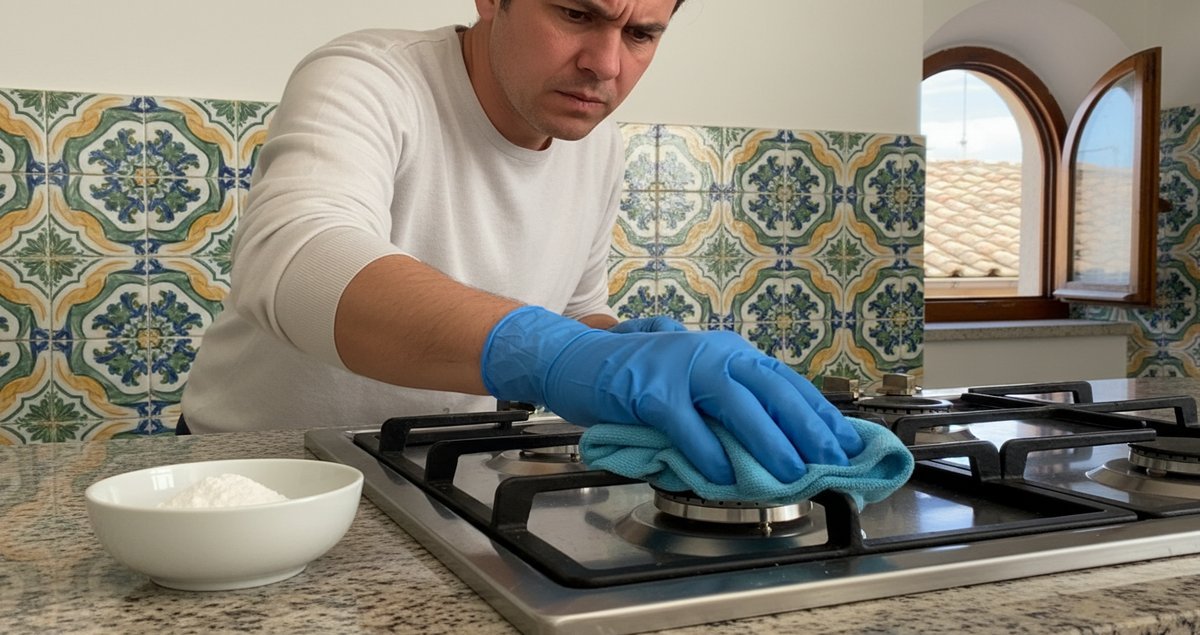
I used to believe that kitchen grease demanded something industrial and mean sounding to vanish. That was suburban myth telling me to buy the loud blue aerosol and pretend it was a personality upgrade. Over time I learned to stop buying declarations and start testing what actually works in real life kitchens where time is short and patience shorter. This article shows the single reliable trick I keep returning to and why it consistently beats expensive degreasers for most everyday messes.
What I mean by a simple trick
The trick is not a mystical powder or a multi step ritual you have to memorize. It is a method built around two humble, gentle players used in sequence so each does what it does best. First wash with concentrated warm water and dish soap. Then apply a baking soda paste to the stubborn spots and finish with a short warm rinse. That is it. No bleach fumes. No aggressive solvents. The result is grease removal that actually feels permanent rather than cosmetically erased for an afternoon.
Why it works better than you think
Grease is chemistry not malice. Oils stick because of molecular attraction and because they find micro texture to hide in. Hot water and surfactant from dish soap cut oil into tiny droplets that your cloth can lift away. Baking soda adds a mild abrasive and an alkaline environment that loosens residue without stripping finishes. When you alternate the two approaches you make the grease vulnerable twice instead of trying to blast it in one pass.
How I do it in a hurry
If I have thirty minutes between dinner and the next thing, this is the version I use. I fill the sink with the hottest tap water my hands will tolerate and add several squirts of dish soap. I dunk a microfiber cloth until it is saturated and wring it until it is damp not dripping. Quick wipe across the surface to dissolve the top layer of oil. For the sticky, yellowed edges I apply a paste made with two parts baking soda and one part warm water. I smear it on. Let it sit eight to ten minutes. Then scrub lightly with a soft sponge and rinse. The last wipe is with a dry towel so you can see if there is any haze left. Usually there is not.
Practical notes from the front lines
Do not use vinegar on natural stone. It will etch. If you have that kind of countertop use only soap and the baking soda paste sparingly. Do the paste test in a hidden corner if the finish is delicate. The microfiber cloth is crucial. A rag from the garage will smear grease. If you keep a small spray bottle with diluted warm water and a few drops of dish soap handy you can spot treat as you cook and prevent the worst buildups. The trick becomes magic if you don’t let grease sleep overnight.
Real voices who agree
Combine baking soda with a small amount of water to create a paste. Apply it to the greasy spots, let it sit for a few minutes, then gently scrub and wipe clean with warm water. This method is effective and safe for most surfaces.
Alicia Sokolowski President and Co CEO AspenClean
I cite that because Alicia Sokolowski has built a cleaning business around natural solutions and her advice lines up with months of kitchen experiments. When experts and slow observational testing agree you have a method worth repeating.
Where most people go wrong
The impulse to escalate. Spray harder. Scrub like you are chiseling. Switch chemicals like they are fashion accessories. Those responses usually move the grease but also wreck finishes, produce lingering odors, or leave residues that collect dirt faster. Another mistake is mixing baking soda and vinegar expecting a miracle. The fizz looks dramatic but often neutralizes both agents and gives you nothing but the adrenaline of watching bubbles. Use each ingredient for its real property not its theater.
When you should call in something stronger
If grease has polymerized from repeated exposure and heat and it has become a tacky film that resists repeated home treatments then you either have to let a professional take it or use a stronger solvent designed for the specific material. That is not a common household emergency. Most kitchens will respond to the simple soap then baking soda approach if you are consistent.
A few devices that make the trick easier
A handheld steam cleaner is a good partner if you have one. Brief steam softens old grease and lets the baking soda paste work faster. A small soft bristled brush helps with crevices around knobs and trim. And keeping a dedicated microfiber cloth for degreasing avoids cross contamination with other cleaning tasks. None of these are mandatory but they shorten the job and reduce elbow grease.
Personal observation I rarely read about
There is an intangible benefit to this approach that I now trust more than any advertising claim. After a few weeks of using soap and baking soda, surfaces stop acting like magnetized greasers. They shed oils more easily. I think repeated chemical overkill leaves a thin residue that invites more oil to cling. Gentle chemistry plus mechanical removal resets the surface. I cannot prove it in a lab here but my sinks and stove tops tell the story.
Environmental and cost thinking
Using a small amount of dish soap and baking soda keeps costs low and packaging minimal. You are not committing to a single purpose canister of degreaser that sits under your sink waiting for the day it will justify its shelf life. It also reduces exposure to harsh ingredients most people would rather avoid in an indoor cooking space. That matters if you live with kids or pets or anyone whose nose dislikes industrial fragrances.
Final practical checklist
Start hot and soapy. Target the big greasy smear first. Apply baking soda paste only where needed. Wait. Scrub gently. Rinse with warm water. Dry and scan for residue. Repeat on stubborn spots only once more. If it persists schedule a deeper attention day rather than escalating instantly to harsh chemicals.
Closing thought
Cleaning is boring until it is not. This trick makes grease removal faster and less dramatic. That may not be glamorous but it wins in the long run. You can keep the industrial cans if you enjoy the smell of trademarked power. Me I prefer a method that works and leaves my kitchen smelling like cooking not chemistry.
Summary
| Step | Why it works | When to use |
|---|---|---|
| Warm water with concentrated dish soap | Breaks oil into droplets and lifts surface grease | Daily spills and light grease |
| Baking soda paste | Mild abrasive and alkaline loosening of residues | Stubborn or yellowed grease spots |
| Steam or repeat | Softens polymerized grease for removal | Old heavy build up only |
| Microfiber finishing wipe | Removes residue and reveals any missed spots | Always |
FAQ
Is this safe on all countertops and stoves?
Mostly but not always. Do not use baking soda or vinegar on unsealed natural stone such as granite or marble because the acid can etch and baking soda can dull a polished finish if you scrub hard. For painted or laminate surfaces the method is usually safe but test in a hidden area first. For delicate finishes use only the hot soap step and avoid abrasive scrubbing.
Can I mix baking soda and vinegar for more power?
That combination creates a fizz that looks effective but neutralizes much of their power. Baking soda is best used as a paste and vinegar is best used as a diluted spray for mineral residues. Use them in sequence not blended into a single aggressive cocktail.
How often should I do this to prevent permanent buildup?
Quick daily wiping during cooking and a focused degrease session every two to four weeks for high use stoves prevents the worst of buildup. If you cook at high heat frequently check the hood and backsplash monthly. Prevention makes every cleaning faster.
Will this remove old yellowed grease?
Often yes if you are willing to let the baking soda paste sit longer and use gentle mechanical action. For grease that has baked on for years a professional deep clean or a targeted stronger product may be necessary. Try multiple gentle cycles before resorting to harsh chemicals.
Does this method remove odors?
Partly. Baking soda helps neutralize odors while soap rinses away residue that carries smell. For persistent odors you may need to clean filters or address the source such as accumulated grease in a vent or hood filter.
