I used to think the only way to banish stubborn kitchen odours was a cocktail of branded sprays and plastic scented gels. That felt like surrendering. Then I started experimenting with a low tech, low drama method that doesn’t mask smells or carpet them in fragrance. It reduces the problem at source and it costs almost nothing. I am not neutral about this. I prefer solutions that respect the food and the air at the same time.
Why most deodorising is just window dressing
We live in a market that loves quick fixes. Spray something and the room smells like citrus for sixty minutes. Clean up the surface but not the chemistry. Smells return because we often treat the symptom and not the generator. The generator can be moisture trapped in packaging, volatile compounds wafting from old leftovers, or a soggy sponge on the drip tray. Masking with scent simply adds another layer of molecules competing for your nose.
A different aim
What I propose is not to perfume the kitchen but to change the microclimate where odours form. Get rid of persistent humidity pockets. Interrupt the airborne exchange of odour molecules. Remove the small rotors of stink that sit in drawers and the back of shelves. The trick is humble but oddly precise. It is also stubbornly effective in everyday lives where time and attention are in short supply.
The trick explained without fuss
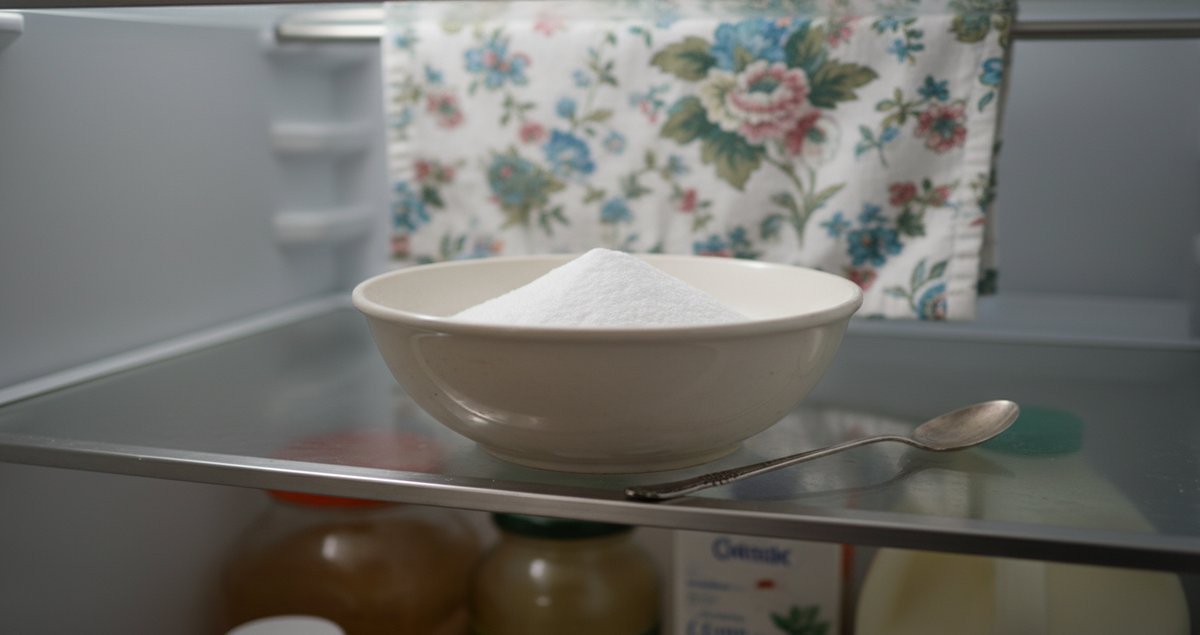
Place an open shallow container of bicarbonate based powder on a middle shelf. Use a shallow white ceramic bowl so it reads as neutral in the fridge or on the counter. Replace it every fortnight if you keep it on a shelf. For damp drawers or crisper compartments layer a single sheet of paper towel folded flat so it absorbs early condensation and is swapped out when damp. That is it. No sprays no fancy gadgets just slow persistent reduction of the environment that holds odour.
Why it works
Bicarbonate helps neutralise some acidic volatile compounds. A dry cellulose surface like paper towel reduces micro condensation which otherwise feeds microbial activity and the release of certain volatile organic compounds. The effect is about altering probability. Fewer wet spots equals fewer places where odour chemistry accelerates. Fewer free volatile molecules equals less offensive air. It is not miraculous. It is a systematic nudge in the direction of less stink.
Not a lab but sound guidance
This is not pseudoscience. Food scientists have taken a look at common household absorbers and their limits. Christine Bergman Ph.D. Professor of Nutrition and Food Science University of Nevada Las Vegas has said I cant answer this with a yes or no but rather a maybe or its likely in some situations but not all which captures the cautious truth here. That caution matters because these methods reduce but do not guarantee perfection.
“I can’t answer this with a yes or no, but rather a maybe, or it’s likely in some situations but not all.” Christine Bergman Ph.D. Professor of Nutrition and Food Science University of Nevada Las Vegas.
I also want to flag a practical caveat. Put a wet piece of paper towel in a warm closed drawer and you might create a microhabitat. Dr Bryan Quoc Le Food Scientist Mendocino Food Consulting explains that the towel itself can become a breeding ground for mold if not managed properly. Replace it when damp. These are not theoretical worries they are procedural realities.
“While this method can be effective it must be done correctly to avoid potential contamination as the towel itself can become a breeding ground for mold if not managed properly.” Dr Bryan Quoc Le Food Scientist Mendocino Food Consulting.
Small rituals that make a big difference
Make the switch to environmental control what it is: a daily micro ritual. After cooking wipe the pans before they go in the sink. Leave lids ajar on containers cooling on the counter for a short time so steam escapes and does not condense inside plastic. Rinse the sink strainer immediately rather than letting it sit. Change the powder in the bowl on a fixed cadence rather than when it seems necessary. Rituals are not chores when they reliably prevent an ugly outcome.
Why this feels different from conventional advice
Most blogs list tricks and then shrug at follow up. I am pointing at change in the environment. The payoff is cumulative. You will notice the atmosphere of the kitchen slipping into a milder register. Food smells will still announce themselves but they will no longer fossilise into stale background stink. That is the point. A kitchen that breathes a little is kinder to both food and people.
When the trick is not enough
If you are dealing with genuine spoilage or standing water do the obvious thing which is to clean and dry thoroughly. If the fridge has a fault where moisture accumulates call in repair before you spend a year changing bowls. This trick is a hygiene companion not an emergency rescue team.
Personal notes and an inconvenient truth
I tried this for months across different kitchen setups in rent control flats and my own house. The result was noticeable even on days when I forgot to swap the paper towel. But I also underestimated how much packaging and store bought marinades contribute to persistent aroma load. Sometimes the most stubborn odour is the packaging itself. That means part of the job is shopping with odour in mind. Choose resealable containers and allow cooked food to cool uncovered briefly before sealing. It is small behaviour change but it matters.
Open questions I still think about
How much of kitchen odour is social memory rather than chemistry. In other words do we smell less because there are fewer molecules or because we stop paying attention to them when the overall environment improves. I do not have a definitive answer. What I can say is this specific trick makes the test of attention easier. It lowers the baseline noise and lets you judge real problems faster.
Summary table
| Problem | Intervention | Why it works |
|---|---|---|
| Fridge stale odour | Shallow bowl of bicarbonate on shelf renewed fortnightly | Neutralises some acidic volatile compounds and absorbs airborne particles |
| Condensation in drawers | Folded paper towel replaced when damp | Absorbs moisture and prevents microhabitats for odor creating activity |
| Persistent packaging smell | Transfer to resealable containers and brief airing before sealing | Removes trapped volatile molecules and reduces concentration build up |
| Sinks and strainers | Rinse and dry after use | Stops organic residue from decomposing and releasing gases |
FAQ
Does baking soda actually remove all smells?
It reduces many acidic and volatile odours but it is not a universal absorber. Baking soda is a useful low risk tool that helps shift the chemistry in enclosed spaces. It works best alongside good practice such as regular cleaning and removing the source of the odour rather than simply covering it up.
How often should I change the paper towel or powder?
Change the paper towel when damp. For a bowl of bicarbonate a two week cycle is a good starting point. If you notice quicker saturation or strong odours shorten the interval. The key is consistent replacement not dramatic frequency. A predictable schedule is easier to keep than sporadic panic cleans.
Is this safe to use around food?
Yes when you use food safe materials and keep them separate from uncovered food. Use ceramic or foodgrade containers for powders and ensure the paper towel does not touch loose produce directly. The trick is to manage surfaces and keep them tidy so that the intervention does not become part of the problem.
Will this remove cooking smells from the whole house?
It reduces ongoing sources and helps in small enclosed areas like fridges drawers and specific cupboards. It will not instantly clear the entire house after a heavy fry up. For whole house odours consider ventilation or targeted cleaning of textiles and porous surfaces that tend to trap oils and smoke.
What is the most common mistake people make when trying this?
Leaving absorbers in place until they are saturated. A wet or oversaturated paper towel can flip from absorber to generator. Treat these interventions like active maintenance not disappear and forget props. Small attention beats dramatic occasional action.
Will this work in rented accommodation?
Absolutely. One reason I like the method is that it is low impact and reversible. You are not drilling or installing equipment. It is movable and cheap so it suits transitory living situations where landlords worry about modifications.
Try it for a month and notice what changes. If nothing else you will learn more about where odours actually come from and that knowledge is useful in itself. I still light a candle sometimes but rarely as a substitute for these small steady interventions.
