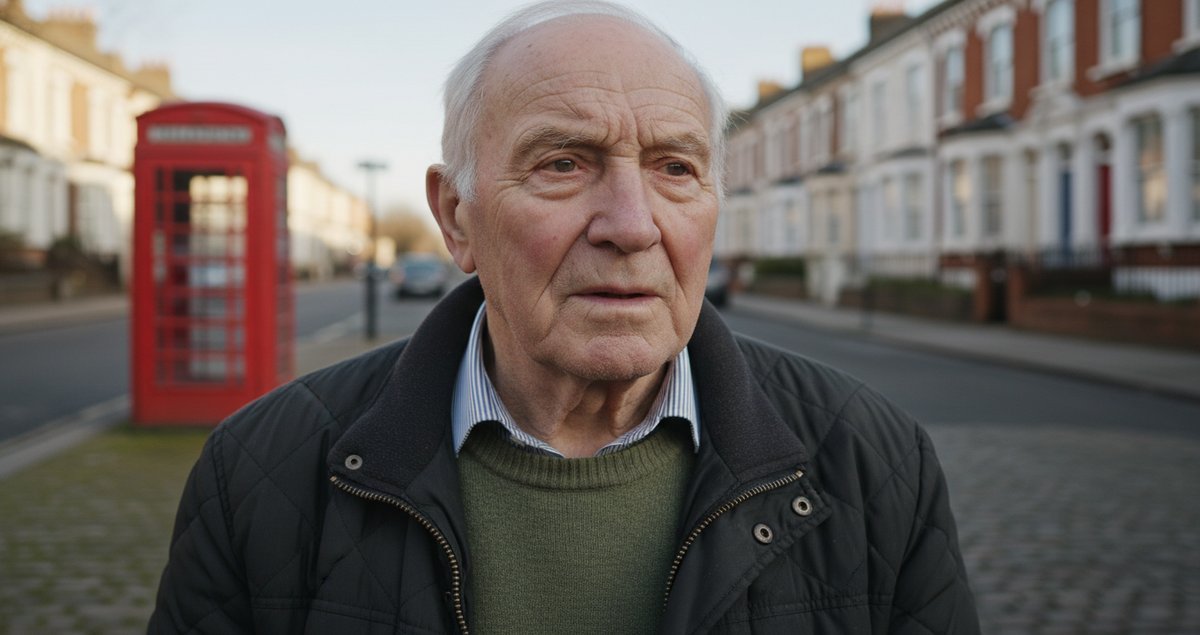
There is a particular calm impatience that runs through many people who came of age in the 1960s and 1970s. They do not hustle for attention. They seldom need to polish every sentence for an algorithm. They know how to hold an opinion without feeling it must be broadcast to a thousand strangers to be validated. How the 1960s and 1970s shaped a generation that doesn’t need to prove itself is not a tidy thesis. It is a messy inheritance of protest songs and unpaid labour in community kitchens and an unease with spectacle. This piece tries to map that untidy terrain while refusing to explain everything away.
Not performative rebellion but procedural reorientation
The image of the Sixties as endless shouting is lazy. For many people who lived through those years the act of refusing to perform the expected life was quieter. It was choosing different work. It was steady involvement in a local campaign. It was a private renegotiation of values. The 1960s and 1970s offered a procedural reorientation rather than a one off public standoff. That reorientation seeded practices of living that later generations have called authenticity.
Small refusals added up
There was a lot of small refusal. Employees leaving secure jobs for something less steady but more meaningful. Couples insisting on different domestic arrangements. Tradespeople and artists sharing skills freely in studios and collectives. These decisions accumulated into a cultural scaffolding where self worth became less tied to external verification and more to practical competence and community recognition.
The paradox of public truth and private distance
Talk of authenticity usually glosses over its paradoxes. Saying what you think in public can be a form of virtue signalling when it substitutes for sustained action. Yet the Sixties also blurred the borderlines of private and public life in ways that mattered. The following quote from a major voice about public life nails one essential contradiction.
“The modes of authenticity erased distinctions between public and private. That humanity might consist in keeping wounding feeling about another person from him, that disguise and self repression may be morally expressive under the aegis of authenticity these ideas cease to signify.”
What Sennett observed was not only a collapse of stiff Victorian reticence but also an invitation to own contradictions. The people who learned to live there did not demand a permanent audience for their identity. They accepted ambivalence. That acceptance is part of why many of them do not feel compelled to prove themselves into permanent visibility.
Work, craft and the refusal to be edited into irrelevance
People from those decades valued doing things well even when nobody was watching. There is a stubborn ethic of craft in carpentry, journalism, small manufacturing and local public service that persisted. It is different from perfectionism. It is about finishing tasks and keeping standards because the work itself mattered, not because completion would earn a badge.
That orientation makes some people slow to adopt performance metrics that demand constant display. They mistrust metrics that reduce competence to clicks. They are not Luddites. They are selective. They will use a phone to call a friend and then put it away because a direct conversation counts in ways a notification never will.
Expert voices on culture and resilience
Cultural commentators have noticed how later media narratives repackaged the lessons of the Sixties. One observer whose work spans youth culture and feminism explains a contemporary twist to this legacy.
“Magazines and their social media offshoots find the concept of resilience useful as a kind of halfway house. It allows them to take the emphasis away from feminism per se and replace it with qualities like being resilient or being strong.”
This is important. The older generation taught younger activists that long term organising mattered more than viral virtue. But the commodified language of resilience has been harvested by industries that would rather sell a feelgood slogan than a difficult political platform. People who remember how movements actually work are less tempted by the quick fix of a trending hashtag. That restraint looks like indifference sometimes but is often a strategy calibrated by memory.
Memory as a form of quiet entitlement
There is something like entitlement in the way older activists sometimes refuse to explain themselves. It is not entitlement to wealth or status. It is a claim that having lived through certain ruptures you are permitted to be less performative. You have carried responsibilities that did not come with likes. You have wounds that were not neatly hashtagged. That personal archive makes you tolerant of complexity and impatient with moral simplicity.
It also fosters a particular approach to parenting and mentorship. You offer tools rather than medals. You teach persistence rather than teach someone how to craft a spectacle for an audience. This is the seedbed for a generation that simply does not feel the need to prove itself to strangers.
Where this attitude collides with modern life
The quietness that comes from refusing to perform can be misread as disengagement. Younger people in crowded digital public squares often interpret silence as surrender. But silence can be a strategy. It can be a refusal to let every moral quandary be resolved on the basis of a single post. The tension is real. Sometimes the refusal to prove oneself becomes a refusal to account for harm. Other times it is a protective refusal that preserves a capacity for sustained care and action.
These contradictions make the generation of the Sixties and Seventies interesting and infuriating in equal measure. They do not fit easy narratives of nostalgia. They are not uniformly noble. The same generation that dismantled unnecessary hierarchies also hoarded privileges and left hard questions unresolved.
Concluding refusal to finish the story
Any neat moral about a generation that does not need to prove itself flattens the variety within cohorts. The 1960s and 1970s shaped many people to find meaning outside of constant external verification. But that pattern is only one thread in a very tangled weave. Some embraced spectacle. Some never stopped seeking approval. The important bit is the presence of an ethic that treats competence care and local commitment as proper ends in themselves.
I do not want to romanticise. I also do not want to hand a certificate to an entire age. History is stubbornly particular. But there is a practical lesson here for anyone exhausted by the obligation to perform. Ask what work outlives clicks. Ask what actions build something that matters when the feed goes dark. These are the questions whispered through decades that learned to value lasting practice over loud proof.
Summary table
| Idea | How it formed | Why it matters |
|---|---|---|
| Procedural reorientation | Small refusals and alternative life choices in the 1960s and 1970s | Encourages sustained commitment over fleeting performance |
| Blurred public private boundary | Shift toward authenticity in public discourse | Produces both honest speech and guarded privacy |
| Craft and competence | Valuing work quality over applause | Creates resilience to metrics driven validation |
| Selective visibility | Using media without being subsumed by it | Protects capacity for long term action |
FAQ
How did the protests of the 1960s influence private behaviour later in life?
Protests taught people that public dissent could be meaningful but also exhausting. For many that lesson translated into a preference for quieter forms of engagement later in life. Volunteering for local causes showing up for a neighbour or sustaining long term campaigns became preferred modes of action because they offered ongoing responsibility rather than episodic attention. The effect is not universal but it is common enough to shape community institutions and norms.
Is this lack of need to prove oneself just a generational vanity?
No. It is not vanity. It is partly a product of cultivated competence and partly an adaptive response to cultural saturation. The refusal to seek constant external approval often stems from experience. People who remember organising without social platforms do not assume visibility is the same as impact. That perspective can look aloof but is often grounded in a practical sense of what actually changes things.
Can younger people learn this attitude?
Yes. Elements of it can be learned through practice. Long term commitments to craft community and local politics teach different rewards than short term online validation. The learning curve involves accepting slower feedback and cultivating local accountability. It also requires resisting commodified narratives that equate sincerity with performative exposure.
Does this make older activists less effective in the digital age?
Sometimes digital reticence hampers rapid mobilisation. But older activists often bring institutional memory and relational networks that expand the durability of movements mobilised online. The trick is combining rapid digital reach with the patient stewardship that prevents burnout. When both tactics are used together outcomes are stronger than either approach alone.
What should readers take away from this?
The main takeaway is modest and a bit awkward. Not needing to prove yourself is not a moral badge you can claim without effort. It is a practice cultivated through sustained action care and the willingness to tolerate complexity. If you want less performance in your life start small. Choose one thing to do well without a crowd watching and see what that changes for you.
