There is a small, stubborn truth about kitchens. They generate smells. Some of those smells are charming like slow cooked onions. Some are honest and useful like the smell of lemon when you clean. And some are the kind that make you open every window in the house and pretend you live somewhere else. I used to be the person who sprayed until the can felt empty then wondered why the sink still smelled like last week. Then I found a trick that is both unflashy and stubbornly effective. It does not rely on perfumes or toxic aerosols. It relies on a lowly pantry staple and a tiny change in habit.
What the trick actually is
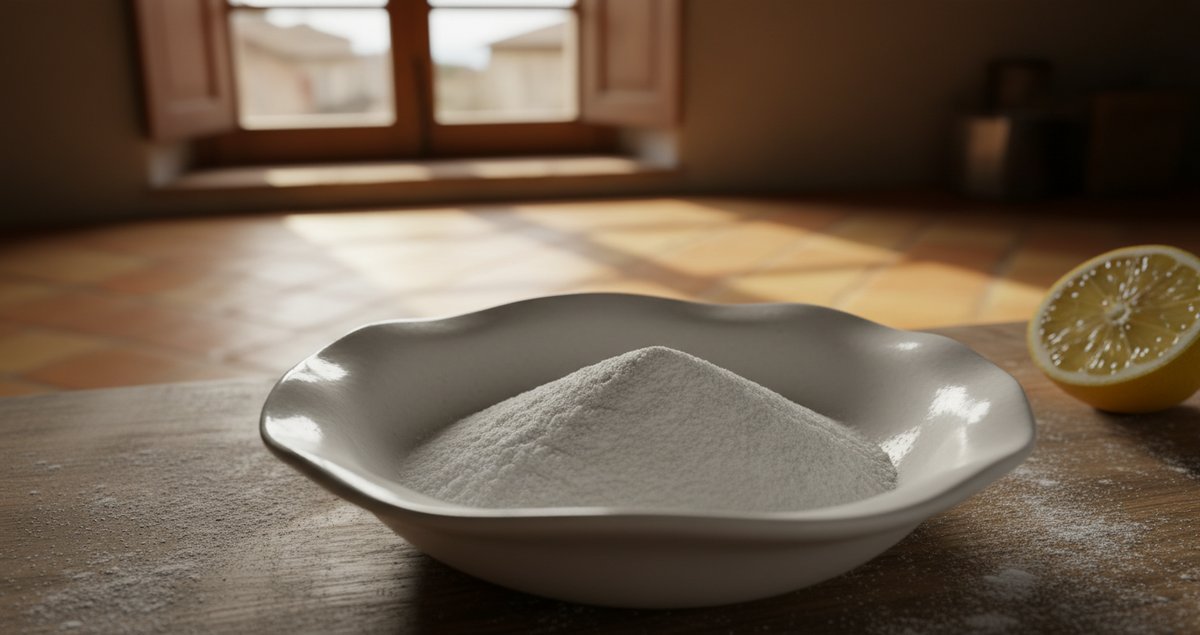
Place an open shallow jar or bowl of baking soda near the sink, inside the bin lid, and in small enclosed spaces where odours tend to gather. Replenish it routinely and replace completely every few months. That is the trick. It is not glamorous. It does not promise instant scented nirvana. Instead it quietly reduces the molecules that make things smell bad, often more successfully than a scent mask.
Why I prefer this over sprays
Sprays work by covering a problem with a new scent. That is marketing arriving late to clean living. It is a theatrical solution. Baking soda, scientifically known as sodium bicarbonate, behaves differently. It neutralises acidic and some other volatile compounds responsible for sour or sharp kitchen smells. It absorbs and sometimes even reacts with the molecules that create the odour signature of old food, greasy pans, and damp fabrics. You will still clean. This is not a substitute for elbow grease. It is a complement that keeps the baseline honest.
There is a caveat. Baking soda is not a universal miracle. For biological breakdown of residues or mold driven smells you need cleaning that removes the source. But for frequent everyday scents that creep into drains, the under lip of the bin, or the corners of a cupboard the powder is remarkably good at making the background neutral and unintrusive. That neutrality is what most of us actually want. Not another smell but a lack of one.
An expert perspective
“I cant answer this with a yes or no but rather a maybe or its likely in some situations but not all. Baking soda can help reduce certain odours particularly acidic ones from spoiled food like dairy meat or produce due to its alkaline nature. However scientific research directly investigating baking sodas deodorizing effects in refrigerators is limited.”
Christine Bergman Ph D RD Professor of Nutrition and Food Science University of Nevada Las Vegas
That quote keeps me honest. The scientist is careful and so should we be. Baking soda helps. It does not fix every problem and it does not replace cleaning. But appreciation of the limits and practical use of the trick is where most household wins lie.
How I set it up at home without being precious
I do not use pretty labelled boxes or Instagram props. I use whatever small shallow container is clean and dry. A jam jar lid works fine. I put it on the draining board near the plug and next to the sealed bin. In the cupboard behind the coffee I use a ceramic espresso cup. The aim is surface area and placement. A tall narrow jar will have less exposed surface than a shallow bowl. Switch containers every month or two to shake and aerate the powder. Replace when the powder looks damp or discoloured. Most people throw it away when it is dirty because they think the material is used up. In reality the physical act of refreshing is as important as the powder itself.
Practical tweaks that matter
Use multiple small dishes rather than one heroic bowl. Smaller containers let you target hotspots and are less conspicuous. Keep a small jar inside the bin lid so the odour is fought at source rather than in the wider room. For drains sprinkle a little powder directly into the opening and let it sit when the sink is not in use then flush with hot water. For cloth kitchen items add a spoonful to the rinse cycle. For carpets or upholstery a light dusting left to sit then vacuumed can lift stale smells. All of these are modest interventions that scale with attention.
Myths I have seen and how they fail
People claim that you can keep the same box in the refrigerator forever or that a single tablespoon will neutralise an entire apartment. Those are myths born out of wishful thinking. Baking soda is not a perpetual machine. It binds molecules until it becomes saturated or contaminated. The faster you replace it the better the outcome. Another common misstep is using it as a masking agent by adding essential oils directly to the powder and expecting long term purification. Oils smell nice but do not change the chemistry of the trapped molecules. They can make a muddled olfactory experience where artificial fragrance masks a persistent problem instead of solving it.
How this trick changes the rhythm of kitchen care
There is a small behavioural shift that comes with relying on a passive neutraliser rather than a spray bottle. You become more attentive to sources rather than symptoms. You notice the bin liner fitted poorly. You find a forgotten tupperware. You check the drain seal. It is a gentle form of accountability. The trick does not make you cleaner automatically. It nudges you to spot reality sooner and act. For me that has been the most valuable part. It made domestic maintenance less reactive and more observational.
Unexpected benefits I did not anticipate
Baking soda gifts the kitchen a kind of olfactory absence that is oddly pleasing. After you stop layering scents you notice more subtle actual smells like citrus from a cut lemon or the toasted note from fresh bread. It recalibrates the nose. It also reduces the impulse buy of fragranced products which too often are substitutes for time spent on cleaning. That saving of attention free up space for other rituals you actually enjoy like proper coffee and not masking sprays.
When baking soda is not enough
If there is persistent damp and a moldy smell you must find the leak or the moist substrate. For stubborn biological odors from pet accidents or deep grease you need enzymatic cleaners or thorough laundering. For the professional cook who deals with smoking pans fish and heavy garlic you will still have moments of surrender. The trick is not an eraser for everything but it is a reliable first line of defence that reduces the number of times you need more intrusive methods.
Final note on honesty and taste
I write about this as someone who used to prefer theatrics over work. The uncomplicated ritual of keeping a dish of baking soda is almost an act of domestic humility. It does not promise perfection. It promises a quieter kitchen and fewer desperate sprays. You will clean less often in a panic and more often because you notice something that needed doing. That shift has been worth the minimal effort for me. It might be for you.
Summary table
What to do Place shallow open baking soda containers near sinks bins and enclosed spots.
Why it works Baking soda neutralises certain acidic and volatile compounds and adsorbs odour molecules rather than masking them.
When to replace Refresh regularly and replace fully every few months or earlier if damp or discoloured.
When to clean instead If smells persist after using baking soda or if there is visible residue mold or biological contamination clean and remove the source.
Extras Use multiple small dishes target hotspots and sprinkle into drains or fabrics when appropriate.
Frequently asked questions
Can I use any container for baking soda
Yes. The goal is exposed surface area so shallow wide dishes are preferable to tall narrow jars. The container just needs to be clean dry and placed where air circulates through it. A shallow ceramic ramekin a jar lid or a small bowl are all fine. The ease of replacement matters more than the vessel itself.
How often should I change the baking soda
Replace the powder when it appears discoloured or damp which can vary by environment but plan for a complete replacement every few months as a rule of thumb. For busy or humid kitchens check monthly. Routine refreshing keeps the powder effective and prevents contamination.
Will baking soda neutralise strong smells like fish or curry
It can reduce the background intensity especially in small spaces but very strong or oily odours often require source cleaning and ventilation to be fully removed. Baking soda will lessen the lingering sharpness and make the effort of follow up cleaning more effective rather than acting as a full cure.
Is it safe to use around pets and children
It is a common household ingredient widely used in cooking and cleaning but keep containers out of reach to avoid accidental ingestion or mess. Avoid applying powder directly on skin or eyes and store spare supply securely.
Can baking soda be combined with other natural methods
Yes. It pairs well with good ventilation routine cleaning and occasional use of enzymatic cleaners for organic residues. Citrus peels placed nearby add a pleasant fresh note but they are not a chemical substitute for removing a source. The combined approach tends to be more effective than any single method.
End of article.
