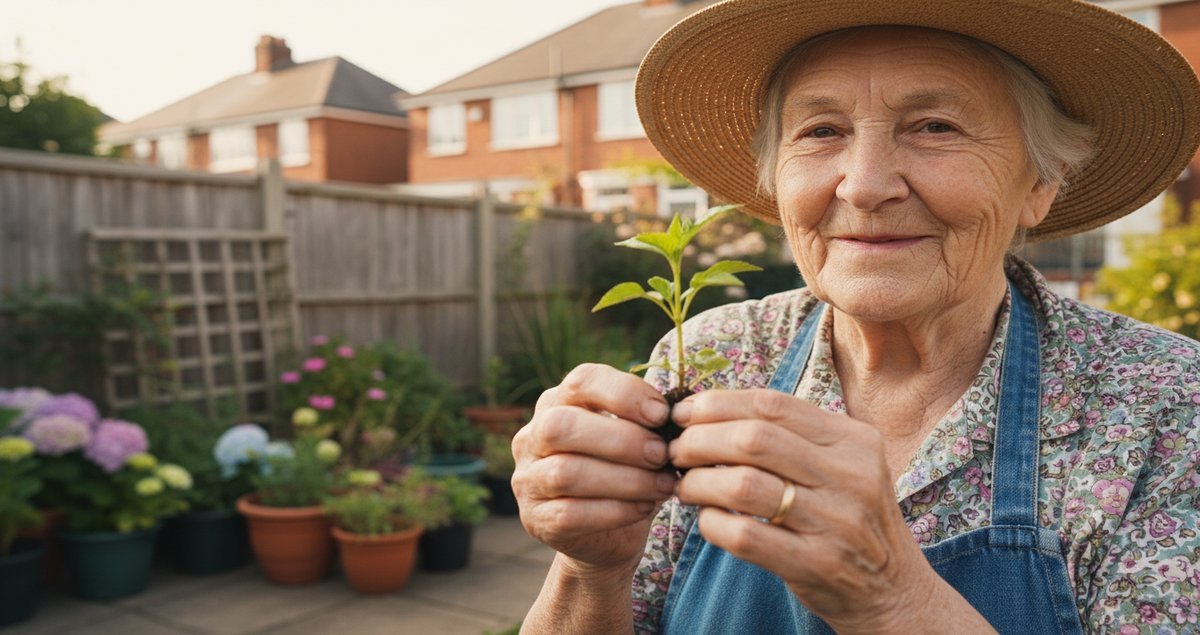
There is a stubborn picture in the health pages where crossword grids and novels are trotted out as the go to brain savers for people over 60. Sensible enough in principle but incomplete. Recent research nudges a different narrative that feels both simpler and odder in equal measure. The habit is gardening. Yes gardening. It is not merely a hobby for a tidy border or a runner up to knitting. It is a repeated, practical practice that seems to register in the brain.
Why gardening keeps cropping up in studies
Look, I am sceptical by default. I want an explanation that does not wear a lab coat as costume. Gardening brings together mild exercise, routine, sensory stimulation, problem solving and sometimes company. Individually those factors are known to matter for cognition. The surprise is that when they are bundled into one everyday pursuit the signal is consistent enough to warrant attention rather than faddish headlines.
Evidence that feels like a pattern
A long running study from Edinburgh looked at older adults and found that those who gardened regularly showed better cognitive performance across decades than peers who did not tend beds or borders. This was not a flash in the pan observation. Differences persisted even when researchers accounted for schooling, childhood ability and current health. That is the sort of stubborn result that invites curiosity rather than dismissal.
Identifying lifestyle behaviours that facilitate healthy cognitive ageing is of major public interest for the prevention of cognitive decline and dementia. Gardening is a key leisure activity in late adulthood. Engaging in gardening projects learning about plants and general garden upkeep involves complex cognitive processes such as memory and executive function. Consistent with the use it or lose it framework of cognitive function more engagement in gardening may be directly associated with a lower risk of cognitive decline. Dr Janie Corley School of Philosophy Psychology and Language Sciences University of Edinburgh
That quote is not gentle promotion. It is an honest admission of mechanism and limitation. The researchers say the relationship may not be strictly causal and they do not pretzel the language into certainty. But they do suggest gardening is a legitimate candidate for a behaviour that supports thinking skills over the long haul.
What makes gardening different from puzzles and reading
Puzzles and reading are excellent. They can sharpen specific mental muscles. Gardening is different because it binds physical rhythm to cognitive demand to sensory richness. When you prune a rose you plan, you predict growth, you adjust forces, you remember locations, you shift posture and you inhale scents. None of those components are novel alone but the whole experience is connected. That combination may produce a kind of low level complexity that nudges the brain in ways a tidy crossword does not.
My observation from visiting allotments
I have spent time at community plots and small suburban gardens. What you notice is not grandiosity but accumulation. People return to rows and pots frequently. Tasks are incremental and repeatable yet never identical. There is a rhythm of checking a plant then adjusting. It invites curiosity and small inventions. That slow iterative tinkering seems to resist the binary of passive reading versus strenuous gym work. It is a middle path with cognitive texture.
Not just exercise not just solitude
Some readers will say Aha a bit of digging equals fitness and fitness equals brain health. That is too narrow. Studies that control for general physical activity still show a distinct association with gardening. It matters how the movement is embedded in problem solving and sensory engagement. It also matters whether gardening is social. Community gardens create small ecosystems of exchange where stories and tips are traded. That social dimension compounds the cognitive work.
What the large population surveys add
Nationally representative analyses show lower reports of subjective cognitive decline among people who garden when compared with non exercisers and even with other forms of exercise. The difference is not dramatic like a miracle drug but it is consistent. The mechanisms explored by researchers include increased energy expenditure lower rates of depression and small shifts in diet from home grown produce. Those are plausible pathways yet none fully explain the association.
A cautionary word and a stronger stance
Do not treat gardening as a guaranteed shield. There is no single activity that will inoculate anyone against brain ageing. I will not sell you a tidy list that pretends otherwise. But I will argue that gardeners deserve a little more respect in the public health conversation because their practice combines elements that map neatly onto what cognitive scientists think helps the ageing brain stick around for longer.
And suppose you hate mud and nettles. Fine. The point is less about soil under nails and more about adopting routines that blend modest movement with mental engagement and sensory novelty. It need not involve a greenhouse or a prize dahlias. A window box on a council flat, a communal trough in a housing estate or a stubborn pot on a balcony can host the same micro mechanics.
Policy minded reflections that are underdiscussed
We talk a lot about gyms and cycling lanes and less about tiny plots of semi public green that could be protective. Local government often views green space through the lens of aesthetics rather than cognitive infrastructure. That is a missed policy lever. Planting benches and allotment plots is relatively cheap. The payoff is speculative but the baseline benefit to wellbeing is real and measurable. From an equity perspective gardens can be democratised in ways subscription based brain games cannot.
My non neutral position
I believe public health messaging has favoured tidy cognitive metaphors at the expense of practical communal interventions. The relentless championing of brain training apps and quizzes feels like an industry push. Gardening does not scale the same way as an app but its cultural and social returns are broader. If I had a say I would push for more community planting projects and modest subsidies for allotments. That is a political choice not medical doctrine.
Small experiments you might try
If you are the sort to test ideas do a simple thing. Start with five minutes a day caring for a single pot. Add a tiny note each week. See whether the act alters your weekly rhythm and mood. This is not a prescription. It is a nudge to see whether a small change accumulates into habit and whether habit changes you back in ways you notice.
Open ended conclusions
Gardening is not miraculous and it is not for everyone. Yet the evidence suggests this low tech habit deserves a higher place at the table. It is a practice that aligns physicality with problem solving and sensory pleasure. It is social or solitary by design. It can be cheap and it can be modestly scaled. For those reasons I prefer recommending plots, pots and veranda herb trays to handing someone another subscription to a digital puzzle bank.
Summary table
| Idea | Why it matters |
|---|---|
| Gardening as repeated practice | Combines mild physical activity with cognitive tasks and sensory input. |
| Evidence base | Longitudinal and large cohort studies show consistent associations with better cognitive outcomes in later life. |
| Mechanisms | Energy expenditure mood improvement diet and social interaction contribute but do not fully explain the effect. |
| Policy implication | Community gardening and access to small green spaces are inexpensive public health investments worth trialling. |
FAQ
Can gardening actually reduce the risk of cognitive decline?
Gardening is associated with lower reports of cognitive decline in several studies. The evidence is observational and researchers are careful not to claim absolute causation. Multiple plausible pathways exist such as increased physical activity reduced symptoms of depression and better diet from home produce. The cumulative pattern across studies strengthens the credibility of the relationship even if it cannot be called definitive medicine.
Is gardening better than puzzles or reading?
Better is the wrong frame. Puzzles reading and gardening each bring cognitive benefits but of slightly different kinds. Puzzles refine specific processing skills while reading builds vocabulary and comprehension. Gardening bundles modest exercise problem solving sensory novelty and sometimes social contact. That blended nature is what makes it interesting to scientists and to those of us who have watched people in allotments age gracefully in small increments.
Does gardening have to be outdoors to matter?
Outdoor gardening has additional benefits such as exposure to natural light and wider sensory variation but indoor container gardening can also embody the same micro practices. The key elements are repetition mild physical engagement and cognitive challenge rather than strict geography. Both settings can be meaningful.
Is the benefit only for older people?
Research focuses on mid and later life because cognitive decline becomes a public health concern as people age. The cognitive and wellbeing advantages of gardening are not exclusive to the over 60s. People of many ages report improved mood and focus. The studies that show resilience into older ages are the reason gardening is discussed specifically for that group.
How should policymakers think about gardening as public health?
Policymakers might view gardens not purely as recreation but as low tech infrastructure for cognitive and social health. Projects that increase access to small plots communal planters and seed libraries require modest investment and have multiple downstream returns in wellbeing social cohesion and potential cognitive resilience. It is a different angle from commercial brain training and worth experimenting with.
To be clear I am not offering medical guidance. I am reporting a pattern in research and making a cultural argument about priorities. The evidence for gardening and cognitive health is intriguing and practical. It is worth trying on for size.
