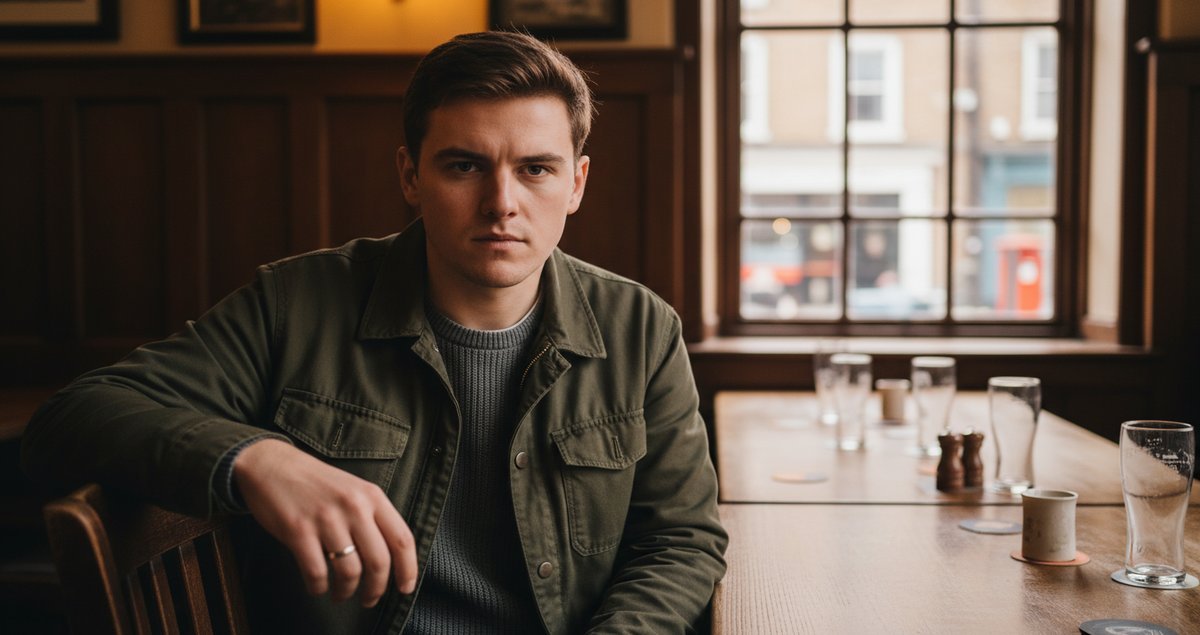
People underestimate chairs. They treat them as neutral furniture when in fact chairs are signal amplifiers. Move a person two seats left and you can turn an ally into an auditor a jokester into an interrupter and a quiet person into someone who is asked a question. This is not theatre trickery. It is the slow work of geometry memory and attention.
Why a seat is not just a seat
I used to think seating was trivial until I watched a stubborn town council meeting fracture because one councillor switched from the end of a rectangular table to the centre. In ten minutes the cadence of the debate changed the mood shifted and new microalliances formed. The small repositioning altered who made eye contact who was offered the floor and who became the unofficial moderator. There was nothing mystical about it. It was spatial politics.
Spatial politics explained bluntly
Your place at the table determines which faces you see most easily how many people you can address without turning and how often others will catch your eye. Those tiny interactions accumulate into speaking time. Speaking time accumulates into perceived authority. Perceived authority accumulates into influence. By the time dessert arrives the group has rewritten its own social script around one simple alteration.
Patterns that keep showing up
Across meeting rooms classrooms and dinner tables a few reliable patterns surface. People at the head of a rectangular table become de facto anchors. People seated beside anchors gain influence by association and those at corners fade into background noise. In rounded arrangements the centre becomes psychological real estate even when physically there is no head at all. These patterns are stubborn because they are reinforced every time someone leans in directs a glance or occupies a gap that others then orbit.
There are also subtler effects. Seats that allow for easy exit invite candidness because leaving is low cost. Seats that force a person to turn their back to a door increase tension. Proximity to a whiteboard or laptop singles out the person nearest it for tasks. None of these are absolute rules. They are probabilistic inclinations that nudge behaviour more often than we realise.
Evidence you can use
Researchers have tested these ideas in small group settings and found seating correlates with leadership emergence and speaking frequency. Workshop leaders and facilitators know this intuitively and arrange rooms accordingly. The evidence is not moralising. It is tactical. If you want a quieter honest discussion arrange for a circle. If you want a clear designated leader give them a seat where they can see everyone and be seen. Small environmental choices produce outsized social effects.
Good seating allows for quick unambiguous group formation.
Rob Fitzpatrick Author The Workshop Survival Guide.
How changing where you sit at a table alters group dynamics
That is the question some people ask cautiously as if moving a chair is a strategic act of mild sedition. It often is. When someone deliberately swaps seats they can reframe their role.
Move towards an organiser and you become a collaborator. Slide opposite a leader and you signal independence or opposition. Drift away and you are signalling disengagement. This is not theatre but signalling theory applied to the lunch hour. Your body position says what your words might not yet have formed.
Personal experiment
I once tested this in a monthly writers group. For three months I sat at the far corner and barely spoke. For the next three months I sat closer to the centre and asked a technical question at the start. I did not become smarter but my suggestions were attended to more often. I was noticed earlier. I received invitations to collaborate and a couple of people asked for specific feedback. The seat did not create expertise but it increased the probability that my voice would be treated as one worth listening to.
Why this unsettles people
Seating rearranges the invisible ledger of respect and risk. People comfortable with the status quo may feel slighted when others alter their positions because that shift interrupts implicit agreements. That is why some organisations ritualise seating arrangements. Rituals manufacture stability. But they also ossify power structures that might be worth contesting. Sitting somewhere new can be a gentle insurgency.
They didnt handle issues of equitability well. It was hard for them to overcome politeness norms to confront each other.
Ruth Wageman Professor of Organisational behaviour Dartmouth College.
The facilitator advantage (and responsibility)
Facilitators who understand seating can either reinforce hierarchy or flatten it. A skilled facilitator does not pretend chairs dont matter. They design the room according to a purpose. Want debate then arrange opposing seats. Want trust then create proximity pairings. And crucially if power imbalances are present the facilitator must intentionally offset them by giving spatial privileges to otherwise unheard voices.
Original insights few people talk about
First: temporal seating. Which chair someone chooses at the beginning of a meeting influences how they are treated later even if they move. Initial placement creates an expectation anchor that colours subsequent behaviour. Second: peripheral charisma. People on the edges may cultivate a different kind of influence by becoming observers. Their interventions are rare but often memorable precisely because they are unexpected. Third: body footprint. The small area someone occupies including bag coat and laptop creates perceived territoriality. More space suggests higher status even if the person is not speaking.
Small acts with cumulative power
Do not dismiss the cumulative effect of micro-decisions. A dozen small seat switches across months can change the culture of a group faster than any memo. People are more flexible with behaviour than with text. They respond to what they see and where they sit.
Practical moves to try
If you want to tilt a group towards collaboration sit beside likely allies not opposite them. If your aim is to disrupt politely choose a seat that gives you direct lines of sight to the whole room. If you are a leader trying to be less domineering place yourself in a less central position and watch how contributions multiply. These are tactics not moral absolutes. Use them with intention.
Some things must remain open. Not all groups respond the same. Personality history and context matter. A seat is an instrument not a guarantee.
Final thought
Sitting is a small public act that announces a private calculation. It reveals priorities and sometimes alters them. Next time you go into a meeting or pull up a chair at dinner notice the tiny economies that occur. Change one seat and the room rearranges itself to make sense of that choice. Often that new sense becomes the new normal.
Summary table
| Action | Typical effect on group dynamics |
|---|---|
| Sit at head or central focal point | Increases perceived authority and speaking time |
| Sit adjacent to an established leader | Gain influence by association and increased speaking opportunities |
| Sit opposite leader | Signals independence and can invite challenge |
| Sit at corner or periphery | Reduces participation but can make interventions more noticeable |
| Sit near exit or personal space | Enables candidness and allows low cost withdrawal |
| Initial placement at meeting start | Anchors future perceptions even after movement |
FAQ
Does switching seats actually change who leads the conversation
Sometimes. Changing seats alters attention pathways and eye contact patterns both of which strongly influence speaking opportunities. Leadership emergence is a complex interplay of status personality and context but seating nudges those variables. It raises the chance that someone will lead rather than creating leadership outright.
Are there cultural differences in how seating is read
Yes. Different cultures have varying norms about personal space and status symbols. In some contexts proximity to a host is a mark of respect in others interrupting or sitting close may be seen as rude. If you are operating across cultures observe first and adapt your seating tactics carefully.
How should a facilitator use seating to encourage quieter voices
Design the room to reduce hierarchy use circular or semi circular layouts rotate seating over time and intentionally seat quieter people in positions with clear sightlines rather than corners. You can also create structured turns so the environment supports participation instead of relying on the usual loudest voices.
Can seating changes backfire
Absolutely. Abrupt shifts can be read as manipulative and provoke resistance. If people feel their territory is being taken they may revert to defensive behaviours. Gentle transparent adjustments with an explanation often work better than strategic stealth.
Is this useful outside formal meetings
Yes. The same dynamics apply to family dinners study groups and social gatherings. Awareness of seating effects helps you decide where to sit when you want to be heard less noticed or simply more comfortable.
What if I have no control over seating
You still influence with posture gesture and small objects. Use body orientation to create eye contact minimize barriers on the table and time your interventions when attention naturally shifts. Even without chair choice you can shape interactions moment by moment.
