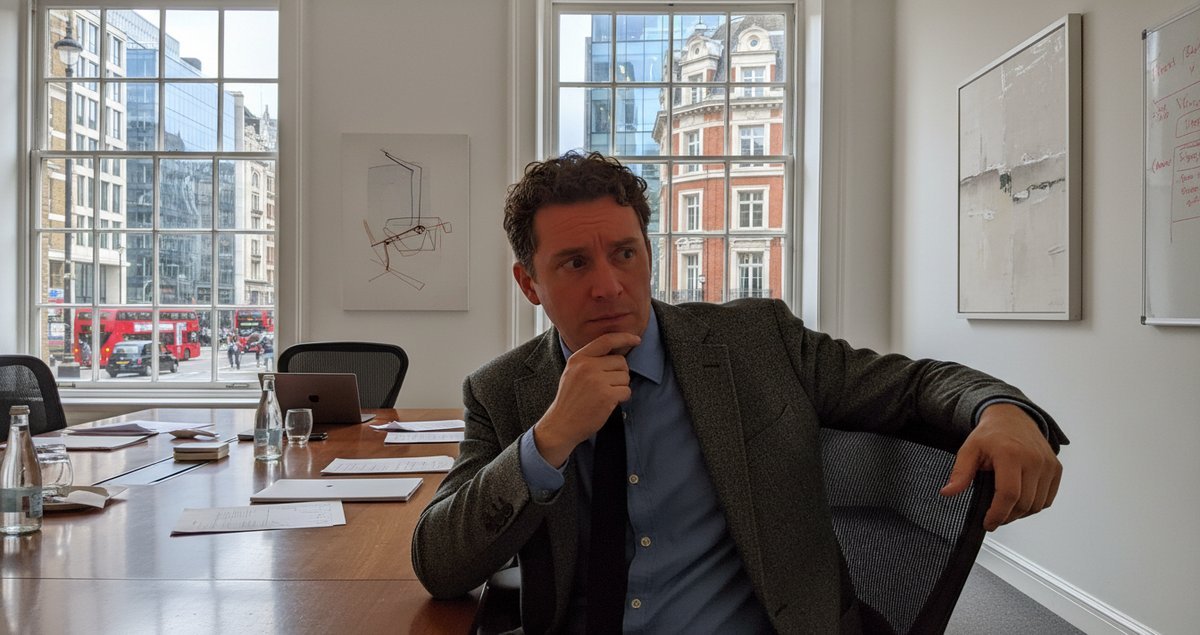
I once watched a five person meeting dissolve into a dozen private conversations after one person shifted a chair two places to the left. No raised voices. No dramatic gesture. Just a tiny reorientation of bodies and sightlines and suddenly alliances had new borders. The room smelled the same. The agenda stayed on the table. But the conversation changed its mind about who mattered.
Seating is not décor. It is grammar.
We treat chairs as passive props when they are really punctuation marks. Sit at the end of a rectangular table and you write sentences with authority. Take the middle of the long side and you act like punctuation that invites continuation. Move to the corner and you are a soft aside. These are not metaphors. There is a body of social science that shows seat position shifts who speaks more often who looks to whom and who gets credited for ideas.
What the studies say and what they miss
Academic work going back decades documents patterns. People in central visual positions speak more. Those across from one another tend to compete. Side by side seating often breeds collaboration. That is the skeleton. But scholars have mostly dissected seating as if people were identical grammar students. They measure who talked and for how long and then write conclusions. They rarely lean into the messy stuff I see in real rooms: microalliances that form from remembered glances rivalries that reawaken when two people meet eye to eye and the way someone’s movement seems to reanimate a previously quiet participant.
Those gaps matter. They mean designers and managers who apply academic prescriptions can get predictable results and surprising failures. A round table won’t magically erase hierarchy if the room has a single window that frames one seat in a halo of light. Humans read context before they read geometry.
The modest mechanics that steer a meeting
There are small mechanical truths that rarely get attention outside of ergonomic diagrams. Eye contact is a currency. Visual centrality gives someone an automatic feed of social cues. Proximity facilitates whispering and the passing of private notes. A seat that gives easy access to the whiteboard buys you agenda control because you can anchor ideas to a place that others keep looking at. None of this requires theatrical behaviour; it’s about affordances. What a seat allows you to do becomes what you do.
Our research shows that social spatial strategies designing spaces that encourage connection and give people different ways to interact are becoming more valuable and important in the workplace for both employees and employers.
Ruth Hynes Global Research Lead Project Development Services JLL
Hynes frame is useful because it pushes us beyond the notion that seating is just about fairness or comfort. It is a lever for social architecture. When you change where people sit you change the channels through which reputations flow and influence accumulates.
Seating as theatre and strategy
There are people who stage their seating as deliberate performance. An executive who consistently takes the far end of a boardroom is sending a message both subtle and deliberate. Equally potent are quiet strategic moves. Sliding one seat over to sit beside a sceptic immediately blurs a diagonal of opposition and creates a new zone of joint attention. The move is small but it can be decisive: you either become a foil or you start to share the same conversational territory.
How spaces connect to each other their size how many people use them what you can see from where you sit what activities happen there all of this affects how well people perform.
Adrian Davidson Global Design Advisory Lab Lead JLL
Davidson’s observation points at a design truth: the room is part of the team. You cannot fully separate what people say from the lines of sight they have. That means people arranging seats are making tactical choices about conversation outcomes whether they know it or not.
Why ordinary people should care
Because seating choices shift credit and career in ways that feel unfair until you notice them. Consider brainstorming sessions where the person who sits nearest the facilitator gets their idea picked. Or classrooms where students seated at the front get more feedback from the instructor and therefore more chances to improve. These patterns create cumulative advantage. Small positioning choices compound until they look like talent differences rather than artefacts of a room.
I believe this is where moral argument comes in. If organisations want equitable participation they must design intentionally. Random or default seating is not neutral. It privileges habits and incumbents. That is not just a design problem. It is an ethical one.
What to try if you want different outcomes
Swap seating mid meeting. Invite participants to change chairs after a round of updates. Block the ‘obvious’ seat with a small note. Assign seats to mix cliques. None of these are silver bullets. They are experiments. Expect surprises. Some moves will raise resistance. People are territorial. But the point is to use seat changes as interventions not as aesthetics.
And yes this is slightly manipulative. But most meeting architecture is manipulative in the service of goals. The choice is whether to be clumsy about it and blame chance when meetings go badly or be intentional and accept the responsibility of design.
What I still cannot explain fully
Why some people resist moving despite obvious advantages. Why a seat change that invigorates one meeting leaves another cold. Why cultural scripts that assign honour to particular seats persist even when the practical reason has vanished. These are not bugs in theory they are invitation points for further attention. I do not close these questions because they are easy. I leave them open because the right next step is experiment not preachy certainty.
Final provocation
Next time you walk into a meeting notice not the screen or the agenda but the empty chairs. Notice how bodies will choose, negotiate, and contest those spaces. The smallest move will ripple. If you want influence learn to see seating as a set of levers and not just a row of furniture. If you want fairness treat seating as policy rather than accident. And if you want to study human life pay attention to where people put their bottoms. There are truths there you will not hear in transcripts.
Summary table
| Insight | What it does | Action |
|---|---|---|
| Visual centrality | Increases speaking frequency and agenda control | Rotate central positions or assign them to less dominant members |
| Face to face across a table | Tends to amplify competition | Place potential collaborators side by side instead |
| Ends of rectangular tables | Signal authority and focus of attention | Use ends deliberately or prevent default occupation with a rule |
| Mid meeting seat swaps | Break entrenched conversational patterns | Plan one swap after opening remarks |
| Lighting and sightlines | Can override geometric seating norms | Audit room light and view before relying on table shape alone |
FAQ
Does moving where you sit really change who leads the conversation?
Yes it often does. Leadership in small groups is a flow not simply a title. Seats that provide comprehensive sight lines and easy access to shared materials increase opportunities to intervene and guide discussion. That gives occupants a practical advantage in emerging as de facto leaders.
Are round tables always better for equality?
Round tables reduce obvious end positions but do not guarantee fair participation. Architectural quirks lighting and social histories still create prominence. Equality requires policy and facilitation not just shape.
Can changing seating unfairly disadvantage someone?
It can. Random moves can exacerbate anxiety for some people or reduce accessibility. Any intervention should be mindful of individual needs and not deployed as a blunt instrument. The aim should be inclusion not theatrical disruption.
How often should teams rotate seats?
There is no fixed rule. Occasional rotation after major agenda phases or at the start of new projects helps prevent entrenched hierarchies. Frequent rotation can be disruptive though so balance experiment with stability.
Is there research backing these recommendations?
Yes there is a long tradition of social science on proxemics visual centrality and seating effects that consistently shows correlations between seat location and speaking time influence and perceived status. Those patterns are robust but they interact with culture personality and room design so they demand cautious application.
What should a moderator do when seating is already fixed?
A moderator can redistribute speaking turns use directed questions invite quiet members by name and create small breakouts that remix participants. Physical moves are powerful but facilitation can circumvent bad geometry.
