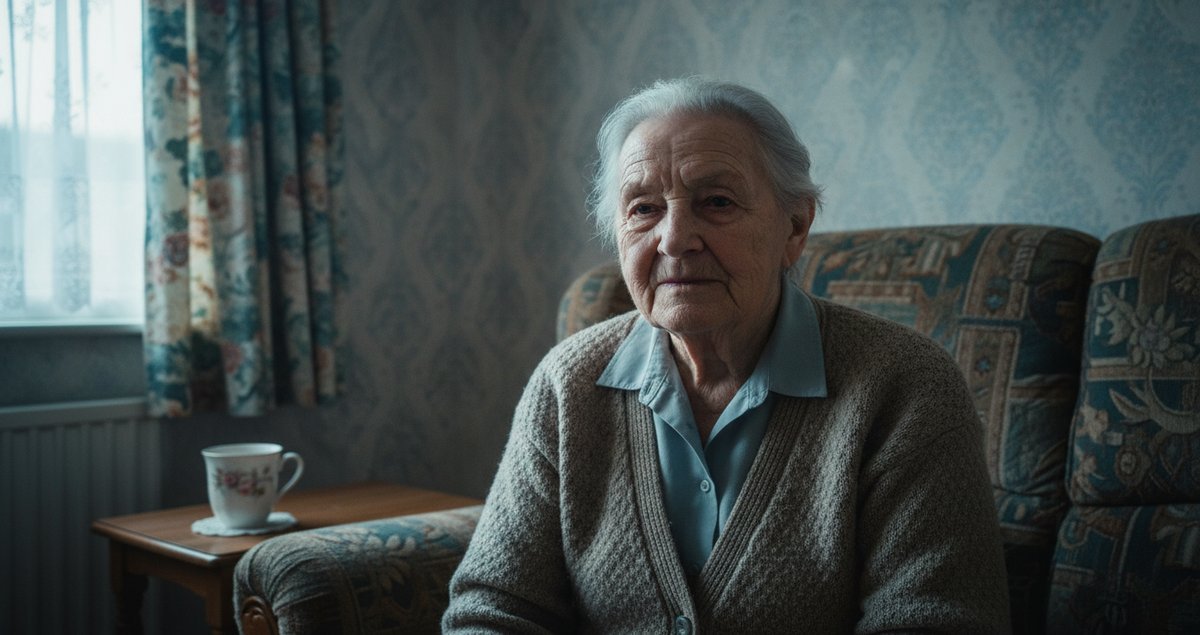
The idea that an entire generation became comfortable with silence sounds dramatic until you sit with the sound of an empty living room and realise the drama is understated. The 1960s and 1970s did not invent solitude but they rewired how people expected to encounter one another. This piece argues that silence from that era was not merely absence of noise but a social grammar learned in kitchens and council flats in Britain and in living rooms across the Western world. It is a grammar we still speak today whether we admit it or not.
The quiet scaffolding of modern solitude
Silence in those decades arrived bundled with change. Massive demographic shifts household composition changes in work patterns and the rise of private leisure created pauses where noise once lived. People were more mobile. Neighbourhoods shuffled. The rituals that used to force conversation dissolved or became optional. Where once someone knocked on a neighbour’s door and stayed for tea the same person might now park inside, step in, say hello and retreat to the privacy of their television set. That withdrawal was not always loud. It was structural.
Television and the new etiquette
Television did not just entertain; it taught people how to be together apart. Even in a shared room the eye could be fixed on the box and the other person could be effectively absent. This produced a novel social literacy: being physically proximate without having to perform warmth. It was economical. It allowed people to economise emotional labour in a way earlier generations found odd. I think of my own family home in the late 1970s where silence was a comfortable thing like a spare blanket folded on the sofa. We used it. We relied on it. We did not always question why it felt safe.
Politics and private interiors
There is a political dimension too. The upheavals of the 1960s shook faith in institutions. Public conversation about class race gender grew sharper and more contentious. For many ordinary people the easiest reaction was to withdraw into private space rather than engage. You can trace how distrust in public institutions and political fatigue made quiet an attractive default. It became a social defence. Not everyone chose it deliberately. Many were nudged there by exhaustion.
Economic transformations and social withdrawal
The 1970s carried economic shocks that reshaped domestic rhythms. As employment patterns shifted and communities fragmented the incidental conversations once held in factories clubs and market stalls began to evaporate. That decline in casual contact altered expectations. People learned to expect fewer interruptions to their attention. I do not mean to romanticise this. The silence of the period often masked loneliness and disconnection. But silence also offered a way to preserve dignity in tough conditions. If you cannot change the politics you can at least control your domestic room.
Culture taught restraint
Culturally the decades privileged a certain restraint. In Britain especially there was a strain of understatement an aesthetic of keeping matters private. Public confession was rarer. Where Americans sometimes turned soapboxes into civic practice British life protected silence as civility. This is not to say the era lacked passion. It had noisy protests and boisterous music. But on the day to day level the learned habit was less speech more measured interaction. That habit survives because habits are stubborn.
Expert observation
Without at first noticing we have been pulled apart from one another and from our communities over the last third of the century. Robert D. Putnam Professor of Public Policy Harvard University
The social scientist Robert Putnam’s work on social capital is often invoked when we trace these patterns. His observation about being pulled apart is not a nostalgic lament about a lost golden age. It is an empirical account of changing patterns of association which helps explain why silence became a default. When the rituals that once generated conversation weaken silence can expand to fill the void.
Silence as technique not temperament
It is tempting to treat the older generation’s calm as temperament: people were simply quieter then. Instead silence functioned as a technique. Families developed tacit rules about not oversharing about income arguments or political views. Employers expected forms of stoicism. Schoolrooms drilled into children a particular reserve. These repeated practices created a durable capacity to sit with quiet rather than immediately seek to fill it. It is a skill set that the generation handed down unevenly.
Practical echoes today
We live with the consequences. When later technologies offered new ways to connect the generation raised on quiet did not instantly embrace them. Phones and early social networks offered a different grammar of presence a persistent small noise. Some adapted others resisted. You see it in how older people treat smartphones as tools rather than social stages and how privacy settings are treated as inviolable. The silence that was bought for psychological breathing room becomes at times a resistance to public vulnerability.
Not all silence is benign
There is a risk of sugarcoating. Silence also concealed harm. In many households silence around difficult subjects prevented help being sought for abuse mental suffering or financial strain. Silence could be a social lubricant or a social adhesive holding painful things together. My own impatience with the era’s reticence is personal as much as analytic. I grew up watching stories delayed because people would not speak. The same quality that preserved privacy also kept wrongs unchallenged.
Why we should notice the inheritance
Understanding this inheritance matters because we still live amid its effects. The way older people respond to public life how families manage emotion and how neighbourhoods expect exchange all carry hints of that lull. If you want to rebuild looser conversational public life you cannot only change platforms or policy. You must change the grammar that made silence comfortable. That involves encouraging small ordinary impositions the kind that create neighbourly obligation but never feel like activism. I am not sentimental about this. I am impatient. We can do better than nostalgia or scolding.
Open endings are useful
Some patterns jolt into view briefly and then blur again. The lesson the 1960s and 1970s left us is ambiguous. Silence was protection and prison. It permitted contemplation and hid neglect. It taught respect but also taught reticence when action would have mattered. I find that unresolved quality useful. It resists tidy prescriptions. It asks us to sit with the discomfort of not knowing whether a quieter society is kinder or colder. That ambivalence is where new conversation might begin.
For those who grew up in that era silence is not an absence but a texture. For younger people silence sometimes reads as refusal. The two experiences can conflict in families. Bridging them requires curiosity a willingness to be mildly inconvenient and the blunt recognition that not every pause needs filling. Sometimes silence is the problem. Sometimes it is the solution. The point is to choose.
Summary table
| Theme | How the 1960s and 1970s contributed | Contemporary echo |
|---|---|---|
| Structural change | Mobility and new work patterns reduced everyday encounters | More private lives less incidental social contact |
| Media | Television normalised being together while apart | Smartphones continue the pattern with different form |
| Political fatigue | Contentious public debates encouraged withdrawal into private spaces | Polarised publics and selective engagement |
| Cultural norms | Valuing restraint made silence a social good | Generational tension over openness and privacy |
| Hidden costs | Silence sometimes concealed harm and unmet needs | Modern mental health discussions challenge that reticence |
FAQ
Did technology in the 1960s and 1970s cause the turn to silence?
Technology was a factor but not the whole story. Television provided a new form of private shared experience which normalised being physically present but mentally elsewhere. That combined with economic mobility changes and cultural norms to produce the habit. Technology made certain kinds of solitude easier but social and political shifts made them socially acceptable. It is the intersection of these forces rather than a single cause that matters.
Is this British experience unique?
The pattern is visible across much of the Western world though it expresses differently by country. In Britain the cultural preference for understatement magnified the effect. Other countries with different public customs saw variation in how silence functioned. But the structural drivers such as suburbanisation and media consumption were widespread which is why scholars often discuss this as a transatlantic phenomenon.
Are younger people less comfortable with silence?
Not uniformly. Many younger people seek silence deliberately as a respite from constant connectivity. Yet they also often lack the learned grammar of measured reserve that older generations have. Younger people may use silence as a curated aesthetic while older people treat it as a habit. That difference creates misreadings especially in families and workplaces.
Can society undo habits of silence?
Yes but it takes sustained small acts rather than grand projects. Building more opportunities for low stakes interaction redesigning public spaces and encouraging cultural practices that normalise speaking about everyday matters gradually rewires expectation. It is less about forcing talk and more about creating contexts where small talk is not precious but ordinary. Policy can help but culture does the heavy lifting.
How should families navigate intergenerational differences about silence?
Begin with curiosity. Ask older relatives about what silence meant to them and explain why younger people may want more discussion. Introduce gentle rituals like brief shared meals or a twenty minute conversation once a week. The goal is not to abolish silence but to make space so silence becomes a choice not a default that obscures problems.
There are no simple prescriptions here. The era taught a useful discipline and a costly reticence. Recognising both opens a path forward.
