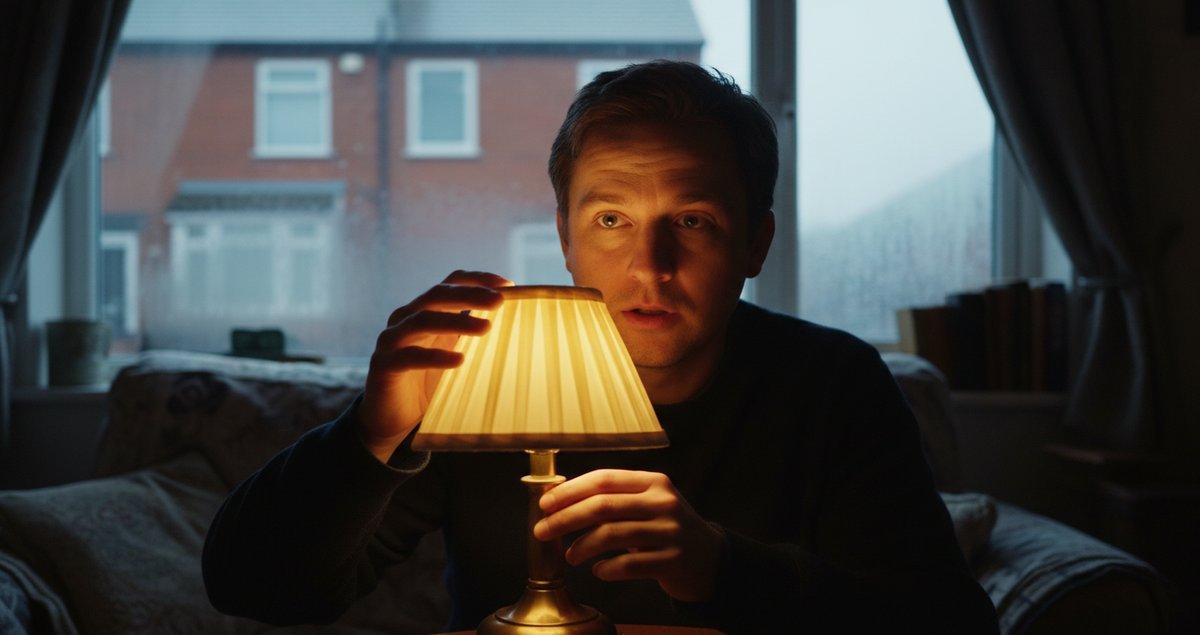
I used to think music was the quickest way to change the way a room felt. Put on a record and the air tightened or softened almost immediately. Then I watched a friend switch a single lamp and the room altered in a way music never managed. It was instantaneous not theatrical. The sensation felt less like mood being scored and more like an atmosphere being reprogrammed.
Light as a fast acting switch
Light arrives to our brain through pathways the eye uses for more than seeing. Those pathways chat directly with regions that process emotion and attention. That means a change in light can change how alert we are and how we feel in the same heartbeat. Researchers have shown that bright or blue shifted lighting can trigger measurable changes in brain activity within seconds. That speed is the key difference between lighting and music.
Why music feels slower
Music rides on memory and expectation. It needs time to build tension or to unspool a memory. A chord can alter heart rate but often it does so because your brain has been asked to listen and to remember. Lighting skips that ritual. A shift in illumination can alter neural firing in emotion related areas without asking permission. It can be blunt and honest in a way music rarely is.
When sunlight enters your eyes it signals to your brain to stop producing the hormone melatonin which normally makes you feel sleepy. As a result you feel more alert which can lift your mood. Mariana Figueiro director of the Light and Health Program at Icahn School of Medicine at Mount Sinai.
That quote is not a flourish. It describes a mechanism that explains why a pale morning can feel energising before your coffee has done anything. You cannot always say the same for a playlist. Playlists require curation. Light only requires presence.
Fast acting does not mean trivial
There is a tendency to treat lighting as decoration. Lamps are chosen for lampshades and wattage as an afterthought. That casualness is itself meaningful. Poorly timed or badly chosen light can nudge people toward fatigue irritability or sluggishness within an hour. Better lighting can lift attention and short term mood far more reliably than a carefully curated set of tracks. Not always. Context matters. But the potential is underused.
Subtle variations with outsized impact
Intensity colour and direction of light do different things. Cooler tones push alertness. Warmer tones encourage settling. But there is more nuance. Direction matters. Light from a high angle mimics midday sun and moves the nervous system toward wakefulness. Light grazing the face from a lower angle tends to feel intimate and can coax empathy. Small changes in brightness within a room can alter perceived personal space.
In public spaces designers worry about glare and in homes we worry about cosiness. Few of us think about how a bedside lamp set to a particular wattage will influence the way we argue with our partners. Yet it does. I have watched couples reach different conclusions in the same kitchen depending on whether the overhead was on or only the undercabinet lights were burning. That is not magic. It is physiology and context playing out at human scale.
Lighting wins on immediacy and consistency
Music asks for interpretation. Two people can listen to the same song and come away feeling different things. Lighting tends to operate more uniformly. A bright blue white source will push most people toward alertness. That means in workplaces and classrooms changing the lighting can be a blunt instrument for raising shared attention quickly. It is also a double edged sword. Constant bright light when people want to wind down creates tension. The advantage is predictability.
A short thought about control
Because light acts fast and broadly it is also a place where small acts of control have big returns. Dim a room and conversation changes. Bring up colour temperature and the same group becomes more awake. The act of adjusting a lamp is both practical and symbolic. People respond to the act of changing the light as much as to the light itself. That is something designers and hosts have known instinctively but seldom name aloud.
What current research adds that you probably have not heard
Studies speak about ipRGCs the intrinsically photosensitive retinal ganglion cells. Those neurons are not new on the block but the way they route light signals to emotion centres is becoming clearer. Functional imaging shows limbic responses to light within seconds. That is a shorter timescale than the average emotional arc evoked by a piece of music. The research also suggests that timing matters. Morning exposure to bright light has different effects from the same light at night. That gives lighting an affordance music does not have the same way making it both powerful and perilous.
Another point not often discussed in lifestyle pieces is the role of expectation mismatch. Bright clinical light in a cosy situation creates cognitive dissonance. Our brain registers that mismatch and the result can be unease. Designers use this to energise spaces deliberately. But most homes suffer from accidental mismatches often because lighting is left to a single overhead fixture that never quite fits any mood.
My non neutral take
I prefer to think of lighting as a public good in a domestic setting. It is the background policy that shapes how we talk eat and sleep. We spend far more time agonising over the right playlist than over the lamps that shape the conversation where that music plays. That is a kind of misplaced romanticism. If you want fast reliable mood change choose the light first then choose the music. Music will always be the flourish. Light does the plumbing.
A last reflective moment
Not everything needs to be solved. Sometimes we want music to linger and alter slowly. Sometimes the slowness is the point. But there are moments when speed matters. If you are hosting a meeting or trying to coax focus into a worn afternoon the lamp you choose will do more work than the song. Remember that next time you are tempted to curate yet another playlist. Adjust the light. See what happens. It will often surprise you.
| Idea | Essence |
|---|---|
| Speed | Light changes neural state within seconds while music typically takes longer. |
| Uniformity | Lighting tends to produce more consistent responses across people than music. |
| Control | Small lighting adjustments yield large perceived changes in atmosphere. |
| Timing | When you expose people to light affects outcomes as much as what light you use. |
| Design implication | Layer lighting rather than relying on a single source to match varied social needs. |
Frequently asked questions
How quickly will lighting change the mood of a room
Changes can be perceptible within seconds to minutes. Functional imaging studies show limbic changes within seconds of exposure to brighter or bluer light. Subjective experience may take a bit longer because mood also involves context memory and expectation. For practical purposes if you switch from a warm dim lamp to a cooler brighter source you will feel a shift within a few breaths and others in the room will notice soon after.
Is lighting more effective than music for group settings
Often yes. Lighting affects attention and alertness in a uniform way which makes it a good tool when you need everyone on the same page quickly. Music is excellent for shaping narrative and slow mood work but is less predictable across individuals. For shared tasks that demand a rapid change in focus lighting is usually the simpler more reliable choice.
Can lighting be used badly
Absolutely. The same qualities that make lighting powerful also make it easy to misuse. Overly bright blue white light late at night can create agitation or make it difficult to wind down. A single harsh overhead light in a home can produce unease during intimate conversations. Thoughtful layering avoids these pitfalls by allowing you to select different moods without forcing a single atmosphere on every situation.
How do timing and colour temperature interact
Morning light that is brighter and cooler tends to boost alertness and can help reset circadian timing. Evening exposure to cooler light can delay sleep and reduce readiness for rest. Warmer tones in the evening support winding down. The interplay is not absolute. Individual sensitivity varies. The key is to match light quality to the activity and to the time of day instead of using the same setting around the clock.
Should lighting decisions become more deliberate
Yes. Treat lighting as part of the toolkit for shaping behaviour rather than as mere decoration. Layer your lighting invest in a few adjustable sources and learn to change them according to need. If you are hosting or working paying attention to the light will repay you more often than swapping to another playlist.
