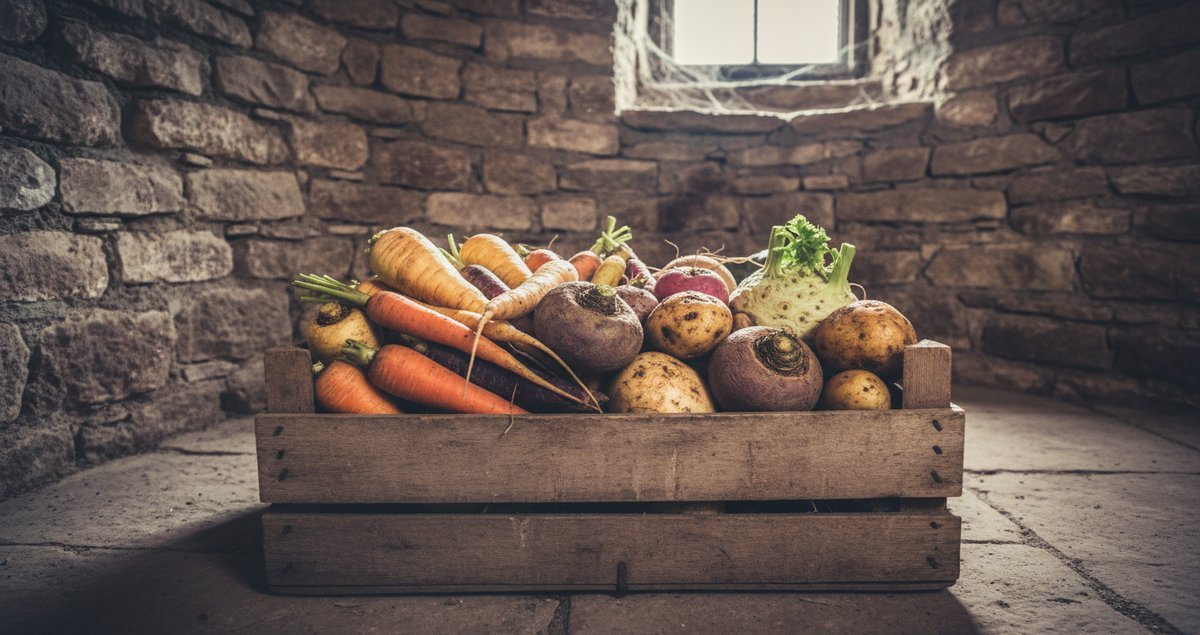
There is a strange hush around the old methods of food storage as if a generation of techniques were quietly shamed into obsolescence by the hum of the refrigerator. That hum freed kitchens from daily chores but it also narrowed the range of what people thought possible. The history of how food was stored before modern kitchens changed everything is not a museum exhibit. It is a living archive full of messy compromises clever craft and stubborn regional taste.
Root Cellars and the Politics of Cool
Digging a hole and calling it a refrigerator sounds rude until you stand inside a root cellar on a winter afternoon and feel the air that has not known sunlight in months. The root cellar was not merely a storage space. It was a seasonal contract between a household and the soil. People placed crops deliberately into darkness to delay their decline. Apples would hang for months with their skins shrivelling but their flesh keeping a memory of ripeness. Turnips and parsnips slept side by side like stubborn friends who refused to spoil.
I find root cellars intimate and a little disobedient. They demand planning and attention and they give back duration. There is a cultural arrogance in discarding them as primitive because they require more thought than pressing a button. The cellar preserved not just food but a relationship to time.
Why it lasted
Root cellars worked because they used the earth as a natural regulator. Temperature and humidity were controlled by architecture not electricity. Families adjusted layouts and packing strategies according to what they needed to keep through winter. The domestic choreography around the cellar created culinary habits that a fridge erased.
Ice Houses and the Long Luxury of Cold
Before refrigeration became a household staple cold was a commodity. Wealthy estates built ice houses to tuck blocks of winter ice away beneath earth or inside thick stone. The ice was not merely for cooling. It was political and social capital. Bringing out a bowl of iced fruit signalled resources and reach.
But there are subtler tales here. Ice houses show how a society can engineer scarcity into abundance and then sell that abundance back as novelty. The supply chain began with labour intensive harvesting and ended with a bowl at table. You can almost trace modern global logistics back to that nervous pride of offering chilled peaches in summer.
Fermentation Smoking Salting and the Taste of Necessity
Fermentation and salting did more than preserve. They transformed. Turned vegetables into something louder. Fish into something that announced itself in a room. The techniques carried flavours that anchored cultures. There is a misconception that these practices were merely survival tricks. In truth they were choices about flavour economy and storage psychology.
Communities who mastered fermentation or smokehouses shaped the diets of entire regions. Those methods required elaborate human judgment and repeated small acts of care. They also instituted social conventions about sharing and bartering preserved goods in lean months.
On preference and loss
The modern palette has been softened by uniform cold. When everything can be kept almost indefinitely tastes begin to erode. I think we lost something in the process. Not all of it was sad. Convenience buys you time. But the blandness of ubiquity is real and it has a history.
Clay Pots Ice Wells and Evaporative Ingeniousness
Across drier climates people relied on evaporation and ceramics. Submerged porous pots cooled by evaporation were not primitive hacks. They were tuned systems that required knowledge of humidity and sun and breeze. You do not get that understanding from a temperature gauge.
Equally fascinating are the dug wells and ice pits that lived under towns and estates. They were communal devices sometimes maintained by whole neighbourhoods. The social life around shared storage is an angle modern consumption has outsourced to corporate logistics.
“Just having that many fresh fruits and vegetables on hand able to just be in there without you thinking about them and for you to not think that’s exciting would have only been possible for a century a really limited amount of human history.”
Nicola Twilley Author of Frostbite How Refrigeration Changed Our Food Our Planet and Ourselves and cohost of Gastropod.
Ice Trade Cold Chains and the First Globalised Luxury
The nineteenth century ice trade reads like a prehistory of global refrigeration. Ice was harvested shipped and sold. It required packaging insulation and timing. It also shows early modern capitalism’s ability to convert a seasonal resource into an everyday expectation. That expectation is now an infrastructure we take for granted even as it strains energy systems worldwide.
I do not mean to be purely nostalgic. The cold enabled public health advances and the modern diet. But nostalgia is not the enemy of critique. The question is which old practices are worth reviving and which belonged to different risk environments that would not suit a modern city.
Hidden Practices Worth Borrowing
There are small ideas from prefridge storage that suit twenty first century living. Storing apples and root veg separately controlling humidity simple natural salting and fermenting small batch smoking and the choreography of cold trips to markets can reintroduce flavour discipline. None of this requires abandoning convenience. It asks only for modest shifts in attention.
We are at a peculiar moment where energy constraints make some traditional methods look less like eccentric hobbies and more like low energy alternatives. That said these practices are not universal remedies. They carry their own labour and their own waste patterns. Still the impulse to learn old methods is less about going backwards and more about diversifying techniques in a fragile system.
A partly open ending
What stays with me is how these systems shaped behaviour. The work of preserving food structured days and meals. The disappearance of that work reorganised time into other forms. We replaced a set of intuitive household skills with a technology that anonymised care. That replacement had many benefits but also a thinning effect on cultural knowledge.
I cannot prescribe which of the old methods you should resurrect. Some are clearly impractical for city flats. Others might be tiny acts that improve flavour and reduce waste. The important thing is to notice the gap the fridge made and to decide deliberately whether to fill it with machine comfort or renewed craft.
Summary Table
Root Cellars Earth insulated cool storage for root vegetables and apples lasting months. Sustains seasonal eating practices.
Ice Houses Estate level cold storage using packed ice. Historically a luxury that enabled chilled treats and early cold supply chains.
Fermentation Smoking Salting Techniques that alter food chemistry to preserve and to produce distinctive flavours. Require human skill and time.
Evaporative Cooling Clay Pots Low energy cooling using porous materials and airflow. Suited to dry climates and small scale storage.
Ice Trade and Cold Chains Industrialisation of cold enabled global transport and modern food systems but created dependency and energy demands.
FAQ
How did ordinary households keep milk and dairy without a fridge?
Milk was consumed quickly turned into butter or cheese or stored in cool cellars. In many places dairy was processed within a day of milking. Fermentation and churning were practical responses that transformed perishable liquids into more durable foodstuffs. This required a rhythm of production and processing that modern supply chains have largely replaced.
Were these methods safe?
Safety varied widely and was context dependent. Many traditional methods are microbial strategies that intentionally encourage beneficial organisms while excluding harmful ones. But success depended on local knowledge and consistent technique. Some old methods would be risky if attempted without learning the specifics from experienced practitioners.
Can these techniques reduce food waste today?
Yes in many cases. Techniques like proper cellar storage fermenting and mindful portioning can extend edible life and reduce the impulse to overbuy. The impact depends on household habits and available space. It is realistic to think of them as complementary tools not wholesale replacements.
Is any method better than refrigeration?
No single method is categorically superior. Refrigeration offers predictable control and public health benefits. Traditional methods offer resilience low energy alternatives and distinct flavours. The most sensible approach is pluralistic to use the right tool for the right food and situation.
Will reviving old methods change how we eat?
Potentially yes. Bringing back small scale preservation practices nudges people toward seasonality and a tolerance for stronger or more varied flavours. It also reshapes the domestic calendar and could reconnect food consumption to simpler rhythms of production.
