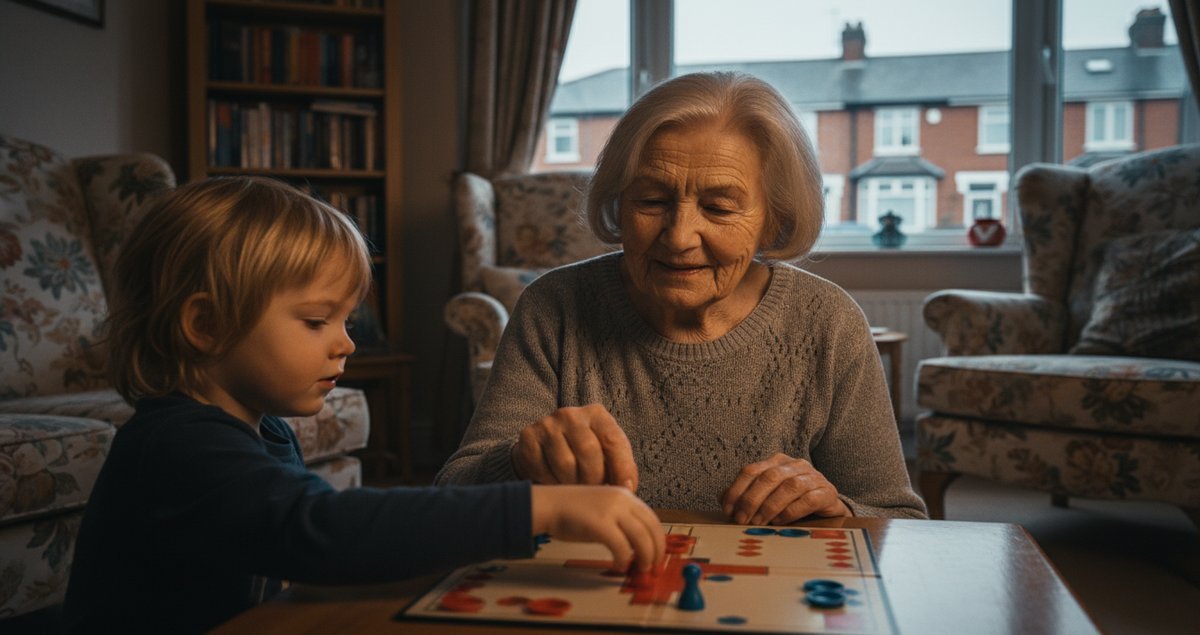
I remember a rainy Sunday in a small terraced house in Sheffield where my gran let my cousin win at dominoes. It was not about pity. It felt like a deliberate stitch in the messy fabric of growing up. That single win changed the way the child looked at himself for a week. He walked taller at school. He tried a new sport. I am not claiming this is a miracle cure. I am saying there is a pattern here that adults ignore at their peril.
Winning Is Practice For Being Brave
There is a tendency among grown ups to treat games as purely competitive rituals where only the best deserved the praise. That is a narrow view. Early wins offer children a rehearsal space for confidence. When an older person steps back and allows a child to taste victory they are not lying to the child. They are calibrating an emotional meter. The child learns what success feels like in their own body and begins to seek it again.
Not a shortcut to arrogance
Letting a child win is not a golden ticket to entitlement. If you let them win all the time the move loses meaning. The trick is selective generosity. The adult is not a puppet but a teacher in disguise. A careful adult lets a child feel achievement while still keeping the scaffolding of honest play. This is subtle and often messy. It requires judgement and sometimes a swift apology afterwards when you misread their mood.
What Child Psychology Actually Says
Psychologists and educators are not unanimous. One practical way to make sense of the debate is to separate outcome from experience. Young children need to experience success to develop a working sense of competence. This is not the same as sheltering them from failure. Rather it is about sequencing emotional experiences so the child can carry forward resilience alongside pride.
Adults may sometimes feel inclined to let children win all the time to avoid whining or meltdowns, but by not practicing losing, you are setting your child up for bigger failure down the road. Providing opportunities to lose and to win both matter. Amanda Gummer child psychologist founder The Good Play Guide.
This point about practice matters. Winning when the stakes are small and familiar supplies a store of positive sensations that a child can retrieve when things go harder. It is the same principle used in classrooms where teachers scaffold tasks so the learner meets success frequently enough to keep trying.
The Art Of The False Defeat And The Honest Win
There is a difference between staged wins and strategically eased contests. Staged wins are theatrical. You throw the game so dramatically no learning happens. Strategically eased contests are adaptive. The adult reduces complexity or makes an error that feels natural. This keeps the integrity of the activity intact while shifting the odds.
Older people often possess a unique capacity for this because they can hide competence under a veil of playfulness. When they let children win they can teach humility too. You can allow triumph to arrive without gloating. The child learns that victory does not have to be cruel to someone else.
When to stop letting them win
There is an age and a skill threshold. Very young children require more help to sense achievement. As they approach school age and beyond you should increase the challenge because true wins against a competent opponent are essential for authenticity. The transition from eased contests to full competition is itself a learning moment. If handled poorly it can feel like betrayal. Handled well it becomes a rite of passage.
Culture Matters More Than We Admit
In Britain we have a confusing relationship with modesty and praise. Many families oscillate between stiff upper lip reserve and enthusiastic cheerleading. Letting a child win sits awkwardly between those poles. It demands the adult be neither indifferent nor performatively fulsome. It asks for quiet intentionality.
What I have seen in older relatives is less an urge to condescend than an appetite for connection. They are trading a moment of superiority for the longer currency of relationship. That exchange often yields more than the instant thrill of victory.
Expert Perspectives And The Evidence That Matters
Researchers have examined play and family dynamics for decades and come up with nuanced positions. Some argue that always letting children win removes the truth of competition and robs them of necessary life lessons. Others say occasional wins at home build identity and reduce fear of trying. The evidence is less about rigid rules and more about context.
If you get the role modelling right children will soon learn that the sting of losing is absolutely nothing to be afraid of and that winning earned fairness and decision making matters. Lucy Rycroft Smith chief executive National Numeracy.
Both quotes point to the same practical conclusion. Foster wins and losses in a controlled environment so the child learns not just to celebrate victory but to process defeat. That is the developmental sweet spot.
Some Original Observations You Won’t Read In A Parenting Pamphlet
Older adults are often the least anxious players in the room because they have less to prove. This unburdened stance creates a space where a child can experiment with identity. When a grandparent lets a child win they are also handing over permission to be momentarily superior. That permission can be subversive in a good way. It rewrites the narrative where the child is primarily a learner into one where they can be the doer.
Another thing I notice is that when adults let children win they often reveal their own vulnerabilities. They expose that they can see the child differently than they see themselves. That exchange can be liberating for both parties. The adult practices softness. The child receives recognition. Both become more human.
Practical Guide Without Turning Into A Rules Manual
Start with games that allow clear micro victories. Keep celebrations low key and linked to effort rather than fate. Normalize a quick reflection after play where everyone says one thing they tried. Transition wins into real challenge within a week or two. If you miscalculate and the child feels patronised apologise and play again honestly. Trust is the real prize here.
When it goes wrong
Sometimes letting a child win backfires. They might suspect theatre or become dependent on assisted triumphs. Confront this by openly discussing how play will change next time. Honesty heals most of the damage. A short admission like I was being softer on you today will make the next loss less of a shock.
Closing Thought That Refuses To Nicely Conclude
I favour letting older people let children win. It is a small inversion of normal power. It is not a permanent strategy nor a moral concession. It is a deliberate lesson in the grammar of confidence. But it is also a human gesture that is sometimes more about solace than pedagogy. Which brings me to the stubborn truth I refuse to tidy up here: there is no one right way to raise courage. There are only practices that feel honest in the moment.
Summary Table
| Idea | Why it matters | How to do it |
|---|---|---|
| Selective wins | Provides children with embodied experience of success | Ease complexity or make natural errors rather than dramatise defeat |
| Balance with real challenge | Preserves authenticity of future wins | Increase difficulty gradually and explain changes |
| Reflective closure | Encourages learning from both wins and losses | End play with a brief comment on what was tried and learned |
| Role modelling | Shows humility and emotional regulation | Adults avoid gloating and show respect for effort |
Frequently Asked Questions
Should I always let my child win when they are upset?
Not always. Emotional states change the usefulness of a win. If a child is already fragile a short lived victory can help them recalibrate enough to try again. But habitual victories to soothe every upset create a dependency. It is better to ask the child what they need and sometimes offer a low stakes success while also teaching coping with disappointment.
How do I ensure a win feels genuine?
Make the win plausible. Adjust the game subtly by reducing difficulty or making a small error that looks authentic. Praise specific actions rather than the result. Saying I noticed how you planned that move is more potent than You are brilliant. The former links the feeling of success to their skill.
Does letting them win affect their ability to lose with others?
When done in balance it improves that ability. Early wins build a baseline of competence so that losing later does not provoke catastrophic reactions. But if home is the only place they win, encountering honest opponents outside can be destabilising. That is why transition to real competition is essential.
Is this approach appropriate across cultures and families?
Families and cultures differ in how they value modesty competition and praise. The method can be adapted to local norms. The key is intentionality. If the practice aligns with broader values and is explained within the family narrative it is far more likely to succeed than a one off staged event.
What role do older relatives specifically play?
Older relatives often have less to prove and more patience. They can model calmness and provide a safe context for wins. Their role is not to manipulate but to offer moments where the child can be the protagonist. That can be transformative because it changes the everyday script where the adult is always the authority.
Letting children win is not a contradiction of good parenting. It is a textured technique that asks adults to be strategic caretakers of a childs inner sense of possibility. It is one tool among many but one that older people have always practiced intuitively. Perhaps it is time we listened to that quiet wisdom and used it with more honesty and less fear.
