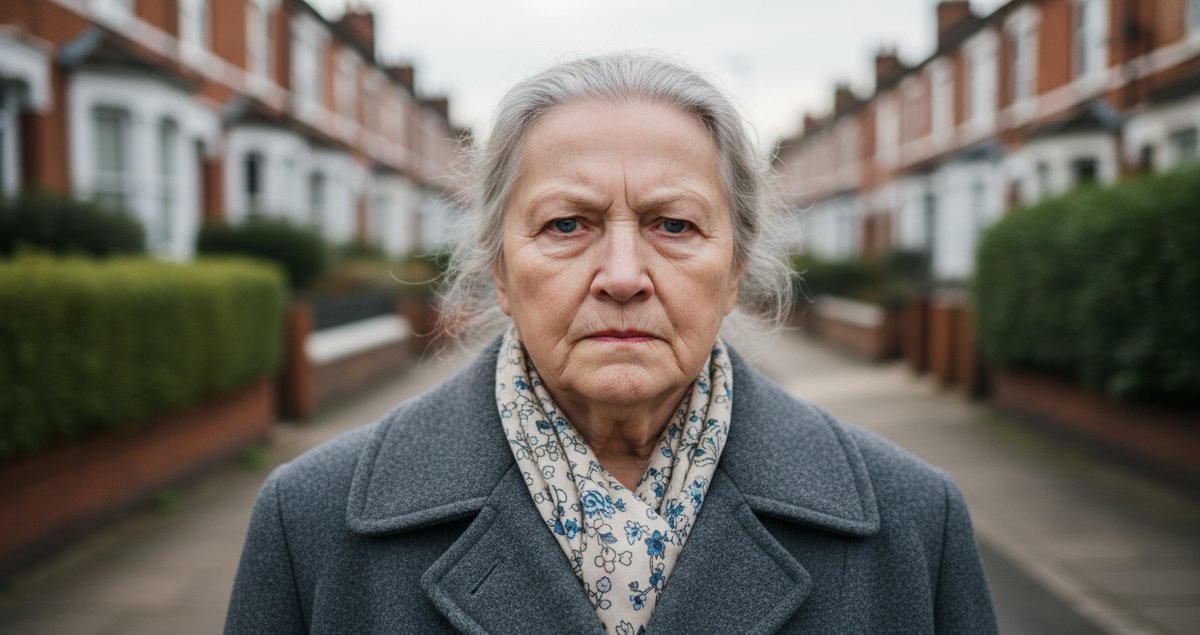
There is a kind of impatience that arrives with age. Not the ranting impatient kind. A quieter impatience that cuts through dithering and invites a decision to land. If you have watched relatives, neighbours, or colleagues in their seventies steer an argument to a close you have likely felt it too a small irresistible tug that makes the room shift. They do not always need to persuade. Often they simply decide and move on. And oddly enough the labs and journals of psychology have begun to recognise what many older people have known for decades.
Older adults and the appetite for closure
People in their seventies often treat conflict as a thing to be resolved not endlessly debated. That is not moralising it is observational. Where a twenty something might circle options, soliciting views and postponing, someone in their seventies will frequently prefer a clean cut resolution even at the cost of a slightly imperfect outcome. The behaviour is not simply stubbornness. It emerges from priorities that have been reshaped by time perception habit and experience.
What the data actually say
Recent meta analytic work pooling thousands of participants finds a subtle but consistent pattern: older adults are not more avoidant in the sense of shirking responsibility. Instead they show lower tendencies toward total decision avoidance and a greater readiness to accept responsibility for a quick outcome. The effect size is modest but statistically reliable and it challenges the caricature that age equals indecision. The message is not dramatic revelation but incremental correction.
Why decisiveness feels like conflict closure to older people
First an unglamorous point a lot of older people have been through messy protracted disputes and observed the long cost of drawn out disagreement. They have seen small slights calcify into grudges. They have watched families and organisations waste time. Those experiences feed a practical intolerance for prolonging conflict.
Second there is perspective. Time horizons change with age. When the future looks shorter certain trade offs shift. Younger people often keep options open because imagined time is abundant. Older people deprioritise the unused possibility of perfect solutions. This does not make their choices shallow. It makes them calibrated differently.
Emotional economy and decision speed
There is also an emotional economy at play. After decades of negotiating human friction many older individuals prefer to spend energy on relationships and projects that matter rather than on cycles of argument. Decisiveness becomes a tool to conserve psychological resources. That tool can be blunt and sometimes unfair but it is efficient.
Psychology explains but does not excuse
We should be careful not to romanticise decisiveness in later life. Quick decisions can shortcut necessary nuance. They can silence younger voices. They can be used to mask avoidance of difficult feelings under the cover of efficient closure. Still the scientific literature is clear that older adults often shift away from deferral toward action when a decision matters little enough to risk an imperfect choice and important enough to stop consuming time.
“What really stood out in this research is that leadership isn’t just about pushing through adversity it’s about how you think about it.” Walter J. Sowden Lecturer in Management and Organizations Ross School of Business University of Michigan
That observation from a study on temporal perspective and leadership is relevant here because the same mental stance that lets someone suspend short term urgencies to see a decade long arc also supports getting to a point and moving on. The mechanism is cognitive self distancing a subtle habit of placing a present conflict in a broader timeline so it loses the power to derail you.
Experience trumps speed in unusual ways
Years of making decisions mean older people often possess fast heuristics that younger adults lack. These are not guesses plucked from thin air. They are compressed pattern recognitions honed by repetition. In many social conflicts the same fault lines — wounded pride fear of exposure scarcity of status — recur. Recognising the familiar cuts the deliberation time dramatically. That is why some septuagenarians make choices that seem like lightning to others and like common sense in hindsight.
When decisiveness backfires
There are contexts where the older person’s preference for closure becomes a liability. When stakes are high for others or when the decision maker lacks domain specific knowledge speed can be destructive. Decisiveness mixed with overconfidence or outdated assumptions creates brittle outcomes. The point is not to declare any age bracket universally wise. It is to say that the style of decisiveness common in later life has both strengths and real limits.
My own runs with this tendency
I have watched both the useful and the ugly versions of this tendency. I remember a family meeting where a relative in his seventies ended a simmering argument simply by proposing a modest gesture of apology and a practical next step. The argument dissolved. Later at work I have seen a senior person close down an important discussion because it took him out of his preferred groove. You cannot reduce these choices to one formula. Still the pattern recurs often enough to be meaningful.
“The brief about older people is that theyre all kind of the same that theyre doddering and that ageing is this steady downwards slope. That view is a great misunderstanding.” Laura L Carstensen Founding Director Stanford Center on Longevity Stanford University
Carstensen is reminding us that ageing produces both losses and gains. The decisiveness that resolves conflicts faster is one of the gains that deserves our attention. It is not universal but it is common.
Practical takeaways without platitudes
If you are younger and irritated by older decisiveness try translating impatience into curiosity. Ask what pattern they think is repeating. Ask how they have seen a similar dispute end before you accept the closure. If you are older and prone to hurry decisions into being ask whether your speed is protecting a relationship or simply protecting your comfort. These are small practices not prescriptions.
What remains unsettled
Empirical work still leaves open questions; how much of the effect is cohort driven how much is biology and how much is social role. There will be variations across cultures and personalities. I suspect that in tightly hierarchical settings decisiveness in older age looks different than in egalitarian spaces. The conversation is ongoing and that is where the most interesting discoveries will come.
Summary table synthesising key ideas
| Observation | Why it matters |
|---|---|
| Older adults often prefer faster closure | Reduces time spent in conflict and conserves emotional energy |
| Time perspective shifts priorities | Shorter perceived future makes imperfect decisions more acceptable |
| Experience supplies fast heuristics | Pattern recognition speeds decisions in recurring disputes |
| Decisiveness can silence others | Speed risks ignoring stakeholders and new information |
| Psychology supports but qualifies the claim | Meta analyses show modest effects and important moderators exist |
FAQ
Does being decisive mean older people are always right?
No. Decisiveness is a style not a guarantee of correctness. It reflects a trade off between time spent and certainty gained. In contexts where long term technical expertise or updated information matters speed may be harmful. The research shows a tendency toward less avoidance not infallible judgment. Treat decisiveness as a feature to interrogate not a proof of truth.
Are all people in their seventies more decisive?
Not all of them. There are large individual differences. Personality health cognitive status and cultural background all influence decision style. The literature identifies tendencies across groups rather than iron laws for every person. Expect exceptions.
How should younger people respond when an older relative pushes for quick closure?
Balance respect for experience with a request for time when needed. Ask what outcome the older person wants to prevent and whether a brief pause might allow important information to surface. Framing the pause as a short procedural step rather than a challenge to authority often works better than confrontation.
Does this pattern vary across cultures?
Yes. Cultural norms about authority interchange and social harmony shape whether decisiveness is prized tolerated or resisted. Some societies value collective deliberation across ages more strongly which can change how decisiveness is used and received. Research indicates moderation by cultural factors so generalisations should be cautious.
Can decisiveness be learned later in life?
Elements of the stance such as temporal perspective taking and pattern recognition can be cultivated. Training that emphasises seeing a problem in a broader timeline or rehearsing simple closure routines can help. That said the accumulation of experience remains a major contributor and cannot be instantly replicated.
Is it better to prefer closure or to keep options open?
There is no universal better. The value depends on context. In low stakes interpersonal tensions closure often yields better long term relationships. In high stakes uncertain technical choices slowing down is usually wiser. The most adaptive people shift between styles rather than hold rigidly to one.
We are not obliged to like every decisive older person we meet. But we should stop assuming decisiveness in the seventies is merely obstinacy. Often it is judgement refined by experience and by a lived recalibration of what deserves our time. That is not the end of the story. It is only the part that begins to explain why many older adults believe decisiveness ends conflicts faster. Psychology agrees in tone if not in absolutism.
