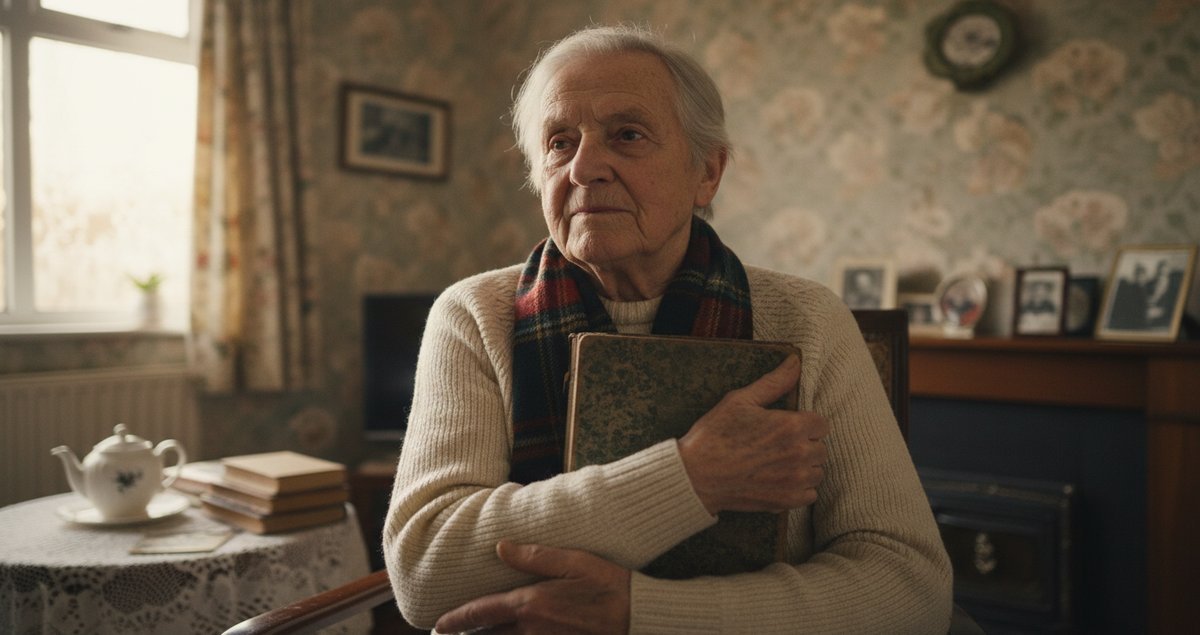
There is a quiet particularity to saying out loud that you grew up in the 1960s and 1970s without a digital audience. It sounds arch because everyone now imagines their life as content waiting to be recorded. But back then our stories were not designed for validation. They were private economies of memory and mischief and embarrassment that rarely left the rooms where they first happened.
Small stages and private reputations
When I say small stages I mean front gardens and scout huts and schoolyards where reputations rose and fell on the strength of an afternoon performance. These reputations were local in a way that feels almost foreign now. You could be brilliantly ridiculous in the village and it would matter very little in the next town over. There was no archive of your worst jokes or worst haircut that would follow you into job interviews. You learned to repair a reputation with recalibration not by deleting but by living differently.
The mechanics of attention before screens
Attention came as faces turned toward you or away. It arrived in the silence after a joke instead of in likes. It was measured by whether someone remembered the exact wrong line you delivered last Wednesday. That sort of attention trained you to be nimble in conversation and to carry a sense of timing that mattered more than timing a post to catch rush hour. People I knew developed an ability to notice when someone else needed to be included. That skill did not emerge from an algorithm. It emerged from scarcity of audience. When people mattered you had to summon them in person.
Loneliness without a crowd
There is a persistent myth that absence of constant connection equals solitude that dulls the soul. That is not my memory. We were alone but not invisible. Loneliness then had a texture not a feed. You could be bored for an entire afternoon and still learn how to sit with yourself. I admit I feel faintly evangelical about that capacity. We learned to entertain ourselves by making things absurdly elaborate. Stories stretched, details accreted. The lies we told each other were often kindnesses. They kept people from feeling small in a way a cursory thumbs up now cannot.
What adults taught us without trying
Adults taught through chores and examples that were not broadcast. My mother corrected my manners at the window of a bus not on a camera. My father tutored me in the mechanics of a lawnmower while the rest of the street went about its business. These lessons were private and therefore ineffable. They had the odd advantage of being both raw and forgiving. You could miserable your way through a lesson and no one would screenshot it. You could fail spectacularly and still reenter the circle because human memory was forgiving in ways algorithms are not.
Play without an audience is not always purer
Do not mistake nostalgia for rose tinted rationality. Growing up without a digital audience had real harms. Gossip could be vicious precisely because it could be confined and repeated with liturgical cruelty. Secrets circulated for far longer in the absence of mass dispersal because they were transmitted by word. Bullying had a subterranean quality. There were sharp exclusions that left marks. My judgement is clear on this point we did not have a better childhood simply because it was offline. We had different compromises.
Memory as a physical thing
One of the things I miss is the way memory was material. Photographs existed as objects. You had to physically walk to an album. Labels were handwritten. The pleasure of discovering a photograph was tactile. It forced conversation because you had to stand there with the image in your hands and ask questions. It created small rituals around recollection. Compare that to an endless scroll where an image competes with the next interruption. Material memory encouraged depth. It required you to stop.
Authority without performance metrics
Institutions felt more authoritative not because they were wiser but because they were proximate. Teachers, librarians, local journalists shaped public knowledge by proximity and personality. Their authority was personal. If a teacher disliked you that mattered for the year not in perpetuity because that view was local. You could rebuild trust across different institutions and spaces. That modularity seems fragile now but it produced a plurality of possible selves. One could be a good son at home and a terrible guitarist in a band and still be neither entirely judged nor entirely defined.
Children contend with parents who are physically close tantalizingly so but mentally elsewhere.
Sherry Turkle Professor of the Social Studies of Science and Technology Massachusetts Institute of Technology.
Their observation is blunt because it names how proximity is not the same as presence. It is a useful correction to those of us who sentimentalise the pre digital. Presence then was messy but it was less performative. There was more room for not being perfect because there were fewer witnesses.
Creativity without metrics
We created because we had to. Music scenes formed organically in basements and church halls because there was no instant distribution. If you were part of a band you toured a small circuit of venues until someone noticed or you simply burned out. That absence of feedback loops meant fewer manufactured careers and more idiosyncratic artistry. Some of that was accidental. Some of it was grim. The barrier to entry was high in terms of patience. You either loved playing for the one indifferent crowd or you found another way to be turned on by craft itself.
The costs of not being seen
Not being seen can also mean not being helped. A generation without a platform had its stories neglected. There is a latent injustice in the archival record because fewer marginal voices were preserved. The same quiet that made intimacy possible also erased testimonies. I argue that memory is political not just personal. Whose stories were kept matters. We must admit that the absence of a digital audience meant both privacy and erasure.
Why this matters now
Reflecting on growing up in the 1960s and 1970s without a digital audience helps us ask better questions about attention and value. We do not need to elevate one era above another. We need to understand what was lost and what was gained. My non neutral stance is this. The skills of attention active listening and the capacity for private reflection are worth recovering. They are not incompatible with being online. In fact they may be the only bulwarks against the tyranny of constant performance.
Open ended does not mean unfixable
Many of our cultural habits are reversible. Camps where children are offline show measurable changes in empathy. Communities that prioritise unshared time can rebuild other literacies. To say we should learn from the pre digital does not mean we should return to it wholesale. It means selectively reclaiming the virtues that made particular forms of human connection possible.
There is an odd comfort in knowing that some stories were never meant for a crowd. They were made for the shape of real rooms and the odd emphatic laugh that convinced you you were seen even if you were not famous. That kind of invisibility is worth defending as a choice rather than imagining it as a default that must be recovered in full.
Summary table
| Theme | What it meant | Contemporary lesson |
|---|---|---|
| Local reputation | Reputation formed by proximity and conversation | Value repair and nuance over permanent judgement |
| Attention | Attention was embodied and scarce | Prioritise presence over performative metrics |
| Memory | Memories were material and ritualised | Create physical or bounded practices for recollection |
| Creativity | Creation required patience and local circuits | Resist instant feedback loops that flatten craft |
| Visibility | Privacy coexisted with erasure | Actively preserve marginal voices in archives |
FAQ
How did growing up without a digital audience shape friendships?
Friendships were organised around shared spaces not shared feeds. You learned tolerances and depths because you saw people repeatedly in the same contexts. That repetition breeds nuance. You discover foibles slowly and you are given room to change. That dynamic can still be cultivated by scheduling recurring analogue interactions and insisting that some conversations remain unscreened and unrecorded.
Was privacy better in the 1960s and 1970s?
Privacy then was different. It felt thicker because so much lived in physical forms. But privacy also protected power imbalances and enabled silence around abuse. The lack of mass documentation meant both sanctuary and concealment. The lesson is to design privacy that protects without silencing legitimate testimony.
Can we learn anything practical from that era for today?
Yes. Practices such as deliberate unshared time collective rituals and physical archives foster different cognitive habits. These practices build patience and depth. They do not require rejecting digital life. They require curating it. The practical task is to reintroduce friction that interrupts constant performance and protects private development.
Did growing up without a digital audience make people more resilient?
It made some kinds of resilience more common like tolerance for boredom and capacity for self directed play. It did not create universal resilience and often left people without the means to amplify their voices when needed. Resilience then was particular not universal and that distinction matters when we romanticise any past.
How should we remember the era without becoming nostalgic in a harmful way?
Remember by distinguishing between salvageable habits and obsolete structures. Honour the skills of attention and private recollection without erasing the injustices and exclusions that also existed. Use memory as a tool to design institutions that combine the best of both worlds.
