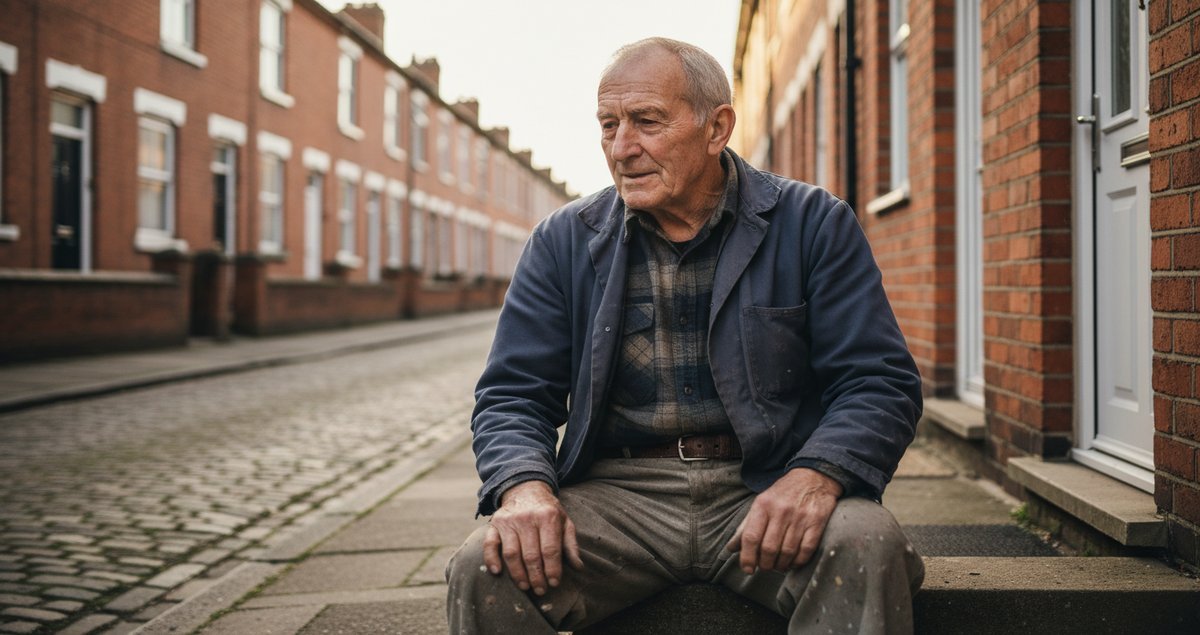
We are told to be faster. Faster at work. Faster at being happy. Faster at becoming what the algorithm decides is desirable. But if you look back properly at the 1960s and 1970s you see a different tempo of life and an argument for patience that is not sentimental or quaint. It was pragmatic. It worked in ways that quiet slogging and careful waiting still do today. This is not a paean to nostalgia. It is an attempt to rescue a practical habit that the present often misnames as passivity.
How patience showed up in ordinary life then
A visit to any British high street in the 60s and 70s reveals how patience was woven into public routines. People queued without a phone lighting up their pockets. Tradespeople cultivated reputation through repeat work rather than instant reviews. Neighborhoods were networks where trust accrued slowly, not something you claimed on a profile. These are mundane facts but they explain an important point. Patience was a medium for cumulative advantage. The small, repeated acts of being reliable counted toward larger outcomes.
Not waiting as denial but as a strategy
There is a difference between delaying because you are inert and delaying because you expect compound returns. The latter was common. Musicians forged careers by playing small gigs for years. Engineers and scientists often spent long stretches refining ideas outside headlines. That kind of delay accepted friction. It used friction as a test rather than an obstacle to be erased immediately. The payoff was often unpredictable but meaningful. Careers, movements, and even business practices from that era show a tolerance for experiments that take time.
Some of this rings true for me personally. My first proper piece of longform writing took three years to find its audience. The work felt slow then. Years later it felt like a deliberate seasoning. If we tell ourselves that every delay is wasted time we lose the capacity to incubate. Incubation matters.
What cultural patience looked like in art and politics
Artists and activists of the 60s and 70s were impatient in their ideals and patient in their methods. A campaign would last seasons. A song might not be played widely until an entire underground network had moved it along. That patient scaffolding produced cultural artifacts that feel deep because they were given time to settle. That depth is not romantic. It is the result of orientation toward durability rather than instant amplification.
Intentional slowness as influence
There is a deliberate slowness here that is often missing from modern influence strategies. The 60s and 70s show us techniques not often named as such: persistence without performative urgency and relationships cultivated across years not for transactional gain but because they mattered. There was a sense that a cause or a craft could be worked on like a garden rather than like a marketing campaign. That sensibility pays dividends in later stability and trust.
Why patient practice outperforms frantic acceleration
When folks speak of patience today they sometimes reduce it to passive endurance. That is an insult to the concept. Real patience is disciplined iteration. It means showing up when there is little visible reward and refining what you do so that when opportunity arrives you are recognisably better. Contemporary psychology talks about grit and long term engagement. Angela Duckworth summarizes this with clarity when she writes about the relationship between passion and perseverance. Her research frames patience not as resignation but as ongoing investment in a chosen trajectory.
Grit is passion and perseverance for very long term goals. Angela Duckworth Professor of Psychology University of Pennsylvania.
That encapsulates the 60s and 70s approach. People did deep work for reasons that outlasted trend cycles. The payoff was not guaranteed yet the mode of working made success more likely over time.
Where modern impatience misleads
Now, impatience is often sold as efficiency. But chasing speed can flatten complexity. If everything must move in short bursts then depth is starved. You get lots of appearances but thin foundations. The 60s and 70s teach a stubborn alternative: build slowly and you get fewer flash wins but more durable systems. That is not universally superior. There are times when speed wins. Still the one trick that era offers and we seem to forget is learning to tolerate ambiguous intervals between effort and outcome.
Practical tactics borrowed from the past that still work
There are some specific moves you can borrow. First, design work with a horizon that allows for recovery and rework. Second, tie your daily tasks to a long arc so that a small routine compounds. Third, treat relationships as capital and invest in them regardless of immediate utility. These are not revolutionary on their face. Their effect is often invisible in the short run which is why they get undervalued.
I will be blunt. Not every historic example is worth copying. Some behaviors from that time were exclusionary and slow for bad reasons. But extracting the intentional patience that supported learning and resilience is both possible and useful. You do not need to mimic fashions or social norms to benefit from the work ethic and the craft patience displayed.
Counterintuitive advantage of slow decision windows
One thing I rarely hear mentioned is that slower decision windows create better tension management. When you delay a nonurgent decision you allow a network to surface objections and minor fixes before a small problem becomes structural. This means fewer emergency fixes and more predictable progress. It also trains people to handle setbacks without collapsing into performative panic. That cultural skill is underrated in boards and creative teams alike.
What feels risky about reclaiming patience now
There is a real risk in advocating slow work. It can be coopted into excuses for inaction. Also the market sometimes punishes slowness in cruel ways. You must be strategic. Patience is not a universal virtue to be applied blindly. It is a tool to be calibrated. And it requires a discipline to distinguish between procrastination and thoughtful delay.
It helps to be honest about values. If your priority is novelty you might accept faster cycles. If it is legacy work that requires iteration then patience becomes an asset not a liability. The 60s and 70s taught this by accident in some cases and by design in others. We can choose today to borrow the parts that build endurance and discard the parts that were harmful.
Where this leaves us
Patience from that era is not aesthetic. It is a technique for producing work that lasts. If you feel impatient read this not as a moral failing but as a signal to re-evaluate your time horizon. Can you live with uncertainty long enough for iteration to do its work? If you cannot, start with small bets where patience matters. Learn the discipline of delayed appraisal. Let time become a collaborator rather than an enemy.
| Idea | How it showed up then | How to use it now |
|---|---|---|
| Patient practice | Long apprenticeships and slow reputation building | Design routines that compound skill over years |
| Relational investment | Community networks and repeat local trades | Prioritise long term professional relationships over short gains |
| Incubation | Projects matured offstage for long periods | Protect projects from early exposure until robust |
| Deliberate delay | Decisions allowed to mature with collective input | Build slow windows for nonurgent strategic choices |
FAQ
How is patience from the 60s and 70s different from simple procrastination?
Patience in that era was intentional and goal directed. It involved iterative investment where each small act built toward a recognisable skill or relationship. Procrastination is avoidance. A simple test is whether the time of delay is used for refining or learning. If two years of apparent inactivity includes regular small improvements then it is patient practice. If it is avoidance it is procrastination. The distinction matters because one grows advantage and the other erodes it.
Can patient methods work in industries that reward speed?
Yes but you must be selective. Use patience where it confers comparative advantage such as in product quality, trust building, or deep research. In front facing marketing or time sensitive delivery you will still need speed. The point is to mix tempos strategically rather than assume a single rhythm for everything.
How do you balance patience with accountability?
Balance by creating micro milestones and external checks. Patience does not mean no reporting. It means reporting on learning not only immediate outputs. Hold yourself accountable for process improvements and learning evidence. That keeps delay honest while preserving the long horizon that generates durable results.
Is this advice only for older generations or for everyone?
This is for anyone who wants deeper results. Younger people may actually benefit more because time is a resource they can cultivate. The prescription is less age dependent than horizon dependent. If your work benefits from compounding skill or trust then cultivating patience is advantageous at any stage of life.
What is a simple first step to adopt this kind of patience?
Start a thirty day experiment where you keep one project away from public metrics. Do the work for craft reasons only. Measure improvements privately. If you can sustain that without seeking immediate external validation you will understand how incubation changes outcomes. That experiment acts as a bridge between impulse and discipline.
