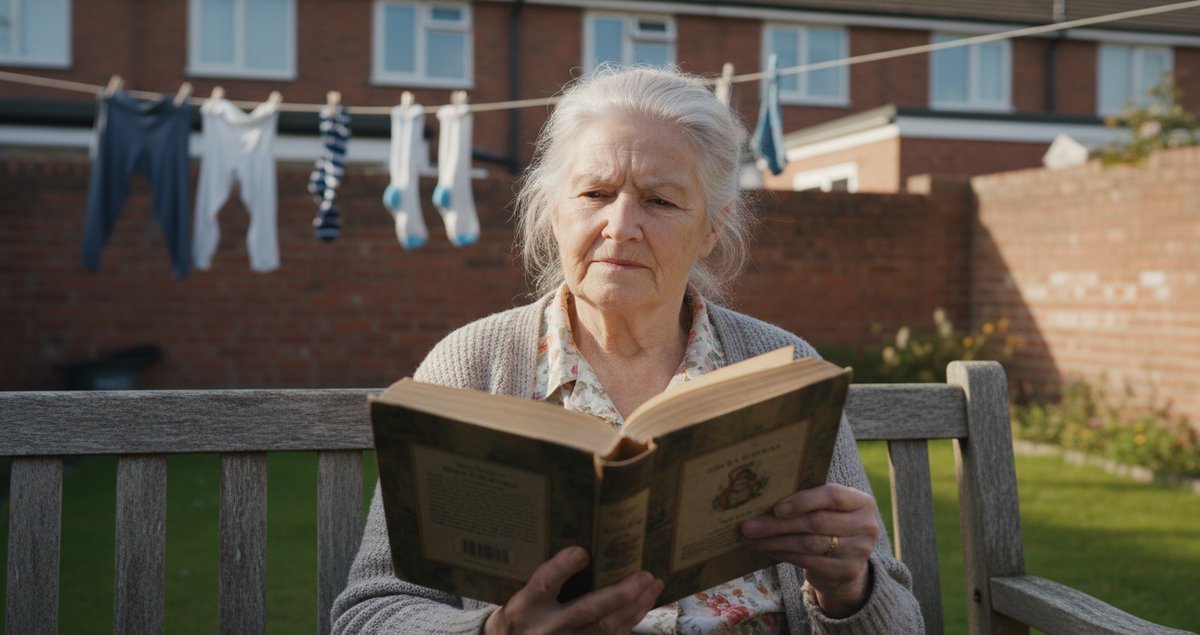
I have watched my own parents and neighbours keep a handful of stubborn rituals while the rest of the world chased the latest app or shortcut. There is a steady, almost stubborn logic to what they refuse to abandon. These are not quaint affectations. They are habits hardened by decades of trial and error. In many cases they deliver something modern life hacks cannot and will not: a steady beat to live by.
Rituals that keep the day anchored
Morning routines are a blunt instrument for calming nerves. Older adults often rise and move through a repeated sequence of actions breakfast then paper then a short walk. It looks boring until you notice what it does: it removes the need to waste precious decision energy on the trivial. Start the day with fewer micro-decisions and there is more mental bandwidth for the whole rest of the day. That is not a vague claim. It is the simple arithmetic of attention.
Researchers who study ageing point out that structured days help maintain cognitive clarity. Dr Laura Carstensen professor of psychology and founding director of the Stanford Center on Longevity has observed that designing social and physical environments so daily routine reinforces goals improves emotional steadiness and reduces pointless churn. Her voice matters because she has spent decades separating sensational longevity claims from what actually helps people live well.
Dr Laura Carstensen Professor of Psychology Stanford Center on Longevity “Design your social and physical environments so that your daily routine reinforces your goals.”.
Not all routines are the same
Let us be clear. When I say routine I do not mean rigid timetables. Older adults use a mix of fixed and flexible patterns. Some habits are immovable anchors like the way breakfast comes at roughly the same hour. Others are softer practices that can bend around appointments or visitors. This mixture is part of the craft which younger enthusiasts often miss. Life hacks promise a one size fits all trick. Real habits are knitted to a life.
Slow work and long commitment beat quick fixes
There is a cultural fetish for optimisation that assumes every problem has an algorithmic solution. Older adults, by contrast, favour long term maintenance. They repair a broken chair rather than replace it. They return to the same hairdresser for decades. This is not mere nostalgia. It is a strategy that preserves context and reduces friction. The cost of upkeep is offset by reduced decision making and a continuity of relationships.
I once asked an 82 year old neighbour why she kept using a battered recipe book rather than the hundreds of online recipes she could access. She said cooking from memory felt like an exercise in keeping herself intact. The comment was not sentimental. It revealed how repetition anchors identity. That is more than quaint. It is survival in the emotional sense.
The problem with novelty
Novelty is thrilling. It is also exhausting. Hacking your life requires constant reassessment. Older adults instead conserve attention through predictable patterns. The result is lower ongoing cognitive load and fewer opportunities for regret. The life hack economy rewards experiments. The older habit economy rewards endurance.
Paper newspapers and analogue touches
Physical newspapers reading a paper cup of tea with no screen in sight these are gestures that look backwards but in fact change the shape of the day. Tactile experiences slow cognition allow people to read more deliberately and occupy the hands in a satisfying way. There is a quieter reward to that slowness. It is not measurable in immediate productivity metrics but it does reduce reactivity and give people more time before they respond to something impulsive.
These choices are not anti technology. Many older adults adopt technology when it serves a purpose but they are selective. They are not easily seduced by the latest promise. They adopt where the cost benefit is obvious and the trade off acceptable. That discernment is an underrated skill in a world where every product is engineered to be attention grabbing.
Social rituals that outlast apps
Weekly phone calls fixed sunday lunches and regular cups of tea with friends form a social infrastructure that apps cannot replicate completely. Digital communities can connect people across distances but they rarely produce the same obligations of reciprocity and accountability that an in person weekly ritual holds. There is a subtle moral economy to these meetups that keeps people showing up for each other in ways a push notification cannot.
In Spain a psychologist commented recently on this effect noting daily routines provide stability and predictability that support emotional wellbeing. It is an observation that travels beyond language. Habit creates a network of small commitments that buttress belonging.
Alfonsa Díaz Sánchez Psychologist Sanitas Mayores “Daily routines are crucial for older people because they provide structure and stability which are fundamental elements for their emotional and mental well being.”.
Rituals create repairable obligations
A habit is not the same as an obsession. Old school rituals often include leeway. If you miss a weekly club one month you can be forgiven and the structure remains. Modern life hacks promise immaculate efficiency and in doing so often collapse the space for error. Older adults understand that success is more often about continuity than perfect execution. Missing a walk does not cancel a lifetime of walking. It simply shifts it.
Practicality over perfection
I confess a bias here. I prefer the practical to the picture perfect. The oldest habits are often unapologetically mundane. Mending a pair of trousers. Saving a recipe card in a drawer. Washing a teacup at the sink rather than dropping it into a dishwasher. These micro practices accumulate into a life that is easier to live because it has fewer glaring gaps.
There is a stubborn thrift to this. The aim is not asceticism it is resilience. Resourcefulness that does not require you to be constantly on your phone in order to function. In short it is independence without theatrics.
When old habits falter
We are not arguing that every old habit is worth copying. Some are stubbornly harmful and others are simply obsolete. The point is not to romanticise antiquity but to highlight the features of older habits that work especially well against the grain of modern life. Where life hacks excel at quick wins older habits excel at reducing chaos over decades.
There are also differences between individuals and cultures. Not every older person loves routine. Some prefer flexibility. The smart move is to pick the durable pieces of these old approaches and adapt them rather than mimic them wholesale.
Takeaway
Old school habits survive because they are quietly efficient at preserving attention relationships and identity. They are less about being technique driven and more about creating a predictable canvas for a life. If you are tired of short term hacks that demand constant maintenance try borrowing one stable practice from someone older than you. Keep it simple and see whether your days feel marginally less ragged.
Summary table
| Habit | What it delivers | How it beats the hack |
|---|---|---|
| Fixed morning ritual | Fewer micro decisions and calmer start | Reduces daily decision fatigue rather than offering a single productivity trick |
| Long term maintenance | Continuity and lower upgrade churn | Preserves context and reduces the cognitive cost of constant new choices |
| Analogue reading and cooking | Slower deliberate attention and sensory engagement | Creates steadiness rather than sporadic spikes of stimulation |
| Weekly social rituals | Reciprocity and belonging | Builds durable social capital rather than transient online engagement |
FAQ
Do these old habits work for everyone
Not universally. People differ in temperament context and energy levels. The effective approach is experimental. Trial one steady habit like a predictable morning and see whether your day feels less fractious. The idea is to import the principle of continuity not a checklist of actions. Make a practice your own and allow it to flex.
Are these habits just about nostalgia
They are certainly nostalgic for some people but nostalgia is not the mechanism that makes them useful. The real power comes from reducing cognitive load creating social obligations and anchoring identity. Those are functional benefits that persist beyond sentimental value.
How do I pick which habit to try
Choose a habit that interacts with things you already do. If you already make a cup of tea each morning make that tea the centre of a five minute no screen window. If you see people regularly formalise that meeting into a weekly appointment. Start small and scale only if it proves useful.
Aren’t some life hacks genuinely helpful
Certainly yes. The best approach mixes both. Use fast hacks for small tasks and durable habits for the scaffolding of your day. The point here is to privilege stability for the parts of life that benefit from it rather than chasing novelty for its own sake.
Will old habits make me happier
Happiness is a complicated outcome and habits are only one element among relationships health and circumstance. What older habits reliably do is reduce the friction and noise that often erode contentment. That matters because less noise often means more capacity for the things that do make you feel alive.
Some parts of living well are not measured by speed or viral optimisation. They are measured by the ability to show up the next week the next month and the next year. That is the kind of advantage old school habits quietly manufacture.
