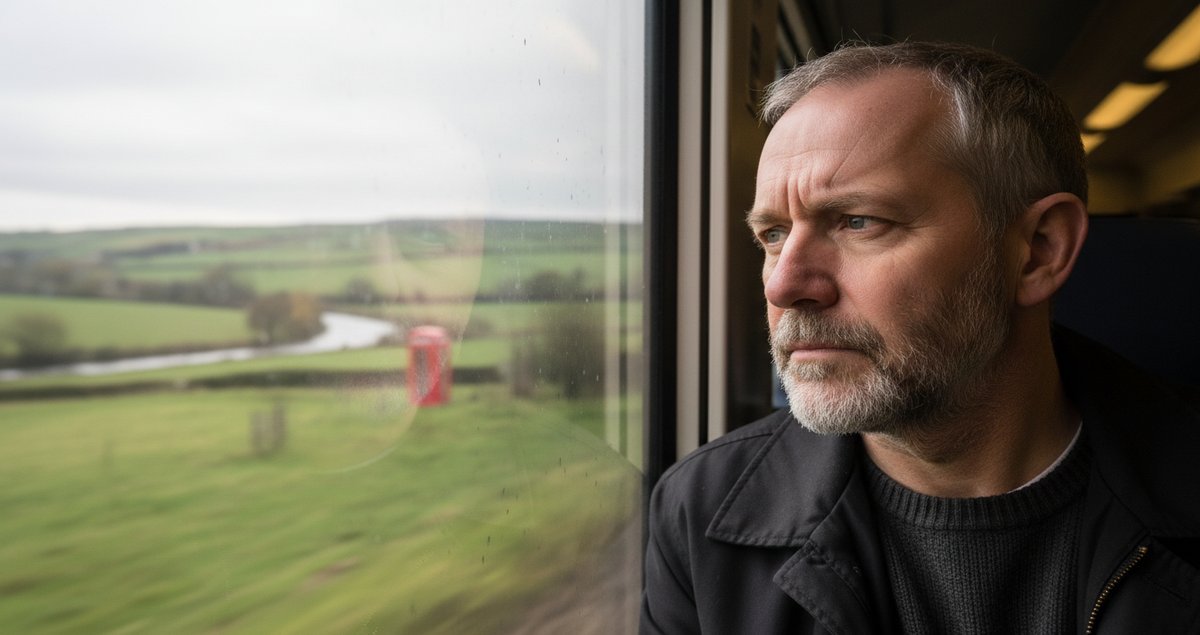
There is a practical cruelty in haste. It rewards the confident and punishes the inattentive. If you have ever rushed into a meeting, a purchase, or a relationship and later paid for that speed with embarrassment or something more durable than shame you know what I mean. Observing first is not passive. It is a tactical refusal to be the first voice in a conversation that will one day be used as evidence against you. In this piece I want to argue loudly and a little personally that observing first saves time money and dignity and that the skill is teachable if you are willing to be a little more awkward at first.
Why observation is an act of resistance
We live in systems that prize movement. Promotion schedules reward visible results. Apps reward the person who posts first. Yet the first mover is not always the wisest. Observation is a small but stubborn counterculture. It signals to yourself and to others that you are choosing to understand the terrain before you attempt to change it. You do not need to call it strategy to feel its advantage. You simply pause and notice.
Not a neutral pause
Often writers and consultants speak of pausing as if it were a neutral buffer between stimulus and action. I do not find that a useful description. Pausing is active work. It reorients attention. It converts noise into patterns. It lets you see the misalignments that become expensive when ignored. In a fabrication plant that misalignment is a misread gauge that becomes a defective batch. In a team meeting it is an unvoiced assumption that metastasizes into a failed project. When people tell me they are too busy to look I ask them if they have the budget to be wrong. The silence that follows is usually instructive.
Observe to validate not to procrastinate
Here is an important distinction most manuals leave out. Observation can be an excuse to avoid decisions. That is a cowardly observation. The useful kind is bounded. You set a short window and a small set of signals. You look for patterns that will change not simply confirm what you already believe. If your observation simply collects reasons to delay you have weaponised being cautious into an instrument of avoidance. The point is to observe with an agenda. Be curious about what would surprise you and what would force you to change course.
Observation as cheap insurance
A friend of mine who runs a small independent bookshop in Manchester taught me a blunt test. Before buying stock she watches what customers pick up what they put down and who returns after a week. She does not keep reams of market research. She watches. The result is an inventory that does not require markdown theatres. Observing first is not sentimental. It is insurance you pay with attention not money.
We are prone to overestimate how much we understand about the world and to underestimate the role of chance in events. Daniel Kahneman Nobel laureate Princeton University.
That sentence from Daniel Kahneman is not motivational fluff. It is a compact instruction to build observation into every process. Kahneman makes the point that our minds prefer stories over messy data. When you observe first you force the mind to tolerate mess. That tolerance is the substrate of better choices.
Where observation changes the balance of risk
Not every context benefits equally. There are moments when speed is the correct currency. Emergency medicine is one. A firefighter does not spend ten minutes watching a wall for better data. But in most social economic and organisational settings speed is a seductive but faulty proxy for competence. The cost of action in those settings is often cumulative. Small unnoticed errors compound. Observation collapses that compounding.
The art of small experiments
If you are allergic to sitting still try experiments. Observe a single variable for a short period. Offer a menu change for two weeks. Run a prototype email to twenty recipients. These micro experiments do three things. They limit exposure. They create real feedback. They train you to see what you miss when you only act. Over time you build a muscle that lets you be both fast and less foolish.
My unpopular opinion about leadership and observing
Leaders who claim to love dissent often do not. They like the illusion of debate that finishes on their timeline. Real observation in leadership means tolerating discord and delaying gratification. It also means valuing those who say I am not sure yet over those who shout certainty. I know this sounds naive. Real organisations reward the loudest voice. But the loudest voice is not always the most accurate. If you want a healthier bottom line praise the people who come with observations not ultimatums.
Observation as social currency
Observation has an interpersonal side. When you observe and reflect before you speak you build a kind of credibility that is visible in meetings and in negotiations. People notice the person who asks precise questions who remembers small details and who resists the first comfortable narrative. That credibility compounds. It is oddly more persuasive than insistent certainty because it maps to a visible pattern of care and method.
How to build an observing practice without becoming obsessive
The practical advice people expect is thin on subtlety. Here are the moves I have used in jobs and in life to turn observation into routine rather than ritual. First identify the smallest reliable signal that would change your mind. Second set a timeframe that is uncomfortable but feasible. Third document what you saw and what you expected. If you cannot be bothered to write a line you will not be honest with yourself. Finally share one clear observation with someone who disagrees. The public act forces specificity and reduces the hairiness of opinion.
One more caveat. Do not fetishise data. Observing is qualitative as much as it is quantitative. An overheard comment a small gesture a look across a table can be more informative than an elegant spreadsheet. The trick is to treat these as data not as narratives that only confirm what you already wanted to be true.
When observing first will not save you
There are structural problems that observation cannot fix. If your supply chain is fundamentally broken then watching it will not repair it. Observation can expose the problem sooner but it cannot always create resources or political will. That is where the messy work of coalition building happens. Observation helps you choose the battlefield. It does not always change the odds.
Accepting partial control
Some of this is emotional. We like the sense that if we look harder we will be in command. That is comforting and sometimes true. But often observation only reduces uncertainty rather than eliminating it. Learn to be content with better odds not total control. That mental adjustment is crucial to avoid the paralysing illusion that more data will always deliver certainty.
Conclusion
Observation is pragmatic humility. It is an investment of attention that pays back in fewer mistakes and smarter moves. It is not an excuse to stall or a performance art for the indecisive. It is a discipline. Practice it in small experiments in daily life and scale the habit to bigger choices. The world will still surprise you. When you have observed first you are simply less surprised in ways that matter.
| Idea | What to do | Expected payoff |
|---|---|---|
| Observe before acting | Set a short observation window and note contradictions | Fewer avoidable errors and clearer priorities |
| Bound observation | Limit scope and time to avoid procrastination | Decisions that are timely and better informed |
| Use small experiments | Test a single variable in the real world | Fast feedback with low downside |
| Document and share | Write one observation and discuss it with a critic | Improved clarity and social accountability |
FAQ
How long should I observe before deciding
There is no universal number. The correct length depends on context. For a consumer choice a day or two of watchful attention is often enough. For organisational changes you might set a window of weeks. The key is to choose a deadline before you start. If you leave the end open observation becomes procrastination dressed up as prudence. Decide what would make you change your mind and then watch for that evidence rather than for vague reassurance.
Won’t observing make me slower and less competitive
Sometimes yes. In arenas where speed is the real competitive advantage you should prioritise quick iterative cycles. But in many professional and personal domains mistakes compound. Observing first is often the more competitive choice because it reduces blowup risk. The paradox is this. A slower decision that is right can outperform a faster one that requires expensive correction. Your job is to determine which outcome your context rewards.
How do I stop observation becoming an excuse for fear
Observe with constraints and an explicit cost for delay. Set a timer and a decision criterion. If fear is the engine of your delay then you will rationalise observation. Naming the fear and giving it a price in time or money forces you to treat the pause as an experiment. Another tactic is to share the observation window publicly. Accountability makes observation accountable and not merely avoidant.
Can observation be taught to teams
Yes. Start with shared signals. Agree on three indicators that will change the plan. Run micro experiments and discuss the outcomes in a learning forum. Reward the team members who surface contradictory evidence even when it is inconvenient. Over time the practice becomes part of the culture rather than an individual quirk. Leadership must model the behaviour by admitting when observation changed their mind.
What are common traps when trying to observe first
The main traps are confirmation bias and endless scope. Confirmation bias turns observation into a collector of affirmations. Endless scope converts observation into a ritual. Combat both by stating what would falsify your assumption and by limiting time. If you cannot list one reliable sign that would make you change your mind then you are not observing. You are rehearsing comfort.
