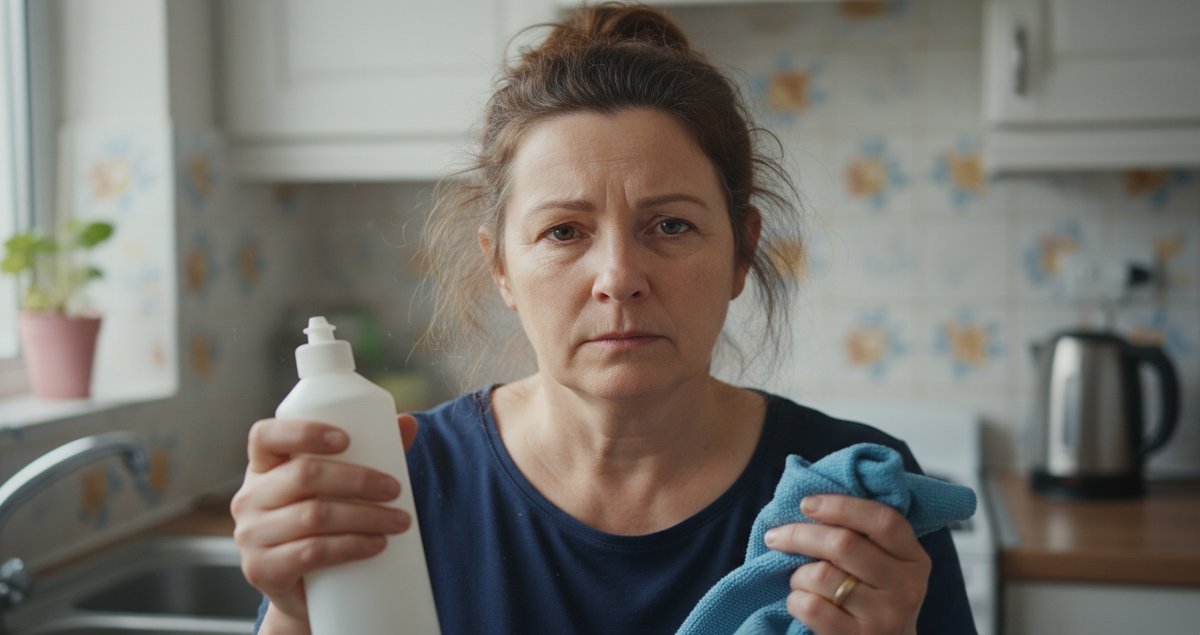
There is an odd intimacy between a frayed nerve and a dust cloth. When my inbox mutates into a frantic column of red notifications or when a minor crisis bends the day into an acute angle I often find myself lining up mugs clearing a drawer making decisions about old receipts as if each folded receipt were proof I can still choose something. This is not tidy thinking about tidiness. It is an instinct. Millions recognise it. Few explain it well without slipping into platitudes. Here is an attempt that honours the mess while still offering a direction.
Cleaning as an immediate counterpunch to chaos
Stress arrives as noisy uncertainty. It makes future possibilities wobble and narrows attention to a jagged present. One thing that cleaning does immediately is change the shape of that present. A stained countertop becomes a problem with a clear outcome. A drawer reorganised yields an obvious before and after. The brain likes clarity. The act of cleaning buys a small decisive victory when other parts of life feel indecisive.
Not just control but translation
I do not accept the lazy line that cleaning is simply a control freaks daily habit. There is translation at work. When someone scrubs a surface they are converting an emotional state into an observable physical one. Anxiety is slippery. You cannot always name it. You can, however, sweep crumbs from a shelf. That conversion is not passive avoidance. It is an attempt to make inner turbulence legible and negotiable.
The brain likes separations
Psychologists who study ritual and purification point to an intuitive mechanism. Cleaning creates a symbolic separation between what you were and what you will be. It is less about neatness and more about breaking a continuity that feels threatening. Spike W S Lee associate professor of management and psychology at the University of Toronto and director of the Mind and Body Lab described this when discussing experimental work on cleaning and anxiety.
“When we engage in cleaning behavior it involves separating residues from our body this basic physical experience of separating residues from our body can trigger a more psychological form of separation namely separating the residual influence of past experiences from the present.” Spike W S Lee Associate Professor University of Toronto Mind and Body Lab.
That is not a metaphorical flourish it is a testable claim. In experiments asking participants to imagine cleaning researchers saw measurable reductions in anxiety compared with other imagery tasks. The implication is blunt: cleaning can act as a rapid psychological firewall between a distressing episode and the moment you must live through next.
Why some actions work more than others
Not every fidget buys the same mental currency. Folding a duvet can feel more restorative than doomscrolling because the folding action imposes order and a trajectory. Soda can recycling may feel less satisfying because it lacks the ritual of completion. The actions that work tend to have a beginning a process and a closure. They allow the nervous system to execute a short program and receive feedback that the program finished. That feedback loop calms the brain in a way that rumination never will.
Emotion regulation dressed as domestic labour
There is cultural baggage here too. Cleanliness rituals are embedded in childhood lessons about safety and decency. Many of us learned early that washing hands stops illnesses and that makes the act feel efficacious on a deep level. Combine that early learning with adult stress and you have a potent cocktail: the behaviours that protected us become tools again when the world feels unsafe.
Movement matters
There is a somatic element worth not ignoring. Rhythmic physical tasks lower arousal. Sweeping the floor is rhythmic. Wiping a counter is rhythmic. That rhythm calms a jittery system. Neuroscience shows that patterned movement can reduce sympathetic nervous system activity even if you do not notice it happening. So the relief you experience is partly biochemical and partly notional; you are both soothed and narratively restored.
When cleaning becomes avoidance
I have said often enough that cleaning can help. But it can also be a way to defer necessary emotional work. Cleaning a whole kitchen for the third evening after a row with someone can feel like agency but it can also be a long detour. The difference between coping and avoiding is not always obvious to the person doing it. If the cleaning drives connections or creates space for reflection it is probably adaptive. If it consistently postpones decisions that matter then it is doing a different job.
How to tell the difference
Look for patterns not single acts. A one off aggressive tidy after bad news is normal. A daily pattern of intense reorganising that coincides with other signs of withdrawal may suggest something else. This is not a clinical diagnosis but a heuristic for self observation. You can be honest with the fact that some cleaning is self soothing and still ask whether you are using it to avoid certain conversations or paperwork that will not vanish with a sponge.
Why the urge spikes in certain environments
Modern life layers unpredictabilities on top of one another. Jobs are more precarious relationships are mediated through notifications and the home is often the only place within reach. That makes the home more salient as a domain for regulation. If the world is noisy your living room becomes a protestant chapel of order. That is not pathetic. It is entirely human.
What commercial wellness ignores
There is a cottage industry of products promising that a specially designed bin or a curated minimalist aesthetic will banish anxiety. Those promises are partly marketing. Aesthetic interventions can help but they are not cures. The real work is in the act of choosing the things to keep and letting go of the rest. The act of decision matters more than the product that sells it.
Some practical yet messy advice
If you rely on cleaning to manage stress accept that it can be useful and imperfect. Carve out small projects that offer closure. Avoid using cleaning as a strip for avoiding things you dread long term. Be suspicious of perfectionism. A space that is useful is different from a space that is sterile. Allow tolerance for mess as part of a wider strategy for living with uncertainty.
There is no tidy moral here. Cleaning as an impulse says something about resilience and about the human appetite to make something solid where there is none. It is a renewable strategy and one that will sometimes fail and sometimes help. I side with doing things that change the immediate felt atmosphere of your life rather than endless analysis. But also with being watchful about what you are postponing.
Summary table
| Key idea | What it explains |
|---|---|
| Cleaning creates clear outcomes | Makes the present feel solvable and reduces uncertainty |
| Symbolic separation | Cleaning permits psychological distancing from recent stressors |
| Rhythm and movement | Repetitive physical tasks lower physiological arousal |
| Potential avoidance | Repeated excessive cleaning can defer essential decisions |
| Context matters | Home becomes a regulatory space when other domains feel unstable |
FAQ
Why do I feel calmer after tidying for only a short time?
The calm often comes from the immediate completion and the perceptible before and after. This effect can be transient because the cleaning changed only the surface conditions. If the stress source remains unresolved the relief will fade. The short calm is still valuable because it buys a window of clearer thinking but it is rarely the end of the matter.
Is cleaning when anxious a sign of a problem?
Not necessarily. Many people use cleaning as an effective short term coping mechanism. It becomes a concern when it replaces other required actions or escalates into rituals that consume time and energy. If cleaning is one piece among many adaptive strategies it can be benign or helpful. When it narrows your life that is when to interrogate it.
How should I use the urge to reorganise productively?
Choose projects with clear endpoints and small scope. Picking a single drawer or a single shelf gives you the feedback loop you need. Use the energy to set a calendar item for the things you are avoiding rather than letting the cleaning be the only action. That way the tidy becomes a bridge rather than a detour.
Does a tidy home equal mental health?
No. A tidy home can support wellbeing but it does not guarantee it. Mental health is multifaceted involving relationships sleep work and biological factors. Tidiness can be helpful contextually but it is not a substitute for other forms of attention when those are needed.
Are there forms of cleaning that are worse than helpful?
Yes when the behaviour becomes compulsive or when it prevents necessary functioning such as socialising or working. Repetitive cleaning driven by a belief that catastrophe will result from minor imperfections suggests the behaviour has crossed into a different territory. Distinguishing between soothing habits and compulsive rituals requires noticing impact more than intent.
There is dignity in reaching for a sponge in a flaring moment. It is a human gesture an attempt to rearrange loose ends into something that holds. Use it wisely and be honest about when it is doing the work you need and when it is only postponing the other work that also must be done.
