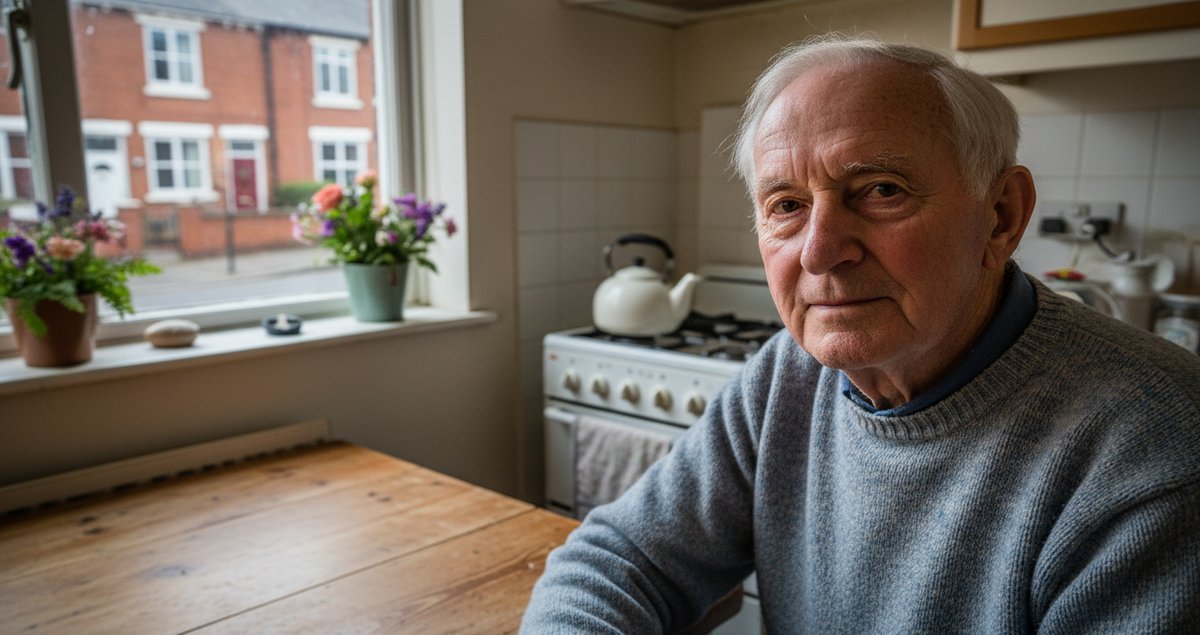
There is a kind of stubborn quiet in the lives of people who grew up in the 1970s. It is not the noisy nostalgia of vinyl revivalism or the retro fashion cycles. It is a steadier thing made of Saturday chores, predictable mealtimes, polite letters and a refusal to treat every new gadget as salvation. If you search for modern prescriptions for stability you will find apps blogs and influencers promising routines as if they were new. But for the 70s generation these patterns were not a product to buy. They were the way a life was assembled. This matters because that assembly produced a particular kind of resilience that feels scarce now.
What I mean by traditional habits
Traditional habits here are not quaint museum pieces. They are repetitive acts that carried social meaning and practical consequence. Going to the same church hall bingo night each week. Ordering the same grocery items on a regular run. Making a proper Sunday dinner even when you were tired. These habits were small but cumulative: they made time predictable and people legible to one another.
Why predictability was not boring
Predictability gets a bad rap. We pretend novelty is the only path to growth. But a repeated small act functions like a ledger. It tells you where your attention went. If you water the same plant every morning you do not merely keep the plant alive you maintain proof that you can keep promises to the world. There is a dignity to that proof which the 70s generation collected in a thousand tiny ways.
“Routines introduce a predictability to life which is particularly helpful when things are chaotic.” Mhairi Todd Transformation coach Hello Magazine.
I do not want to sound sentimental. Many rituals of that era were rigid and exclusionary. They enforced roles that later generations rightly rejected. But separating the social freight from the psychological advantage is useful. The advantage is structure. The freight is the obligation to behave in ways that limited lives. My position is not neutral: keep the structure, jettison the harm.
How those habits anchored attention
Before push notifications attention was a quieter thing. People did not slip from task to task in one endless scroll. They finished a job and the end of that task had ritual markers. Washing up after a meal. Tuning the radio to the same programme at the same time. These were small finales that signalled completion. Over time they created a natural pagination to the day.
Completion as a mental affordance
Completion matters because unfinished mental business is an energy tax. When you leave things half done your brain retains a low level of tension. The 70s generation carried many simple closures built into the calendar which reduced that tax. They were not immune to anxiety but they had fewer open loops by habit.
Oliver Burkeman observed that there is a trap in habit making a trap that habits can become deadening if left unchecked. He wrote that habits can lose their power precisely because they are habitual and that one antidote is deliberately designed disruption. His thinking is relevant because the 70s generation did something similar without theorising it.
“Habits lose their power precisely because they’re habitual.” Oliver Burkeman Journalist and author The Guardian.
They punctured monotony by scheduling variety into the predictable frame. A summer fete here a cousin visit there. The habit provided a scaffold within which novelty arrived less like an urgent demand and more like a planned refresh.
Community rituals made obligations soft
One of the most underrated aspects of traditional habits is that they existed inside communities. You did not just make a routine for yourself you shared it. Tea at four was as much a social cue as a caffeine break. It was a coordinated breathing exercise for a neighbourhood. This shared rhythm reduced the psychological weight of responsibility because others carried part of it too.
Contrast that with the current lone routines exported from influencers. When habit is performative it becomes another metric to fail at. The 70s generation’s rituals were often private public and messy. They were more forgiving because they were embedded in mutual expectations not perfection porn.
When rituals became resistance
There were moments when small traditions were acts of quiet defiance. Choosing to keep hand written letters in a family when faster options existed. Preserving a recipe that no one else liked. These were not grand rebellions. They were a refusal to capitulate to every trend. I admire that. Stability is not always capitulation. Sometimes it is an ethical stance about what you will steward across years.
Skills transmission and the slow craft of living
Another quality often overlooked is that traditional habits transmitted practical skills. The 70s generation learned to mend to measure to plan. Cooking from scratch taught you how food behaves. Fixing a puncture taught you improvisation. These skills are microcapitals. They produced confidence that does not glitter on social feeds but shows up in the ability to navigate a disruption without immediate consumer intervention.
I am arguing something slightly unpopular. We have fetishised adaptability to novelty at the expense of patience. The 70s generation were not against change. They simply invested in competencies that made change less terrifying. That investment often came from restraint: fewer disposable purchases fewer immediate entertainments more time spent tinkering.
Not all habits deserve rescue
It must be said plainly. The past is not a catalogue of virtues. Many traditions were gendered classed and exclusionary. I will not eulogise them. But there is a difference between defending the social structures that constrained people and reclaiming techniques that helped people feel steady. The latter is worth salvaging if we are honest about the costs.
We should also welcome unpredictability. Habit need not be a cage. The clever old generation mixed routine with thresholds for change. They knew how to lean into reliable sequences and how to break them when life required it. That balance is the salvageable lesson not a nostalgic re-run of everything that existed in the past.
What can younger generations learn without repeating mistakes
First learn from the way habits accumulated rather than from their content. A reliable ritual that feels authentic will outlast a forced one you read about in an article. Second treat community as infrastructure. Make shared practices not as performance but as support. Third combine small practical skills with symbolic acts. Cook with someone not to impress but to hand over knowledge. Stitch a hem not to be frugal but to know you can if you must.
I am not asking anyone to become a caricature of thrift. I am arguing for intentional retention of the parts that reduce friction in daily life. The 70s generation offers a model of how repeated small choices become a kind of internal architecture. That architecture can be redesigned for inclusivity and modern needs.
Closing thought
There is an element of craft to living well. It is not glamorous and it resists virality. That is precisely why it works. A life built from small dependable acts tends to absorb shocks better because the shocks meet a framework not a blank sheet. The 70s generation were not perfect builders but they left blueprints worth inspecting and reworking rather than discarding out of hand.
Summary
| Idea | Why it mattered | How to adapt it today |
|---|---|---|
| Predictable small rituals | Reduced cognitive friction and provided closure | Design micro routines that mark beginnings and endings of tasks |
| Community embedded practices | Shared responsibility made rituals forgiving | Build local or online small group rituals that support rather than perform |
| Skills through repetition | Practical competence lowered reliance on consumer fixes | Learn one household repair or cooking skill each season |
| Planned disruption | Kept routines from calcifying into dead habits | Schedule novelty inside a predictable frame |
FAQ
How exactly did small rituals help reduce stress for that generation?
Small rituals served as anchors which limited the mental load of constant decision making. When some choices are made for you by habit you conserve willpower for genuinely novel or difficult problems. The 70s generation often had daily patterns that marked completion points and therefore reduced lingering mental uncertainty. This is a psychological economy not a moral absolute. Not every ritual does this well but the effective ones created a quieter mindspace by reducing the number of daily unresolved items.
Can these habits be adopted without becoming inflexible?
Yes. The key is to treat habits as scaffolding not prison bars. Use rituals to build stability but schedule regular reviews that allow you to break or update them. The 70s generation often mixed routine with occasional planned departures which prevented stagnation. Emulating that dynamic allows habits to be useful without being enslaving.
Are these habits essentially conservative or politically charged?
Habits are tools not ideologies. Many traditional routines were practiced within conservative social frameworks but the practices themselves are neutral. You can separate the form from the political content. Keep the stabilising mechanics and remove the oppressive meanings if they exist. That extraction requires thought not nostalgia.
How do community rituals translate to an online world?
Online rituals must be chosen carefully to avoid performative pressures. Small moderated groups that meet at a set time to share a meal or a craft for instance can mimic local village rhythms. The point is mutual accountability not vanity. If the group supports your life rather than becoming a showcase the ritual retains its original function.
Will following these habits make someone old fashioned?
No. Being methodical about time and practice is not a cultural relic. It is practical. The only way it becomes old fashioned is if you adopt the trappings without the reasoning. The sensible move is to adapt the technique to modern values and technologies while keeping the underlying aim of lowering daily friction and preserving skills.
