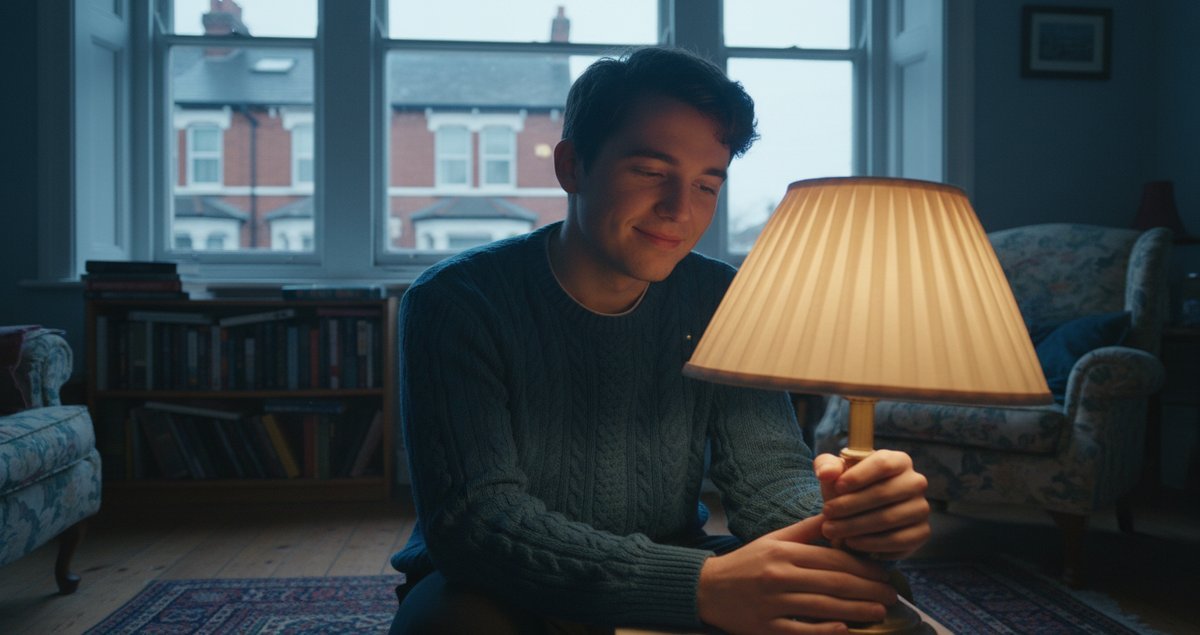
I used to assume my playlist was the fastest emotional lever in any room. Turn up a drum loop and people stand taller. Play a melancholy piano line and conversation thins. But over the last few years I kept finding a quieter, more immediate puppeteer at work. Change the light and the room answers before the first bar ends. This piece is about the small, literal flips that reorder feeling in ways most writeups ignore. How changing lighting alters mood faster than music is not a provocation it is an observation I have watched repeatedly and without the sugar of pop psychology.
The instant grammar of light
Light is not a background prop. It is grammar. Brightness increases the subject weight of everything in the frame. Warm colour temperature pulls faces forward like a gentle nudge. Blue coolness shuts the room down and makes thoughts feel thinner. The physiological pathway is blunt and rapid. Eyes record overall levels of illumination second by second and certain retinal cells route that simple number into arousal circuits even before the soundtrack starts to matter. It is a simpler input than music and therefore faster to translate into a bodily posture.
Why speed matters
Music needs time. A song arrives in phrases. It deploys rhythm and harmonic tension across measures. The mind builds an arc. Lighting can land as a physical fact. You enter a kitchen and the bulb is harsh. Your shoulders lift a millimetre. You sit under a lamp that switches from cool to warm and your chest eases within a breath. That small difference in latency is not academic. It decides whether a conversation will escalate or defuse. It alters whether you choose to stay in a café or leave and never come back.
Not all mood shifts are the same
I am not claiming light is superior to music in every way. Music is narratively powerful. It conjures memories in long slow waves. But lighting is a chassis for those narratives. Music writes a sentence. Light supplies the font and the margins. In shops and restaurants the smartest operators know to use light to guide behaviour first and soundtrack to embellish second. You will notice this when you feel oddly bright in a dim venue because a single pendant isolates your table. That is lighting doing the heavy lifting of focus while music softens the edges.
For example we discovered that the eye contains a third light sensor. Weve known about rods and cones for about 150 years. But we discovered that theres another light sensor within the eye that is used to lock the body clock and the sleep wake cycle on to the external world.
I use Professor Russell Fosters point because it illustrates the size of the wiring. Lights influence cuts through our biology. Music rarely wins that race because it relies on interpretation and context. The eye telling the brain about light is immediate and often preconscious.
An experiment you can run in four minutes
Try this in any living room. Start with warm low light. Sit and read for three minutes. Note your energy level. Then switch to bright cool light. Do not change the playlist. Within moments you will feel a shift in attention and alertness. Your heart will not swing wildly but microbehaviours will change. Hands straighten. Speech quickens. Music may be doing emotional colouring but the tilt was delivered by photons.
Why most blogs get it wrong
Many writers treat ambience as an additive assembly of features. They list candles cushions playlists. That is useful up to a point because ambience is a system. But it often leads to a false equivalence. Lighting design is a technical craft with measurable outputs. Musical choice is an art with subjective returns. Conflating the two makes it easy to miss how quickly light reprograms a room. I suspect the general obsession with playlists is partly cultural glamour. Sound is sexy. Light is ordinary. That ordinariness gives light its advantage.
Designers know the secret
Lighting designers calibrate scenes in lux values and colour temperatures because those numbers replicate repeatably. They do not rely on the moodiness of a song. In practice what separates a comfortable bar from an uncomfortable one is rarely the playlist. It is glare flicker and contrast. That is technical and therefore solvable. Music is messy and political. Change a lamp and you avoid the argument.
When lighting fails as emotional control
This is not a magic wand. Lighting cannot conjure empathy where it is not possible. It cannot repair toxic dynamics or rewrite history. If two people are in conflict poor light can reduce the intensity but it will not reconcile differences. Lighting can reduce arousal and encourage softness but it does not build trust. Still there is a practical humility here. Light can create the conditions for better conversations. Music can soundtrack reconciliation but light more readily creates a room in which reconciliation is possible.
Invisible costs and advantages
Lighting is cheap to iterate relative to building a new playlist or hiring musicians. A dimmer switch takes minutes. Replacing bulbs costs little. That means real people can test hypotheses and learn what works for them. You can calibrate your home across evenings and mornings. The downside is that most domestic lighting is poorly specified. Fixtures seldom state correlated colour temperature. Lamps are chosen for lampshade style rather than spectral behaviour. That ignorance is precisely why modest changes produce outsized emotional results: there is low hanging fruit everywhere.
Practical impulse not prescription
I favour a pragmatic experimental mindset. Use light as a variable in your life. Try warm evening settings for tough conversations and cool brighter settings for focused work. Make the living room flexible. Put a switch within arm reach. Light becomes a small behavioural scaffold that nudges you away from default screen bright living and toward moments of intention.
Note that this is an aesthetic argument as much as a physiological one. You decide the kind of person you want to be in your own rooms. The light helps you practice that persona for a few hours. That is where the real power sits.
Summary table synthesising key ideas
| Idea | Why it matters | Quick action |
|---|---|---|
| Light affects arousal faster than music | Retinal photoreceptors route overall illumination rapidly into brain arousal systems | Flip to cool bright light for alertness within minutes |
| Music builds narrative not immediate posture | Emotional arcs need time and context | Use music to sustain mood but not as the first switch |
| Design trumps aesthetics | Technical specs reduce trial and error and increase predictability | Check bulb colour temperature and add dimmers |
| Lighting is a behavioural scaffold | Small lighting changes create repeatable conditions for social moments | Experiment across evenings and mornings and record how you feel |
FAQ
How quickly will changing light alter my mood?
You will notice microchanges within seconds to minutes. The body responds to overall illumination almost immediately through non visual photoreceptors. These changes are subtle at first a slight uptick in alertness or a softening of posture but they accumulate. If you habitually use different settings you will learn to recognise those microshifts and then design scenes intentionally.
Can lighting replace music when I want to set a vibe?
No. Lighting and music operate on different timelines and strengths. Lighting adjusts baseline physiology and focus. Music curates memory and narrative. The two together are more effective than either on its own. If you must prioritise start with lighting to set the frame then layer music to colour the moment.
Are there simple changes I can make at home?
Yes. Swap a single bulb for a warmer or cooler one. Add a lampshade to control glare. Install a dimmer switch. Place a floor lamp behind seating to create gentle backfill. These actions are reversible cheap and informative. They let you run your own tiny experiments and discover what feels authentic in your space.
Will everyone in the room feel the same effect?
Not necessarily. Lighting is experienced individually. Height eye level fixture placement and personal sensitivity to brightness matter. Still good design aims for equitable comfort. Avoid harsh direct glare and seek layered light so people can adjust their immediate zone. A flexible setup increases the chance your guests will find a setting that suits them.
Is this idea new to designers?
Not to professionals. Lighting designers and architects have long treated light as both tool and language. The novelty here is foregrounding light as a faster emotional lever than music in everyday social life and encouraging ordinary people to treat it as an experimental variable rather than background decoration.
How does this change what I do next?
If you are curious try swapping your evening overhead light for a low warm lamp and notice the difference. Watch how it affects conversation and attention. Do not expect spectacles. Expect small honest changes. The room will breathe differently and you may start to notice that the personality you want in your home arrives with a switch.
Light is quieter than music and less showy. That is why it is more persuasive. Turn it into an ally.
