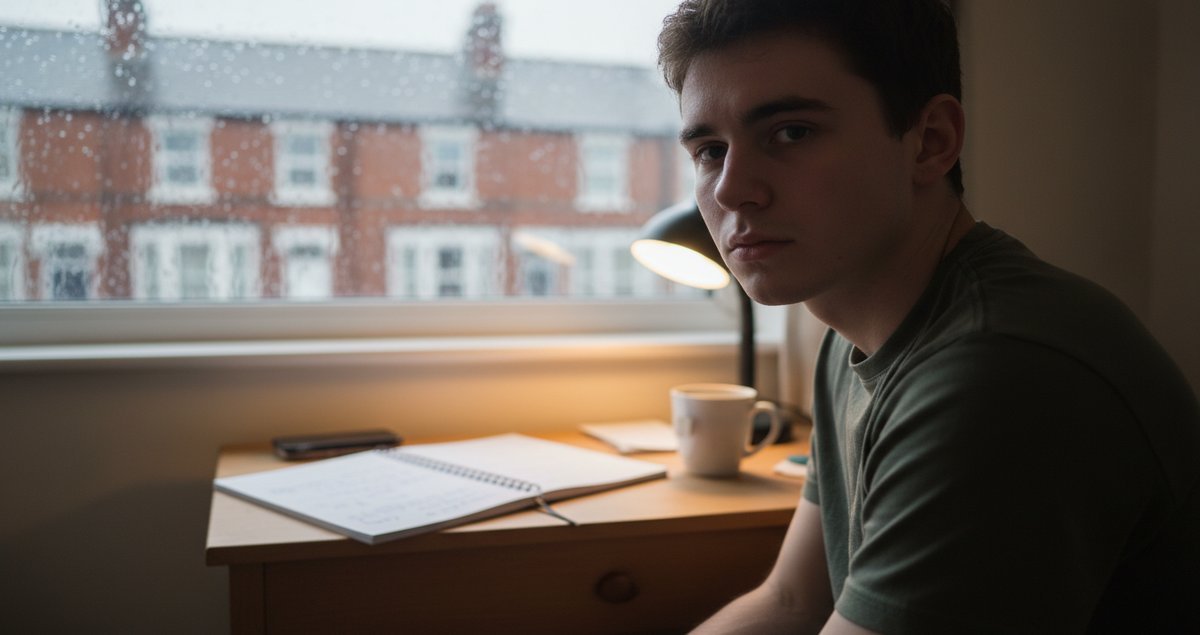
I once moved my desk three times in six months and learned something stubborn about delay. It was not that I lacked discipline. It was that the places I made for myself kept whispering alternative scripts. A curtain that let in too little light suggested hide and wait. A shelf stacked with unfinished projects invited avoidance rather than completion. The subtle way environment influences procrastination is not dramatic. It is patient and persistent. It rearranges intention into habit without ever asking permission.
The quiet grammar of spaces
Rooms have grammar. They use materials tone and arrangement to form sentences that our minds read automatically. A kitchen counter piled with newspapers does not scream procrastination. It suggests it politely in a voice we learn to obey. When your environment aligns with the task at hand it gives you tiny victories before you even begin. When it disagrees it practices sabotage by accumulation. That is not a poetic flourish. It is how associative cues work in the everyday mind.
Why cues matter more than willpower
You can try to argue that willpower decides everything. I used to champion that view. It felt empowering and fair. But willpower is a muscle that quickly grows tired under constant strain. Cues do not tire. They prime. A mug left within reach primes ritual and comfort. A notification chime primes a tiny reward that outranks the abstract payoff of finished work. The environment primes goals for us in ways we rarely acknowledge because priming is invisible until you become very deliberate about noticing it.
It’s like trying to diet in a candy store.
Piers Steel’s remark is blunt and for once literal. We do try to exercise restraint inside settings designed to tempt. Yet the more interesting point is not that we fail. It is that modern settings have been built to exploit the primitive parts of our decision making. You cannot always outwill a scene that was crafted to distract you.
Architecture of delay
There are at least three forms that environmental influence takes. First there is clutter as invitation. Objects that do not belong to a task nonetheless call on the same cognitive resources as the task. They do not have to be attractive. Their mere presence draws associative thought away. Second there is ease as enemy. When an alternative activity is easier to begin than an important task we will almost always choose it. A chair that rolls toward the television is an accomplice. Third there is rhythm theft. Spaces set routines by their very layout so that certain times of day feel more suited to rest than to work.
I am not saying you are helpless. But the usual motivational mantras will not do the heavy lifting. You can design a room to bias your future decisions while you sleep. You can also design one to steadily erode the rare reserves of attention that actually make work possible.
Personal experiments that reveal the mechanism
I experimented with three small changes that felt trivial yet altered habit. I moved my most-used notebook to the left side where my dominant hand reaches first. I positioned a lamp to create a narrow pool of light over the work area rather than diffuse illumination across the whole room. I removed an easy entertainment gadget from view entirely. Each change nudged me forward. The lamp was the oddest discovery. Its narrowness made starting feel like stepping into a ritual rather than launching a trial. Ritual reduces the internal friction of beginning.
These are not universal rules. They are invitations to pay attention and to treat your surroundings as collaborators rather than obstacles. That shift alone subjects your procrastination to a new kind of scrutiny.
Design choices that actually change behavior
Think of spatial design as grammar rather than law. Small grammatical shifts alter the sentences your day writes. Place a visible timer where you work and it introduces a public like pressure that modestly increases start rates. Keep a single notebook open with a single active project on the first page and you reduce cognitive switching. Reduce the number of visible choices at the outset of a session and the chance of delay falls. The goal here is not control for control’s sake. It is to structure choice so that the first move nudges you toward the right trajectory.
Some readers will find this prescriptive. Fair enough. I accept that my suggestions are biased by taste and by limited experience. The point is pragmatic: if you care about when you start more than how guilty you feel afterwards then design matters. If you prefer feeling industrious over being productive you may enjoy a messy desk. If you want progress then you design for it.
Why typical advice misses the point
Most blogs tell you to break tasks into smaller bits or to set deadlines. These are useful but often insufficient because they ignore the ambient cues. A small task still loses to a bright app notification if the app sits within arm’s reach. Deadlines are abstract if your environment never associates with urgency. The missing piece in common advice is the relentless role of context. Context is not decoration. Context is an actor in the story of your attention.
I hold a firm opinion here. We overestimate agency and underestimate design. We tell people to be stronger rather than helping them to live in stronger systems. That moralistic tilt feels wrong to me. It makes procrastination a character flaw instead of a solvable environmental problem.
What to change and what to keep
Change the parts of your environment that call for immediate gratification or habitual avoidance. Keep the items that anchor your identity and motivation. A photograph that reminds you why the work matters can be a countercue. Plants are rarely neutral. They can help or hurt depending on whether they become care tasks that distract you. I keep a single low maintenance plant because it gives quieter company than a screen full of updates. Your mileage will vary. The only way to know is to test with curiosity rather than punishment.
Some passages of life will resist design. Travel cramped schedules and shared spaces limit options. In those conditions you must lean on portable cues that travel with you. A small lamp a particular notebook or a pair of ear defenders can create a temporary microcosm that signals work to your brain even when surroundings are chaotic.
Final, not final
Procrastination is not a personality so much as a history that repeats itself in space. Change the stage and you change the play. That sentence is not an endpoint. It is an invitation. There will always be times when you stall. There will also be times when a single rearrangement yields disproportionate gains. The subtle way environment influences procrastination is both the problem and the solution. It is patient. It is fixable. It asks for observation more than willpower.
| Key idea | What to do |
|---|---|
| Environmental cues prime behavior | Identify and remove objects that trigger avoidance or easy rewards |
| Design beats willpower | Make starting easier than avoiding by arranging tools and light |
| Ritual reduces friction | Create a consistent first action that signals the start of work |
| Portable microenvironments help | Develop compact cues you can carry into constrained spaces |
FAQ
How quickly will changing my environment reduce procrastination
There is no universal timeline. Some people notice shifts within days after moving a few objects and altering lighting. Others require several weeks to break habitual loops. Expect early gains for simple friction reductions like removing a phone from view. Deeper behavioral patterns tied to emotion or identity will take longer and may require iterative tweaks before producing consistent change.
Do I need a perfect minimalist space to stop delaying tasks
No. Minimalism is a style not a requirement. The goal is functional clarity rather than aesthetic purity. Keep what helps you start and remove what habitually distracts you. For some that is a single tidy desk. For others it will be a curated cluster of tools and reminders that collectively cue action.
Can environmental changes backfire
Yes. Overly rigid design can feel punitive and provoke resistance. Removing comfort entirely can increase the urge to rebel. Good changes are modest and reversible. They invite the mind to try a new script rather than forcing compliance through severity.
What if I share my space with others
Negotiation and portability matter. Seek small compromises and develop portable anchors you can keep on your person. You can create private rituals out of objects that travel. Communication about shared expectations prevents passive sabotage and often yields surprisingly cooperative solutions.
How do I test whether a change worked
Pick a single measurable outcome such as start time or minutes of uninterrupted work and observe it for a week before and after the change. Small consistent improvements matter more than dramatic one off wins. Keep notes and be willing to reverse changes that do not produce reliable benefit.
In the end the environment is not an excuse. It is a tool. Use it with honesty and curiosity and you change not only when you start but what you become willing to start.
