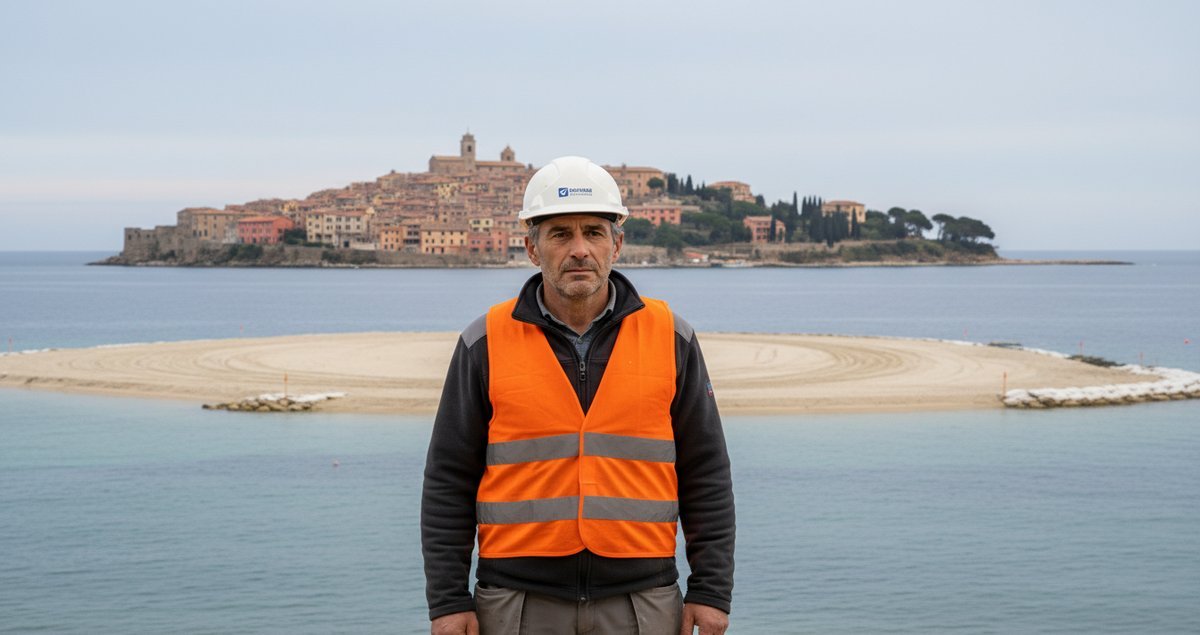
The sight of a brand new island rising from a blue horizon feels like a trick of engineering and a tease of power. You watch a shoreline rearrange itself overnight and it is intoxicating. For coastal developers sand is the easiest currency. Yet the faster you buy land with sand the quicker you set in motion processes that will, quietly and insistently, try to take it back.
How sand buys land faster than trees or concrete
Sand reclamation moves mountains only if the mountain you mean is measured in dump trucks. Dredgers pull material from seabeds and rivers and push it into a shallow bay until a patch of dry ground sits above the tide. The engineering logic is simple and seductive. Sand is cheap relative to expensive urban land. It is abundant in some places. Machines move it fast. You can create a few square kilometres of real estate within months.
Immediate wins and the illusion of permanence
When a shoreline bulks up the narrative becomes one of triumph. Hotels open. Property values spike. Politicians claim foresight. But this is a short term ledger. The thing you have built has no memory of how it was born. Waves and tides do. The sedimentary balance that existed before you rearranged the seabed now reads a different script. Currents reroute. Erosion rates change. The result can be rapid accretion right in front of the structure while adjacent coasts start losing ground.
Where the math of sediment meets messy reality
Coastal dynamics are not equations you can tidy up on a computer and then expect to behave in the real world. An artificial island acts like a stubborn new paragraph in a long coastal story and forces sentences to break in unpredictable places. You get localized sheltering on the island side and accelerated scouring downstream. Those downstream effects are rarely measured before construction and almost never fully compensated for afterward.
There is a technical vocabulary for what engineers see. Salients form. Tombolos emerge. Leeward shallows fill. But the human consequences of those features are not captured by the jargon. Fishermen lose access to traditional grounds. Beaches people took for granted retreat. Infrastructure that seemed secure suddenly leans toward the sea.
Evidence from places that tried to outsmart the sea
Studies from multiple coastal regions show the same two faced outcome. Artificial islands can create immediate accretion in the areas they face while causing erosion on flanks and neighboring shores. Recent satellite based analyses reveal how rapidly shorelines change after island emplacement and how these changes propagate along coasts over years. This pattern is not an anomaly. It is the predictable price of inserting a large stable object into a fluid system.
Not all sand is equal and not every coastline is a candidate
The grain size matters. Finer sediments move more easily. If you fill an island with fine silt it will wash away faster. If you strip sand from a river mouth to feed a reclamation project upstream you will starve downstream beaches. Local geomorphology matters too. Some coasts are sediment starved and fragile. Others have robust natural replenishment. The arrogance of equating sand with permanence fails where systemic flows and ecological networks are overlooked.
When policy meets profit the environment often loses
There is a recurring political pattern. Developers promise jobs and quick fixes. Regulators nod. Environmental assessments are performed but seldom resisted. The benefits get publicized. The costs are diffuse and deferred. That combination is lethal. The environmental damages are often spatially distant from the construction site which makes them easy to ignore in local decision making.
Patricia Gossman Associate Director Human Rights Watch Asia. The environmental cost of these projects is well documented. When you dredge up the sea floor fill in a lagoon and pop down a resort the cost of that is that it is eroding the very basis of the islands themselves.
That quote lands because it connects observed legal and social consequences with the geomorphic realities. This is not an abstract controversy. It is one where people on tiny islands watch seabeds vanish under machines and then live with the consequences.
Countermeasures that sound reasonable but often fall short
Sea walls groan with the admission that retreat is politically unpalatable. Nourishment projects add sand to beaches repeatedly as a maintenance strategy. Breakwaters are built and jetties realigned. All of these measures can work locally and temporarily but each has a cost and a footprint. Breakwaters change currents. Nourishment becomes a recurring budget line. Hard defenses may protect a resort while starving a neighboring village.
I am not arguing that every reclamation project is inherently evil. Some are pragmatic and necessary. Some provide housing where none existed and reduce pressure in crowded capitals. The judgement must be contextual and honest about tradeoffs. Too often it is not.
The long game nobody budgets for
Engineers plan for construction and immediate stability. They rarely get paid to model large scale sediment redistribution decades into the future or to account for the social networks of fishing communities. Sea level rise compounds the issue and turns maintenance budgets into a bleak permanent account. At that point the island becomes a liability for someone else to manage or for future taxpayers to inherit.
Original but unsettling thought
The real moral question is about who internalizes risk. Building new land with sand is an act of reassigning natural risk from the builder to nature and to neighbors. It is a transfer mechanism disguised as progress. We must insist on policy instruments that make developers pay not only for construction but for a credible multi decade monitoring and compensation plan. Otherwise we are simply outsourcing erosion to communities least able to contest it.
Some open ended reflections
There will be places where the calculus favors reclamation and where benefits outweigh environmental and social costs. There will be other places where we should not touch the coast with heavy equipment. The difficulty is that the boundary between those two is often political and economic not scientific. That is a failure of governance more than a failure of knowledge.
I prefer solutions that make stakeholders visible before the first dredger arrives. Compulsory ecological bonds. Transparent sediment budgets. Independent long term monitoring. Those are not glamorous. They are stubborn. Which is what the coast demands.
Summary Table
| Topic | Key Point |
|---|---|
| Speed of creation | Sand allows rapid land building but creates an illusion of permanence. |
| Geomorphic impact | Islands change currents causing local accretion and adjacent erosion. |
| Material quality | Grain size and source location affect longevity. |
| Social cost | Impacts often fall on downstream communities and ecosystems. |
| Policy fix | Long term bonds monitoring and compensation are necessary. |
Frequently Asked Questions
Can artificial islands be built without causing erosion nearby
Completely avoiding erosion impacts is rarely realistic. Thoughtful design can minimize effects by respecting sediment budgets sourcing material responsibly and using softer engineering approaches. Yet minimization is not elimination. The coast will respond and those responses must be monitored over decades not seasons.
How long do sand reclaimed islands last
The lifespan varies widely. Properly engineered reclaimed land with coarse material protective structures and ongoing maintenance can persist for many decades. But if fine sediment is used or if maintenance budgets are insufficient the effective lifespan can be measured in years rather than decades. Climate change and rising seas further complicate projections.
Are there alternatives to dredging for new land
Alternatives include vertical expansion densification of existing urban areas floating structures and prioritizing inland development. Each option has tradeoffs. Floating platforms avoid some sediment impacts but raise engineering and social questions. No single alternative is universally superior.
Who should pay for the long term damage
From a governance perspective the party who gains most financially should shoulder a large share of long term costs. That can mean developers insurers or governments but practical mechanisms require independent ecological bonds legal accountability and enforceable monitoring so the burden is not shifted to local communities decades later.
When is reclamation justified
Reclamation can be justified when there is transparent need robust environmental assessment credible long term funding and tangible benefits distributed equitably. Quick speculative projects driven by short term profit rarely meet those criteria.
What should a concerned citizen look for in project approvals
Look beyond glossy renderings. Scrutinize sediment source plans maintenance funding environmental monitoring commitments and community compensation measures. If those elements are absent or vague the project likely prioritizes speed over resilience.
