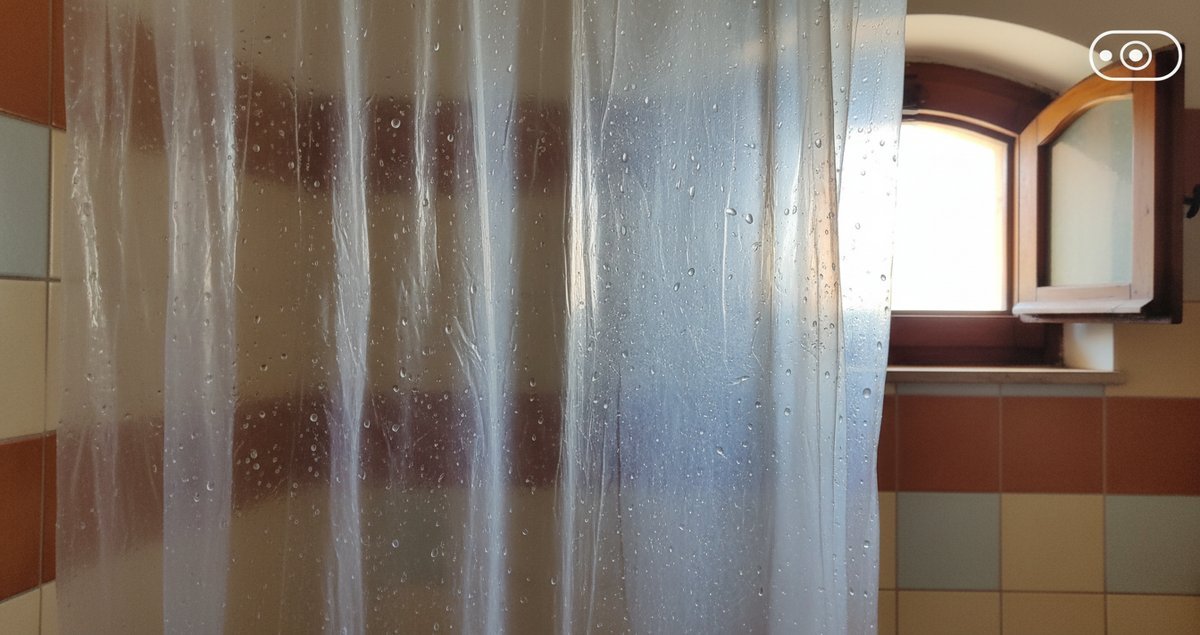
I do not like when my shower curtain stage dives toward me mid rinse. It feels personal. But the thing is not angry. It is obedient to physics. This small domestic betrayal has a tidy scientific story behind it and a few stubborn myths to be disassembled. Read on if you want both an explanation and some slightly impatient opinions about why so many online takes on this topic are shallow.
What actually happens when the curtain bows toward you
Turn the water on full, grab shampoo, and watch the curtain edge lean in. The phenomenon is not magic. Water leaving the showerhead drags air along. That moving air organizes into a pattern and, crucially, creates a low pressure pocket right near the curtain. Nature pushes in the direction of higher pressure. The result is the curtain collapsing inward.
Not just Bernoulli the whole time
Most people are taught the Bernoulli idea and stop thinking. Bernoulli explains part of it because faster air means lower pressure. But the shower scene is messy. Droplets, splashes, walls, tiles, the floor, the curtain itself all redirect flow. The more complete picture involves a driven vortex where the spray transfers momentum to the air and that air circulates in a stable spinning pattern. That vortex holds a low pressure center which the curtain finds irresistible.
What makes the shower curtain suck in is that you have low pressure on the inside and high pressure on the outside. There are two forces creating the low pressure inside the shower Bernoulli effect and driven cavity. The driven cavity creates a vortex that stays alive because the shower continuously drives it.
David Schmidt Associate Professor Department of Mechanical and Industrial Engineering University of Massachusetts Amherst
This explanation comes from a simulation study that used computational fluid dynamics to model the spray and air flow inside a shower. The important part to remember is that multiple mechanisms are at play and that some of them only appear when you model the whole system together.
Why your curtain hates heavy logic and loves light plastic
There is an obvious correlation that backyard mechanics will tell you without ceremony. Thick heavy curtains or glass doors rarely betray you. Thin plastic curtains are like tissue paper in a wind tunnel. The forces created by the vortex are weak. Weak forces only need a light target to show dramatic motion. So if you want immediate, nontechnical advice, a heavier barrier or magnets at the hem help. But a simple fix is not the whole story and you should not be content with surface solutions.
Why temperature alone is an unsatisfying answer
Plenty of explanations put heat at the center. Hot air rises therefore pressure drops inside the shower and the curtain bows in. That is not always correct because curtains still get sucked in during cold showers. Heat contributes sometimes but is not the universal driver. The vortex mechanism explains why curtain suction happens in hot and cold conditions and why the effect depends on nozzle, angle, and stall geometry.
Small geometry matters a lot
I cannot stress this enough. The angle of the showerhead, the shape of the tub, the presence of a shower shelf, even the curve of the curtain rod all rearrange how that vortex forms. One shower will create a coherent horizontal spinning wheel of air. Another will throw the energy into chaotic splatter that never sustains a low pressure center. This is why your friend never has problems but your apartment has trauma related to shower curtains.
Practical observations nobody mentions
Some of the most effective, low cost changes are not about material but about flow management. Point the showerhead slightly toward the side opposite the curtain. Reduce the vertical component of the spray so fewer droplets decelerate near the curtain and feed the vortex. Add a small strip of weighted fabric along the curtain hem. A tiny, heavy seam will change the curtain from a mobile membrane to a stubborn panel.
I have tried these things at different apartments and the results were surprisingly unequal. In one bathroom the weighted seam stopped the curtain entirely. In another it only reduced the drama. There is a subjective pleasure to finally feel like you have outsmarted a piece of plastic. That pleasure is real and somewhat petty which makes it satisfying.
Why many articles sound convincing and are still wrong
Two reasons. People love a single cause explanation and physics textbooks give tidy narratives. Bernoulli is elegant. Heat is intuitive. Those appeals to simplicity work well for quick reads but they fail when the system is not isolated. The shower is a mess of interacting elements. The experts who ran the models used computers because the math by hand is ugly. If you care about the truth you should expect complexity and skepticism.
My opinion about common DIY fixes
Gluing coins to the hem looks clever in a social media video. It works sometimes and looks cheap. Magnets attached to the curtain that stick to a metal tub are fabulous if your tub is ferrous. Swap the curtain for a glass door if you want a guaranteed outcome and can afford the change. But the most satisfying option is to fix the cause not just the symptom. Adjust the showerhead and the curtain position. Reduce the creation of the vortex at the source. That is more elegant than a row of coins.
Open ended bits I will not tidy
There are elements of household aerodynamic aesthetics that invite experimentation. Different materials, microtextures, perforations, and even small flaps could be designed to disrupt vortex formation. Is the ideal curtain one that frustrates the air so perfectly that it never makes a coherent low pressure eye Or is it better to channel the flow in a predictable harmless pattern The answer depends on what you are willing to live with and the cost of redesigning a thing as banal as a shower curtain.
Designers and engineers could do better than they have. There are products that look like they tried and failed. There are viable solutions lurking in textile science that no one mass produced yet. That gap between simple physics know how and attractive consumer design is where interesting inventions sit quietly waiting for someone bored in a shower to notice.
Short checklist to test your shower
Try these experiments slowly and notice changes. Turn the showerhead slightly away from the curtain. Try a cold shower to see whether heat plays a role. Replace the curtain with a heavier one briefly to test the mass effect. If the curtain stops acting up when you change a single variable that is the lever to pull for a longer term fix. These are imperfect but revealing probes.
| Problem | Likely mechanism | Reasonable fix |
|---|---|---|
| Curtain bows in during hot and cold showers | Vortex driven low pressure | Alter shower spray direction add weight to hem or swap to heavier curtain |
| Curtain only moves with high water pressure | Stronger spray creates stronger vortex | Reduce flow or change nozzle pattern |
| Curtain moves more with curved rods or odd geometries | Geometry sustains circulation | Reposition curtain or use a straight rod or door |
FAQ
Why does the curtain still move when I use cold water
Cold showers show that temperature is not the essential mechanism. The vortex forms because of momentum transfer from droplets to air. The circulating air produces a low pressure region irrespective of water temperature. If you want to be thorough measure where the airflow goes with smoke or steam visible sources. You will see circulation patterns even without heat.
Will a heavier curtain always fix the problem
A heavier curtain reduces motion because it increases the force needed to displace the material. It is an effective practical step but not guaranteed. In some geometries the low pressure can still move even thick fabrics. Pair a heavier curtain with small design changes like repositioning the showerhead for a reliable outcome.
Is Bernoulli principle wrong for this case
Not wrong just incomplete. Bernoulli explains how faster air corresponds to lower pressure locally but does not account for the sustained, room scale circulation created by the spray. The real scene is a combination . Bernoulli is a useful piece of the puzzle but not the whole puzzle.
Are there elegant commercially available solutions
There are products that try to solve the problem like weighted hems magnets and vented curtains. Glass doors and rigid panels are the most permanent solutions. The aesthetic tradeoffs matter and many mass market attempts prioritize price over fluid dynamic effectiveness which is why some designs look smart and fail silently.
How can I experiment safely
If you want to observe flow patterns use incense smoke or a harmless fog source while the water is off to see drafts then run the shower. Avoid slippery floors and do not place electronics near water. Slow careful experimentation yields the best empirical insight into why your particular setup behaves the way it does.
In short the shower curtain is not dramatic for dramaticness sake. It is an everyday window into fluid dynamics. If you fix the flow at the source the curtain will stop blaming you.
