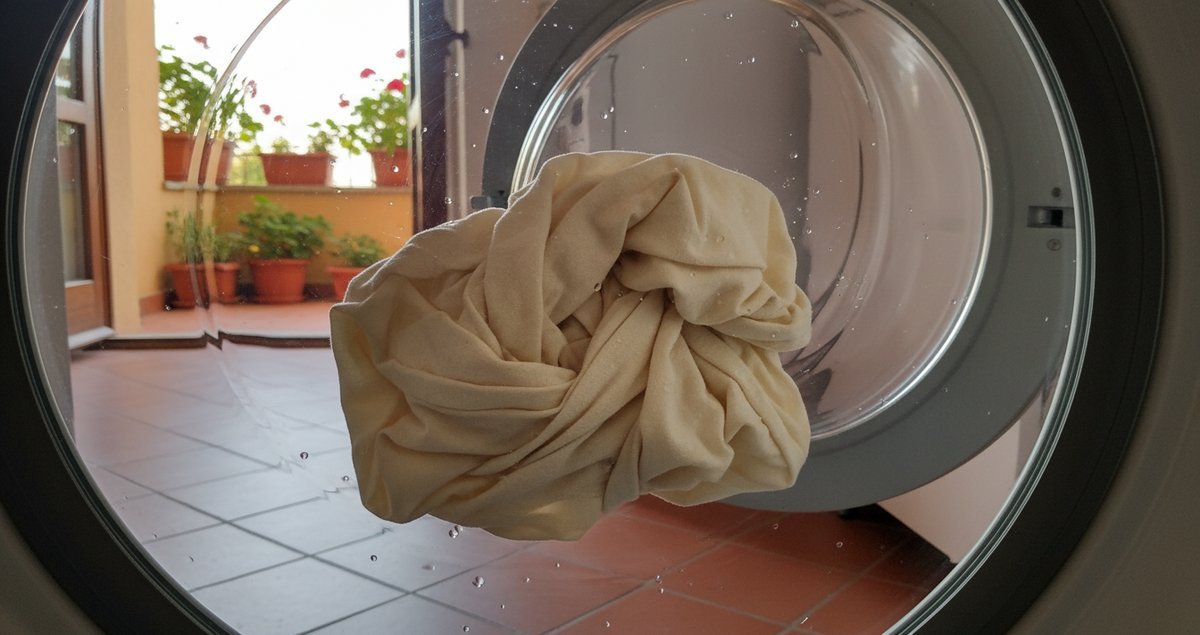
I once left a basket of damp laundry in a front loader for what I told myself would be an hour and woke up the next day bargaining with soap and scent. That bargaining never quite works. The smell that arrives is stubborn in a way that deserves its own name. This article is not a laundry confession column though I have those. It is an attempt to map why leaving laundry in the machine causes lasting odors and what that actually means for your home and your nose.
What actually happens inside a drum when you forget your clothes
There is an ugly chemistry that begins almost as soon as the spin cycle ends. Damp fabric holds heat and moisture. That mix becomes a playground for microbes and for chemical reactions between leftover body oils, detergent residues, and fabric finishes. Those reactions create microbial volatile organic compounds often abbreviated as MVOCs. MVOCs are the molecules your nose interprets as mildew sourness or that vaguely rotten towel smell.
“Musty smells are caused by microbes.” Nathan Kilah Senior Lecturer in Chemistry University of Tasmania
That quote is blunt and useful. It points to the central idea that the smell is biological and chemical at once. It also collapses a common misconception. This is not only about visible mold in a gasket. A machine can seem clean while a biofilm of bacteria and microscopic fungi lines areas you never see. Those invisible communities exhale the molecules that make your laundry feel irrevocably tainted.
Why time is the real accelerant
People often assume an hour or two is harmless. It is not. Microbial growth is exponential. The difference between a smell that is faint and one that clings is often just a few hours longer in a warm humid drum. Add porous fabrics like cotton or synthetics that trap oils and you have fast forwarding. The more time the microbes have, the more MVOCs they generate and the deeper those molecules sink into fibers.
How residues and machine design conspire
Washing machines are not morally neutral objects. Their surfaces and mechanical choices influence outcomes. Front loaders, beloved for efficiency, create pockets where water lingers behind seals and in detergent drawers. Liquid detergents and fabric softeners leave hydrophobic coatings that trap oils. Detergent scum becomes food for microbes. The structural reality of most machines invites retention of moisture and residue and that is the physical basis for the smell.
Not all fabrics are equal
Fibers have personalities. Wool breathes differently than polyester. Natural fibers may take longer to dry which gives microbes a longer window. Synthetics can hold onto body oils that are precisely the favorite nutrient for odor producing bacteria. Your workout shirt may be the villain not because you are unclean but because the materials were designed to repel water and hold scent molecules close to the textile.
Everyday behavior that makes it worse
There are household habits that accelerate the problem. Overfilling a drum prevents adequate rinsing so residues stay put. Cold cycle lovers inadvertently protect microbes that a hotter wash would suppress. Sloppy drying or hanging clothes in a humid room finishes the job. Finally, hiding smelly laundry in an overfull basket or tucking it into a closet before it is fully dry ensures those MVOCs have a captive audience.
I do not like telling people their choices are wrong. But I will say this plainly. If you want laundry that smells alive in a good way you must treat washing as a process with more than one moment. The wash is not the finish line. Drying and airing are part of the victory lap.
Machines do age and memory matters
Older machines accumulate biofilms and mineral scale the way any lived in thing does. Even if you clean a gasket a week ago the inner surfaces can still harbor a microbial population. The difference between a machine that smells fresh and one that harbors ghost scents is often maintenance rhythm. Monthly cleaning cycles and occasional hot washes are not rituals to impress guests. They are the actual barrier between fresh linen and persistent funk.
When scent masking fails
Scented detergents and boosters can feel like a magic eraser. In practice they often do less than we hope. Perfume layers over MVOCs and sometimes accentuates them depending on the molecules involved. Fragrances cannot unbind microbial residues from fiber or penetrate the biofilm lodged in a seal. Masking may make a load tolerable for an hour or two but it does not resolve the root chemistry.
One honest, somewhat stubborn conclusion: the moment you value smell over cleanliness you will keep encountering the problem. Fragrance is decoration not cure.
Solutions that respect reality
It helps to think like a microbiologist for a second. Microbes need moisture warmth and food. Remove one of those and you slow them. Remove two and you cripple them. Practical changes look like this. Retrieve laundry quickly. Use high efficiency detergent sparingly. Occasionally run a hot cleaning cycle without laundry to dissolve residue. Dry completely and avoid indoor overcrowded drying that keeps things cool and damp. None of this is thrilling writing but together these steps shift the balance back to freshness.
There is a second strategy that does not appear in every checklist: treat fabric choices as part of odor management. If you are prone to forgetting loads adopt materials that dry fast and shed oils more readily. Design your laundry routines around realistic human behavior not impossible ideals.
“There is no way to get rid of that musty smell except to wash them again.” Rebecca Van Amber Senior Lecturer School of Fashion and Textiles RMIT University.
That is not comforting but it is true. Once MVOCs are embedded the fastest path to reset is another wash that targets the residues and the microbes.
What I think as someone who writes about everyday failures
I believe the way we talk about laundry with each other is performative. Many tips assume a level of adherence that real life does not support. A more useful approach is to design forgiveness into systems. Set a timer on your phone. Wash smaller loads so retrieval is easier. Place a cheap drying rack in a consistent spot so the step after washing is obvious. Acceptance mixed with small structural changes will beat willpower every time.
There are open questions. How much does local climate tip the scales for an apartment in a cold damp city versus a sun drenched terrace in summer. How much do detergents actually vary in their long term effects on microbial communities. I do not promise definitive answers; I promise that understanding the mechanisms makes the problem less personal and more solvable.
Closing thoughts
Leaving laundry in the machine causes lasting odors because it creates perfect conditions for tiny biological factories to produce strong smelling molecules and then buries those molecules in fabric. The machine, the detergent, the fiber and your habits each play a role. The remedy is less about a single trick and more about arranging your life so the wet stage is as brief as possible.
Summary table
| Cause | Why it matters | Quick fix |
|---|---|---|
| Moisture and time | Enables rapid microbial growth and MVOC production. | Remove laundry promptly and dry fully. |
| Residue and biofilm | Provides food and shelter for microbes. | Occasional hot cleaning cycles and less liquid softener use. |
| Fabric type | Some fibers trap oils or dry slowly. | Prefer fast drying fabrics for frequent washes. |
| Drying habits | Slow or crowded drying lets MVOCs linger. | Space items out or use higher heat where fabric allows. |
Frequently asked questions
Will rewashing always remove the smell
Most of the time a targeted rewashing will reduce or remove the odor. Use a higher temperature suitable for the fabric and consider adding a cleaner that targets residues. For some stubborn cases you may need a dedicated machine cleaner or a second cycle. The key is to treat the fabric and the machine together not separately.
Does leaving clothes in the washer damage fabric
Prolonged dampness can weaken fibers over long periods and repeated exposure to microbial activity may cause discoloration or surface changes. Occasional delay is unlikely to wreck a garment but chronic neglect accelerates wear. Treating your laundry routine like small maintenance prevents gradual deterioration.
Are front loaders worse than top loaders for odors
Front loaders tend to retain more water around seals and detergent drawers which can favor microbial growth. Top loaders can also harbor residues but their geometry often allows more evaporation. The difference is real though manageable through maintenance and ventilation.
Can I prevent odors without using harsh chemicals
Yes. Mechanical steps matter more than chemicals. Prompt removal and thorough drying are primary. Regular hot cleaning cycles and using powdered detergents when appropriate reduce residue. White vinegar is often recommended for scent control though you should check manufacturer guidance for your machine. Non chemical strategies are effective when consistently applied.
How often should I run a machine cleaning cycle
Running a machine cleaning cycle every one to three months depending on use frequency is a reasonable rhythm. Heavy users may want monthly maintenance. The goal is to interrupt biofilm formation before it becomes established.
