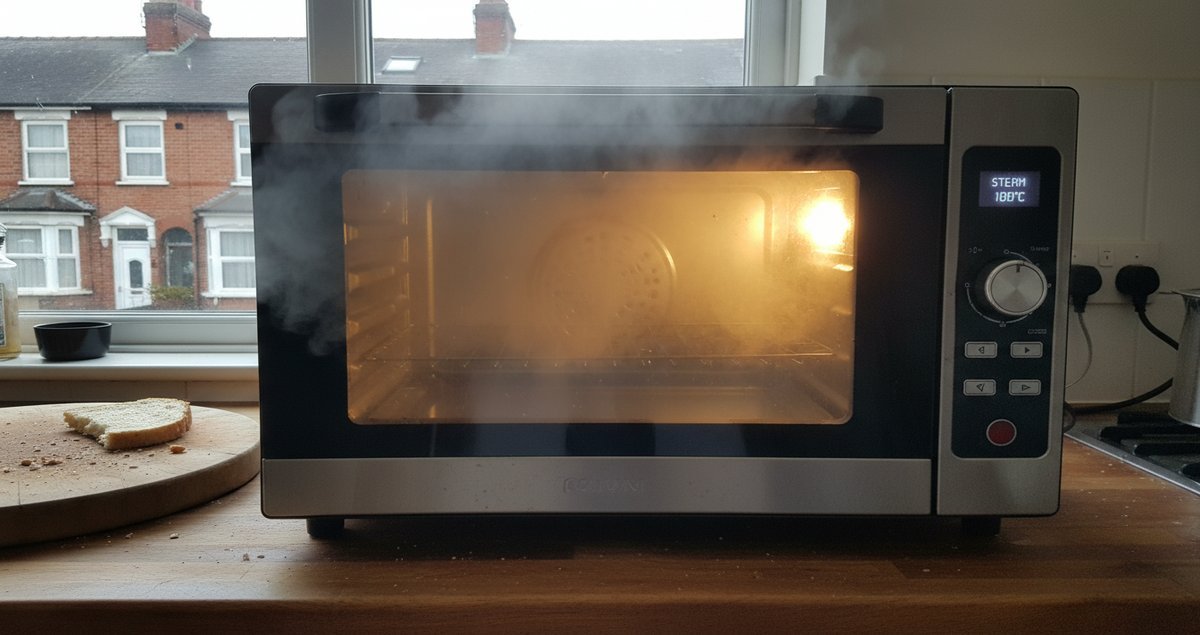
I used to have a ritual with my microwave. A hurried thumb press. A curious half minute of nothing. Then the unavoidable confrontation with a soggy edge or a pocket of molten heat that turned my lunch into an argument with texture. I thought microwaves were eternal. I was wrong.
Not a fad Not a tiny upgrade but a different promise
The machine quietly stealing the microwave’s minutes is not glamorous. It does not scream about social feeds. It looks like a small built in oven or a squat countertop box with a glass door, a measured hum and a panel of sensible symbols. Its name in shops changes from combi steam oven to speed oven to convection steam cooker. The technical core is familiar to chefs but new to many kitchens. Dry convection heat meets carefully timed bursts of steam. Infrared panels or top heating elements sometimes lend speed. Software tames the rest.
Why this feels like a real replacement
Microwaves won on speed and convenience. The new machines win on two things that actually matter when you eat: texture and trust. A slice of pizza can come back with a crust that cracks. Leftover chips can regain a lively mouthfeel. Curries and stews reheat without separating into an oil slick and sad paste. For people who already fight with microwaved food every week this is not a small upgrade. It is the difference between tolerating a meal and enjoying one.
I will not pretend that this is a pure technological miracle. The trick is not rocket science. It is, however, an elegant engineering trade off and much better software. The oven uses convective air to carry heat evenly while injected steam prevents the outer layer from drying out before the centre warms through. Sensors and presets measure internal temperatures and adapt the cycle. That makes the reheating job predictable in a way microwaves rarely are.
Experts are noticing the shift
Designers and retailers I spoke to are swapping the phrase you need both for the blunt observation this could do most of the jobs a microwave does but do them with respect. Maria Stapperfenne a New Jersey based designer observed good reason to favour combi units for many kitchens.
My clients are increasingly favoring combi ovens due to their multi functionality. Models with a built in air fry feature are particularly appealing as they provide added versatility while eliminating the need for an extra countertop appliance. Maria Stapperfenne New Jersey based designer.
That line is not marketing fluff. It reflects a real tilt in substitutions in high spec kitchens and among consumers who will spend on fewer but smarter appliances. Another designer Crystal Hackl framed the trend around convenience and shifting expectations.
We are specifying more and more multi function ovens including convection microwave ovens with smart cooking modes and steam or steam assisted convection ovens with smart cooking modes to optimize cooking time flavor and food quality. Crystal Hackl Boise and San Francisco Bay Area designer.
What the microwave still does better
There is a familiar economic friction here. Microwaves are cheap ubiquitous and ridiculously simple. They still beat the newer ovens for certain ultrafast needs and for tiny spaces where an installed combi oven is not practical. If you live in a tiny flat or you need to melt a small spoonful of butter in twenty seconds the microwave retains an advantage.
But the new devices are encroaching on what people assumed would always be microwave territory. Reheating in under ten minutes with a result you would happily serve at a table shifts habits. When reheating is no longer an act of damage control the microwave loses its social utility.
Personal notes from a kitchen that changed
I replaced a little countertop solo unit last autumn. The first week was awkward. I missed the instant gratification. By the third week I had stopped thinking about speed and started noticing meals. A leftover roast appeared as if revised rather than revived. I warmed leftover pastry without it dissolving into sadness. Energy readings showed small wins but those numbers do not explain the full change. Meals felt more deliberate without being slower. There is a certain domestic dignity to food that arrives whole again.
Not everyone will convert and that is okay
Expectations vary. Some households cling to the microwave like a linchpin. Students on shared housing budgets are unbothered by texture. For single people with a strong commute the micro remains a tool of survival. The combi trend matters most where people value the everyday quality of food and can afford the switch either in space or budget.
The economics and the installation reality
Combi steam and speed ovens cover a huge price and size range. Countertop models are accessible and can sit where a microwave once stood. Wall mounted or built in versions require planning and sometimes a service contract. That complexity is not hype. It is the reason adoption will be gradual. The microwave will not vanish overnight. Instead there will be a thinning out in how people use them. The microwave will become what the dial telephone became a decade ago. Present but seldom chosen.
The other practical point is repair and service. These newer units are more sophisticated. If your oven is from a brand with good UK support the long term experience can be fine. If you buy a cheap import and services are patchy the small gains evaporate quickly.
Where this sits in the wider food culture
There is a cultural dimension to the shift. Food culture increasingly prizes texture and freshness as non negotiable in everyday meals. Social feeds amplify moments of revived leftovers and crisp reheats. The new machines are a device response to that tidal change. They are appliances designed in part for people who want the comfort of prepared food but insist that it not taste like a memory of its former self.
Still some important questions remain open. How will manufacturers balance longevity with software driven planned obsolescence? How will secondhand markets adapt when wall mounted units need matching trim kits and servicing? These are not errors of technology but of a consumer system that has rarely asked how we will keep appliances alive beyond a few warranty years.
Final take
If you eat reheated food often enough that its failure matters then a combi steam or speed oven is not a luxury. It is an improvement with cumulative benefit. It will not eradicate microwaves tomorrow but it will steadily shrink their domain. The shift is part taste part design and part software. People looking for a better reheating experience should consider what they eat and how they live before they toss the old box. For many kitchens the microwave is aging gracefully into irrelevance. For others it will be stubborn company for a good while still.
| Key idea | Why it matters |
|---|---|
| Combi steam and speed ovens | Combine convection heat and steam to reheat food evenly and preserve texture. |
| Texture over instant heat | Results are closer to freshly cooked meals making reheating a pleasant experience. |
| Adoption barriers | Cost installation and repair networks determine who switches. |
| Microwave remains useful | Ultrafast tasks small spaces and budget constraints keep the microwave relevant. |
FAQ
What exactly does a combi steam oven do that a microwave cannot
A combi steam oven uses circulating hot air together with precise injections of steam to warm and cook food. The combination prevents surface drying and allows heat to move more predictably across a dish. A microwave heats from within using electromagnetic waves which can leave cold patches and create texture failures in fried or baked items. The combi method therefore excels at preserving crispness and moisture balance and often produces a result you would gladly serve rather than hide under sauce.
Will switching save me money on energy
Energy outcomes depend on use patterns. A microwave is efficient for tiny single tasks. A combi oven can be more efficient when it replaces repeated conventional oven use or when it reheats with fewer retries because food returns in a more acceptable state first time. The financial calculus differs by household so look at what you do most in your kitchen rather than rely on headlines.
Is installation complicated
Countertop combi units need no special work. Built in models require planning and sometimes a dedicated outlet or ventilation considerations. If you choose a larger built in unit consult installers and check local UK service availability. Complexity can add cost upfront but often improves ergonomics in a long term kitchen layout.
Do these ovens require special cleaning or maintenance
They often include self cleaning modes and removable water reservoirs for steam generation. Because they use moisture occasionally there is a mild difference in cleaning practice compared with a microwave. Regular checks of seals and drip trays are sensible and buying from a brand with UK servicing makes a practical difference over time.
Will restaurants or professional kitchens adopt this widely
Many professional kitchens already use steam assisted ovens and speed ovens for specific tasks. What is changing now is the translation of that functionality into domestic scale and price points. Restaurants will keep more heavy duty gear but the domestic trend mirrors professional values about texture consistency and speed for certain plates.
How should I choose between models
Decide on size and placement first. Think about whether you need countertop portability or a built in look. Check supported cooking modes and whether the brand offers local parts and service in the UK. Read tests focusing on reheating performance not just crisping claims and consider what you most often reheat or cook in a week.
There will always be a place for the small microwave for some people. But for many the combi steam or speed oven is no longer a curiosity. It is the appliance that quietly improves everyday meals in ways that matter more than a ping.
