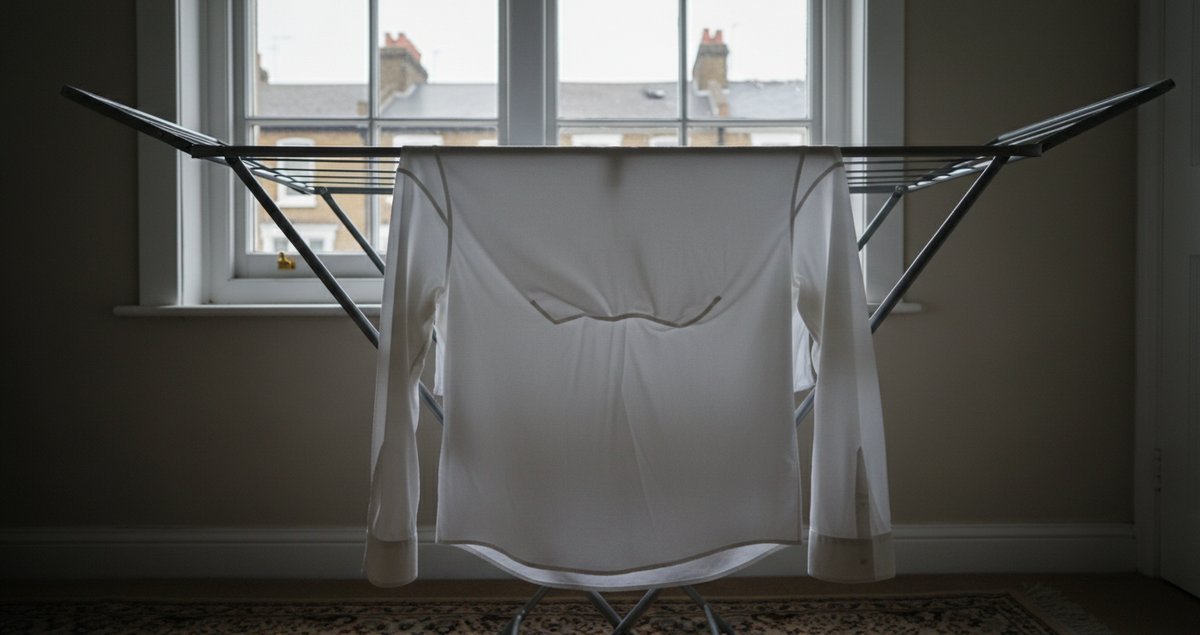
I still hang shirts in my flat when the weather turns miserable. It feels domestic and modest. But there is a nagging question most of us shrug away with a shrug that smells faintly of damp towel. Does drying clothes indoors damage your homes air quality. I set out to push past the half remembered warnings and the quick fixes and look at what really changes inside the rooms where laundry is left to drip and steam.
What actually happens in the room when you air dry laundry
Wet fabric releases water. That is boringly true. It also releases microscopic fibres lint and a fine mist of detergent and softener residues. The water vapour raises relative humidity and if it lingers it condenses on cold surfaces windows walls plaster. Over a week of habitual indoor drying that condensation becomes visible mould or stubborn damp patches. Many of those changes are physical and measurable and then they start to influence the air you breathe.
Why humidity matters beyond discomfort
There is a threshold where damp stops being simply unpleasant and starts to be a habitat. Fungi and dust mites thrive above certain humidity levels. A single load of wet washing can release nearly two litres of water into a room as it dries. In a poorly ventilated space that extra moisture does not vanish. It alters the microclimate and gives spores a place to settle and multiply. That is not speculative. It is the anatomy of a damp problem repeated across millions of homes.
Not all harm is equal
If you are healthy and you dry a small amount of washing in a reasonably ventilated room you will probably be fine. But houses and households vary wildly. Apartments with single glazed windows old terraces without extractors and newer airtight homes without trickle vents present different risks. The people who pay the price first are those with asthma chronic lung conditions or weakened immune systems. This is where indoor drying moves from nuisance to potential hazard.
One load of wet washing contains almost two litres of water which is released into the room. Most of us are either immune to the fungus which grows in these humid conditions or have a sufficiently healthy system to fight the infection. But in asthma sufferers it can produce coughing and wheeziness and in people with weak or damaged immune systems the fungus can cause pulmonary aspergillosis.
Professor David Denning Professor of Infectious Disease in Global Health National Aspergillosis Centre University of Manchester
Expertise that changes how you think about a drying rack
Professor Denning is not speaking in scare headlines. He is an infectious disease expert who treats people harmed by mould related lung disease. His observation reframes the act of drying laundry from a domestic chore to a variable in home health. This does not mean every drying rack will lead to lung disease. It does mean repeated indoor drying in poorly ventilated rooms raises the odds that moisture will cause structural and airborne problems over time.
Common myths I want to kill now
There are a few tidy little sentences people trot out to absolve bad habits. Myth one is that only visible mould matters. Not true. Invisible spores can circulate and trigger symptoms. Myth two is that a burst of central heating will solve it. Heat without airflow simply moves warm humid air to cool corners where it condenses. Myth three is that fabric softener prevents odour and therefore damp. The residues from laundry products can actually feed microbial growth in damp textiles.
Less obvious damage that people ignore
I have stood in flats where living rooms looked tidy but the skirting boards gave up paint like a confession. Mould eats more than your nerves. It undermines plaster paints and joins. That is property decay not melodrama. And the quieter cost is time the time you will need to spend redecorating chasing moisture rather than enjoying your space. It is a slow leak from everyday convenience to future expense.
Simple technical differences that change risk
How you dry clothes matters. A full rail crowded with heavy cottons in a small bedroom is a very different proposition to a single load spread out in a well ventilated kitchen. A heated airer reduces drying time and therefore reduces the period the room remains humid. A tumble dryer with external venting or a condenser collector removes moisture from the room entirely. Dehumidifiers actively extract water from the air but they vary by efficiency and running cost.
What people rarely measure
Humidity readings are cheap and they tell a brutal truth. When a home spends long periods above 60 percent relative humidity the environment favours growth. Many of us live in that band during winter without realising. The surprise is how quickly a single laundry load can push local humidity past the danger line in a closed room.
Practical choices that reflect values not fear
This is personal. I do not believe in rewriting daily life to the tune of alarm adverts. But I do think households should make intentional trade offs. If you choose to air dry indoors because of expense or garment care then accept the work required to manage humidity. That means ventilation monitoring window trickle vents occasional dehumidification and moving drying away from sleeping spaces. Making a considered choice feels different from pretending the risk does not exist.
Design and policy angles few blogs discuss
Housing design is part of this puzzle. Older homes had airing cupboards and drying places built in. Modern builds are often sealed for energy efficiency but lack safe drying spaces. Policy and design could reintroduce simple mechanical extractors dedicated to laundry areas or mandate drying cupboards in new flats. That structural fix would remove the onus from individual habit and move it into the realm of better home design.
My conclusion and a not entirely tidy caveat
Yes drying clothes indoors can damage your homes air quality under certain conditions. The scale of harm depends on your ventilation the amount of laundry frequency and who lives with you. It is avoidable in many cases but not always convenient. Do not let convenience become denial. Air quality in homes is incremental. Small repeated choices accumulate into a room that breathes well or a room that slowly invites damp to claim it.
I am partial to pragmatic realism. Air drying is not evil. It is an activity that rewards attention. The alternative is pretending that hanging a load in the living room is merely an aesthetic choice indifferent to health or property. It is not indifferent.
Summary table
| Issue | Reality |
|---|---|
| Humidity increase | One load can release nearly two litres of water raising local relative humidity quickly. |
| Mould risk | Persistent damp and poor ventilation create conditions where mould spores grow and accumulate. |
| Who is most vulnerable | People with asthma chronic lung disease or weakened immune systems face highest risk. |
| Mitigation options | Ventilate use dehumidifiers heated airers tumble drying or dry outdoors when possible. |
| Design fix | Dedicated ventilated drying spaces or mechanical extractors in housing would reduce household burden. |
Frequently asked questions
Can a single instance of indoor drying harm my air quality
A single load in a well ventilated space is unlikely to create persistent air quality problems. The real issue is repetition and lack of ventilation. If you occasionally hang small amounts of washing and open a window or run an extractor the event is transient. Chronic indoor drying without airflow is the pattern that creates lasting damp and spore growth.
Are dehumidifiers actually effective when drying clothes indoors
Dehumidifiers work by extracting moisture from the air and they shorten the time textiles release water vapor. They are helpful in small or enclosed spaces and when used during drying they reduce residual humidity. Effectiveness varies by capacity and room size. They are not a perfect replacement for airflow but they are a pragmatic tool when ventilation is limited.
Do laundry detergents and softeners contribute to poor indoor air quality
Laundry chemicals can leave fine residues on fibres that become airborne as dust and can settle in fabrics and house dust. These residues may add to indoor particulate load and potentially feed microbial ecosystems in damp textiles. Choosing lower residue products or ensuring garments are fully rinsed and dried quickly reduces this component of indoor air burden.
Is a tumble dryer always the better option
Tumble dryers that vent outside or use condensation technology remove or collect moisture rather than releasing it into living spaces. They reduce humidity problems but carry energy and maintenance costs. They also can be rougher on certain garments. The choice balances convenience efficiency and fabric care. The environmental and operational costs do matter and they are part of a household decision not a moral failing.
When should I consider professional help for damp or mould
If you see repeat mould growth stains or structural damp or if occupants experience persistent respiratory symptoms that correlate with indoor damp it is sensible to consult housing or environmental health professionals. Those signs indicate a systemic moisture problem rather than occasional laundry related spikes.
How should I prioritise changes in a rented home with no easy fixes
In rented accommodation small steps matter. Use a portable dehumidifier choose a heated airer or dry packs in cupboards and ask landlords about ventilation improvements. Document visible damp take photographs and communicate repairs in writing. Tenants rights vary but damp is a housing quality issue that often demands landlord responsibility.
There are no neat heroics in this subject just a set of trade offs and a little humility. Laundry will always be part of life. Whether it slowly files your walls with damp depends less on fate and more on the choices you make about airflow timing and where you hang, or do not hang, your washing.
