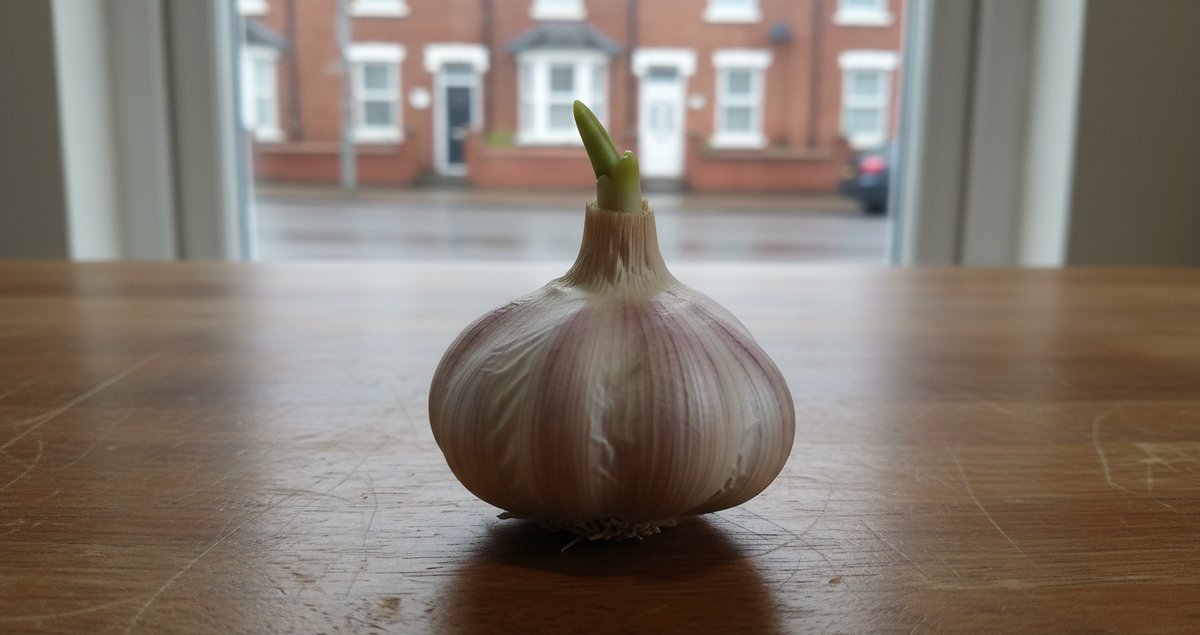
I bought a bag of locally grown garlic and within weeks the cloves had little green mouths peeking out. It annoyed me in a way only small domestic betrayals can. I started poking around the pantry and the bed, asking simple questions that gardening forums like to answer with folklore. But there are concrete reasons your garlic might bolt into life long before spring arrives. This piece is part observation part temperamental opinion and part practical rooting around in the science. If you wanted a straight laundry list this is not it. If you want to understand why that pantry sprout feels personal and what you can do about it then keep reading.
Why premature sprouting feels like a mystery
Garlic is not mystical. It is, however, tuned to environmental cues in ways that often confuse human schedules. The biological control system inside a clove is guarding a meristem a tiny treasure chest of potential leaves and stems that wakes when conditions look favourable. What looks like an early awakening is usually the clove responding accurately to signals it thinks are spring. We misinterpret those signals because our homes and stores do not follow the seasonal rhythms of a field.
Three main triggers that are quietly decisive
Temperature. Garlic dormancy is temperature sensitive. A prolonged spell in that cool but not cold range is the equivalent of a false spring. Humidity. Moisture wakes cells and the meristem, but too much moisture can damage tissue and mimic wet early spring conditions. Ethylene and proximity. Store your garlic next to ripening fruit and you have supplied a chemical nudge the plant can read as a green light.
These are the usual suspects. But there is texture beneath the headline causes a set of subplots I seldom see covered properly.
Storage history matters more than the label bag
Not all garlic is created equal for storage. How a bulb was cured and how long it sat in a warehouse before it reached your kitchen both sculpt its dormancy. Freshly harvested bulbs that have not been thoroughly cured keep a metabolic memory of growth. Older bulbs that were dehydrated deliberately are closer to dormancy fatigue and resist sprouts longer. I have watched supermarket bulbs bought the same day behave differently in my own kitchen depending on whether they came from a farmer who cured in a ventilated barn or a processor who dunked and dried quickly.
UMass Extension has longstanding notes on post harvest behaviour and storage temperatures that show how different temperature bands influence dormancy. Their team looks at storage science with the sober mood of people accustomed to commercial realities and the numbers matter. Some storage temperatures will actually roughen bulbs and trigger side shoot sprouting or cause delayed emergence in the field if used as seed. That is not hypothetical it is a farming headache with a name.
When garlic starts to turn green inside it typically means that the garlic is sprouting. This occurs when the garlic begins to grow new shoots and roots indicating that it is no longer fresh and has been stored for too long. Minwei Xu Assistant Professor Plant Science Department North Dakota State University
Why that quote matters
Minwei Xu draws attention to the simplest truth most of us ignore we store garlic too casually. It is not an attack on anyone though it has the emotional tone of a small but firm rebuke. I think of Xu when I see a garlic bulb shoved into the bottom of a fruit bowl beside apples. The chemistry of those two items is a conversation and the apple speaks loudly.
Microclimates inside your home and their mischief
A kitchen is a patchwork of microclimates. Behind the oven you have heat vortices and warm pockets. By the back door there is a cold draft. On top of the fridge there is steady heat and often the most tempting place to store onions and garlic. The clove does not care about your habits only the temperatures and humidity it experiences over weeks. Even short repeated nudges into the wrong temperature range can add up. Your garlic, in other words, is taking a long term reading of a lot of small lies you tell it about the seasons.
It helps to notice the rhythms. I stopped storing bulbs near the fruit bowl and found the sprouting rate dropped. That is anecdotal, but consistent with controlled guidance from extension services who recommend cool dry and ventilated storage tailored to whether you intend to eat the bulb or plant it.
Varietal temperament
Some garlic varieties are restless and some are conservative. Softneck types behave differently from hardneck types when it comes to dormancy and chilling requirements. If your garlic came from a producer in a mild maritime climate and then you store it in a colder cellar you risk confusing the cloves further. There is a personality to each variety and one of the pleasures of growing your own is learning that personality, though it can be maddening when the bulbs betray you at the table.
Diseases or damage that masquerade as sprouting
Not every green is a healthy green. Certain infections and nematode damage can stimulate irregular growth or make the bulb more prone to sending up weak shoots. If you have bulbs that sprout and then rot this is a warning. Curing and selecting healthy planting stock matters if you plan to keep bulbs into the next season. Extension labs will tell you that poor curing is the single most preventable cause of storage failure. I believe the same applies in a domestic context though I concede my gardening zeal sometimes looks like fussiness.
Practical adjustments I actually use
I stopped treating garlic like a generic vegetable and started treating it like a living seed. I separate bulbs into small breathable bags I stash in the coolest cupboard away from fruit. I avoid the fridge as a first option because the fridge can be too moist and its temperature swings can disorient certain varieties. If I have an unusually large haul I separate into smaller portions and use the oldest first. This simple act of parceling your supply buys you control over the microenvironment.
It is not the only path. If you want maximum shelf life for roasted garlic or long term culinary planning freezing peeled cloves is a different conversation and a different set of compromises. I favour practical small moves that align behaviour with biology without becoming obsessive.
What we do not fully understand yet
There are genetic subtleties that modulate dormancy and our commercial sorting and grading hides those differences from consumers. We also do not have a universally simple test that tells us whether a bulb will sprout in six weeks or six months. A lot of postharvest science is specific to scale and variety and less helpful when you are standing at a kitchen table. I like that uncertainty. It means gardeners still get to experiment and be surprised.
A short argument
We are quick to blame a premature sprout on bad garlic or poor harvests. Often the blame belongs partly to our storage habits and partly to the supply chain. Both deserve some scrutiny. If you want garlic that behaves, learn to read the signals and shape the environment. If you want to plant garlic, treat seed stock as sacred and seek guidance from extension services on proper temperatures and humidity for storage.
Your garlic is not capricious. It is simply responding to a world we have reshaped around it. Sometimes I like that thought because it reminds me that even the smallest acts of storage and care are dialogical. Sometimes I find it infuriating because I like my pantry to behave like an obedient wardrobe. Live and learn. And if a clove sprouts prematurely it is not the end of the world it is an invitation to pay attention.
Summary
Temperature fluctuations humidity proximity to ethylene producing fruit storage history and varietal differences are the main drivers of premature garlic sprouting. Practical steps include separating stock storing in cool dark well ventilated spots and treating seed garlic differently from culinary garlic. There remains variation and room to experiment.
Key ideas table
| Trigger | Why it matters | Practical note |
|---|---|---|
| Temperature | Cool but not freezing ranges mimic spring and break dormancy. | Avoid prolonged storage around 4 to 10 degrees Celsius for cloves intended for long storage. |
| Humidity | Moisture activates growth; high humidity can also promote rot. | Store dry in ventilated containers; avoid plastic sealed bags. |
| Ethylene exposure | Ripening fruit emits a growth hormone that nudges sprouting. | Keep garlic separate from apples potatoes and other ethylene sources. |
| Storage history | How garlic was cured and how long it sat affects dormancy depth. | Prefer well cured bulbs and rotate stock by age. |
| Variety | Different garlic types have different chilling requirements. | Learn the temperament of your chosen variety over seasons. |
FAQ
Will sprouted garlic ruin my recipes
Sprouted garlic can taste sharper and sometimes bitter especially when used raw. In cooked dishes the difference often softens. Many cooks remove the green shoot from the clove when preparing raw sauces or dressings. Flavour perception is subjective so you may prefer one way or another. This is about taste not safety.
How quickly does storage temperature influence sprouting
It depends on how consistently the garlic experiences a triggering temperature zone and on variety. Repeated short exposures to a warm range can add up and effectively break dormancy over weeks. A single brief warm day rarely triggers immediate sprouting but repeated nudges will. This makes steady conditions more important than occasional extremes.
Should I refrigerate my garlic
The refrigerator can be useful for short term control but it has trade offs like higher humidity and potential flavour changes. If you keep garlic for months consider a cool dark ventilated pantry or cellar that keeps the bulb in a stable cool environment without condensation. If you refrigerate wrap cloves loosely and use them promptly once removed.
Can poor curing cause early sprouting
Poorly cured garlic retains more moisture and metabolic activity making it more prone to sprouting and rot. Proper curing in ventilated dry conditions reduces the chance of premature growth. If you grow your own cure bulbs thoroughly before long term storage.
Is sprouted garlic safe to eat
Yes sprouted garlic is safe to eat. The flavour can be altered and texture may change. Many chefs prefer to remove the green shoot when using raw garlic. Use sensory judgement and personal preference to decide how to proceed in recipes.
Where to find reliable guidance
University extension services and horticultural research centres provide detailed notes on storage temperatures and handling for both culinary and seed garlic. They also publish practical recommendations for curing and diagnosing problems related to storage. These are robust practical sources for gardeners and growers.
That is the story for now. Garlic will do its own thing and you will do yours. If you want to reduce the surprise factor you can treat the bulb with respect and intention and your pantry will become less of a conspiracy and more of a conversation.
