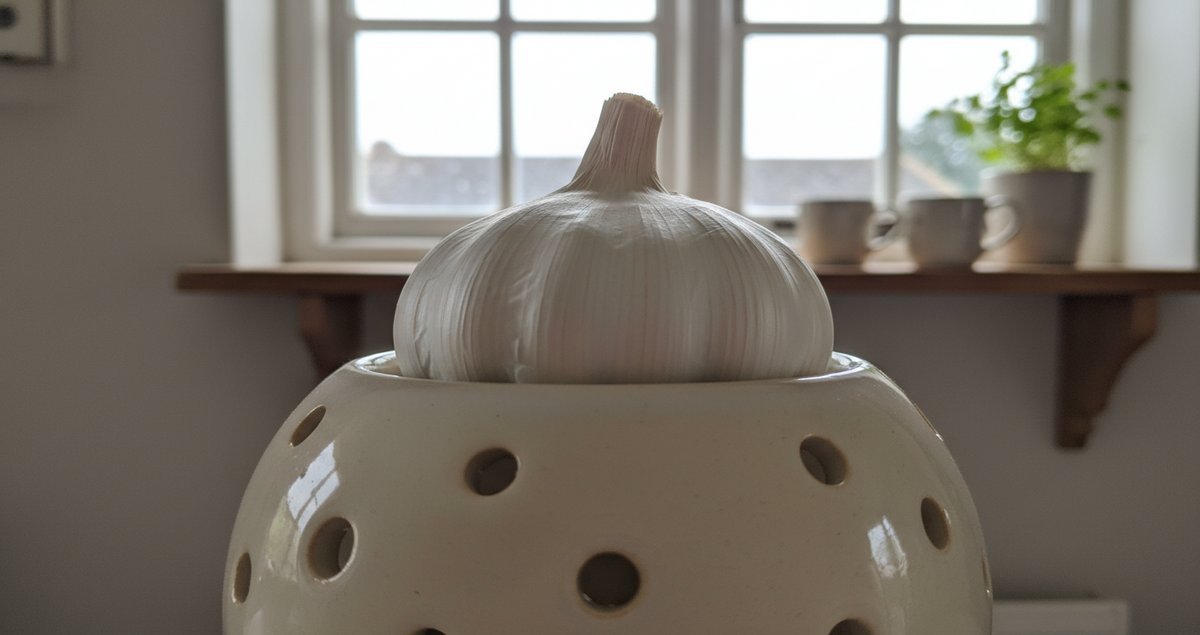
I used to think garlic belonged in a jar on the counter until one damp November ruined a whole head overnight. Since then I have been oddly militant about where I keep bulbs. It is a tiny domestic obsession but one that touches every roast, every sauce, every lazy midweek dinner. This piece is about where garlic should live in your kitchen and why most of us are doing it badly without realising.
Why storage matters more than you realise
Garlic does not behave like onions or potatoes. It is not simply a fragrant ball you leave where it will be handy. Its chemistry, its dormancy and its reaction to temperature and humidity change how long it keeps and how it tastes. Put garlic somewhere warm and moist and it will sprout or soften. Put it somewhere too cold and different changes happen. These are not abstract lab notes. They are the difference between a lively clove and one that tastes tired and bitter.
Common mistakes that feel sensible
People tuck garlic in the fridge because they think cold equals long life. Others keep it next to the stove out of convenience. Plenty buy ceramic garlic keepers because they are pretty and promise air flow. All those choices have trade offs and some deliver the opposite of what they promise. Refrigeration can encourage sprouting in cloves separated from the bulb and a warm corner near the cooker will speed deterioration. Pretty containers without true ventilation merely trap moisture.
The counter truth about the best place to store garlic
The best place to store garlic for most home kitchens in Great Britain is a cool dark pantry or larder area with good air circulation and relatively low humidity. Not the fridge. Not on the sunny countertop unless you eat the bulb within a week. There is nuance though: the ideal temperature for long term storage is surprisingly low but not freezer low. Commercial stores aim for temperatures near just above freezing with low humidity. Most domestic pantries can approximate the conditions well enough to keep bulbs firm and flavours intact for months rather than weeks.
“The green sprout is a sign that garlic is losing both its flavor and nutritional value. To prevent the green growth store garlic in a cool dry place with good air circulation and avoid ethylene producing fruits such as apples and tomatoes nearby.”
Minwei Xu Assistant Professor Plant Sciences North Dakota State University
I am not pretending this is the only expert view but I am using it because it matters practically. When a clove sprouts the flavour profile shifts. You can still cook with it but that bright raw edge you expect is altered. These changes are not dramatic at first, they are incremental. The kind of slow ugliness that reads as culinary defeat only when you pile the next number of meals on top of it.
Storage by form not habit
Whole heads behave differently to separated cloves and chopped garlic behaves differently again. Keep whole heads intact while storing as that preserves the bulb’s internal humidity and slows sprouting. If you break bulbs into cloves and do not use them fast, their clock accelerates. Chopped or crushed garlic should be used quickly or frozen. Garlic in oil is a special case because it can create an anaerobic environment that is risky unless refrigerated or frozen. This is why storage cannot be a one size fits all instruction stuck on the jar.
How to create a small garlic microclimate at home
You do not need a root cellar. A few pragmatic adjustments will make a real difference. Choose a place away from windows and ovens. Look for a shelf inside a cupboard where air circulates, avoid closed plastic bags and airtight containers and prefer a paper bag mesh or ventilated ceramic container. Aim for dry rather than cold. If you have a cool porch or airing cupboard that stays between about 2 to 8 degrees centigrade and is dry that will keep bulbs longer than the kitchen counter. If not, a pantry shelf a little away from light will do fine.
Practical tip that most blogs miss. Don’t cluster bulbs together in a single heap. Give them breathing room. Garlic off-gassing and moisture migration are real in close quarters and keeping heads separated slows the chain reaction where one soft bulb contaminates the rest.
When refrigeration makes sense
There are moments when the fridge is the right choice. If you have peeled cloves or a garlic infused oil that you will use within a week the refrigerator is safer. If your kitchen sits regularly above 24 degrees centigrade and you will not eat a bulb soon then refrigerating whole heads in a ventilated container can slow decay. But be cautious. Cold stored garlic can sprout when brought back to room temperature. If you reach for the fridge because it is convenient you are trading one problem for another.
A few contrarian thoughts
I dislike garlic keepers sold with elaborate claims. Many of them are decorative and poor at their job. Some ceramic jars have tiny holes that look like ventilation but do not allow real airflow. A basket does just as well and is cheaper. I also believe the habit of buying vast quantities because they are on sale is false economy. You may save money per bulb but you lose flavour stockpiling more than you can reasonably eat before sprouting sets in.
There is also a cultural element. In many British homes garlic is an occasional luxury not a pantry staple. If that is you then keep a small, smart supply and rotate often. For households that cook with garlic daily invest in freezing methods for peeled cloves. Frozen garlic loses some textural nuance but retains usable flavour and spares you the ritual of constant shopping.
Personal confession
I still make mistakes and occasionally nibble on a sprout out of curiosity. It tastes sharper than I like. That little experiment keeps me honest. Storage is not about perfection. It is a deliberate habit that pays back through more reliable cooking and fewer wasted bulbs. My kitchen now has a small ventilated box on the pantry shelf and a freezer bag of peeled cloves. It feels deliberately organised without being precious.
Final thought that is intentionally open ended
The conversation about the best place to store garlic is as much about temperament as it is about temperature. If you buy often and cook quickly a countertop jar is fine. If you buy in bulk or want to keep bulbs longer treat them like a perishable with preferences. You will learn by tasting. There is no shame in the trial and error of domestic life. Keep one observation in mind the right place is the place that preserves texture and flavour long enough for you to care.
Summary Table
Storage Situation Whole heads Pantry shelf cool dark dry. Cloves separated Use soon or freeze. Chopped or crushed Use immediately or freeze in oil under refrigeration. Ceramic keepers Only if truly ventilated. Fridge Use for peeled cloves or when kitchen is very warm. Avoid Store in airtight plastic at room temperature. Space bulbs Keep separated to prevent moisture transfer.
FAQ
Where on the kitchen shelf is best for garlic?
Look for a dark shelf away from heat sources. A middle shelf inside a cupboard that is not next to the oven or the kettle is ideal. The point is to avoid fluctuating temperatures and direct light. If your home has a small larder or cool pantry use that. The goal is steady conditions rather than a specific height.
Can I store garlic in a ceramic garlic keeper?
Yes if it truly ventilates. Many ceramic containers are decorative rather than functional. The right keeper will have enough holes for air to move through but not so many that bulbs dry out. Mesh baskets or paper bags often perform better and cost less. Test any keeper by leaving it empty overnight in a humid spot to see if it traps moisture.
Is it okay to keep garlic with potatoes or apples?
No. Fruits and vegetables that emit ethylene accelerate sprouting and decay in garlic. Keep garlic away from ethylene producers apples tomatoes and potatoes. The proximity effect is subtle at first but it changes the bulb’s dormancy and will shorten usable life.
How long will garlic last if stored correctly?
Whole well cured heads stored cool and dry can last several months. Exact duration varies by variety and how well cured the bulb was at purchase. Separated cloves last much shorter. Use tasting and touch as your guide a firm dry bulb without green shoots is your best indicator.
Should I freeze garlic and how?
Freezing works especially well for peeled cloves or for purées in oil. Flash freeze single cloves on a tray and then transfer to freezer bags for flexible use. Frozen garlic is convenient for cooking though the texture changes. The flavour remains serviceable and often preferable to using tired sprouted cloves.
What is the one storage habit that improves everything?
Rotate stock. Buy as much as you will use in a short period and separate larger quantities into smaller batches. Use older bulbs first and resist the lure of bulk buying unless you have storage conditions to match. This small discipline saves money time and flavour.
Storage can feel fussy but it need not be. It is a small domestic skill that rewards attention. Your garlic will taste the difference.
