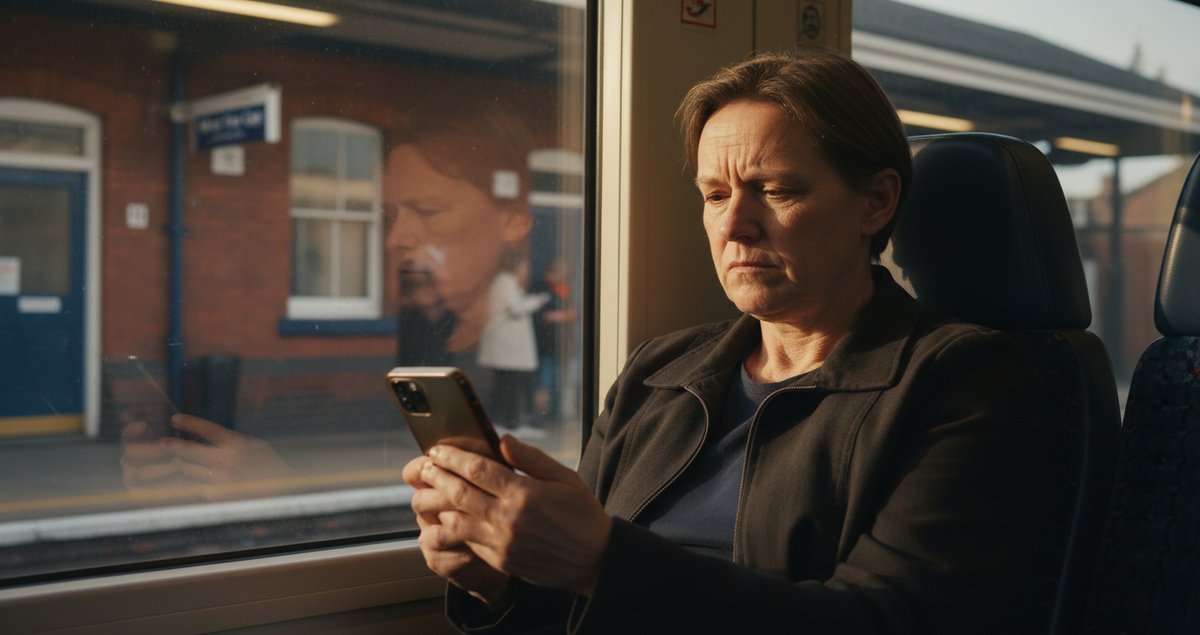
We used to believe that a messy room or a pile of laundry was the clearest signal of an anxious life. That old idea still gets clicks because a pile of paper is satisfying to look at and to sweep away. But living through the last decade of screens has revealed something more insidious and quieter: digital clutter gnaws at attention in ways physical mess cannot. It hides, it nags, and it never leaves the room. This is not a gentle observation. I think it explains more of our restless evenings and foggy workdays than many of the tidy living guides admit.
What digital clutter looks like when it is working on you
Digital clutter is less about storage space and more about ongoing obligation. An unread inbox feels like a scab you keep scratching. A hundred open tabs is less a technical issue than a simmering set of half commitments. Notifications act like strings tugging you at random. Unlike a visible pile of laundry you can touch and fold, the digital pile is a perpetual to do list with terrible visibility. That poor visibility makes it a far more efficient stress producer.
Why invisible demands feel heavier
There is a practical reason for this. The brain creates mental bookmarks for unresolved things. When those bookmarks multiply and are linked to devices we carry, they don’t simply sit in the background. They colonise the foreground of our attention. You are not only aware that a task exists, you are constantly reminded of it through badges, alerts, and the mere knowledge that one day you will have to search for that file you saved somewhere. That persistent low level background tug is exhausting.
Evidence and a voice from the clinic
If you prefer authority to intuition, the clinical perspective is instructive. This is not new age theory. In a widely referenced interview with CNN in November 2024 Dr Susan Albers a clinical psychologist at the Cleveland Clinic described the effect plainly.
It is something that triggers a lot of stress and anxiety the collection of emails pictures open tabs an overwhelming number of digital items that trigger overload. Dr Susan Albers Clinical Psychologist Cleveland Clinic.
That quote matters because it anchors my sense that digital clutter is not a metaphor. It is a measurable source of strain that professionals are starting to take seriously. But there is another voice worth listening to. The economist and social commentator Noreena Hertz has written about the psychological shape of our attention economy and the toll of constant interruption.
Employees speak of being fearful opening emails and feeling increasingly helpless in the face of the deluge Physiologically we now know that the state of continuous disruption puts us into a constant state of hormone induced stress. Noreena Hertz Author and Economist.
Both of these observations point to a shared mechanism. Digital clutter weaponises the brain’s prioritisation system and refuses to accept the answer done later.
How the digital pile hijacks time
Time is not stolen in big obvious heists. It is skimmed like froth. Every notification introduces a cognitive context switch that costs minutes of regained focus and sometimes a full hour of lost productivity across the day. The physical pile can be cleared once and for all. Digital clutter invites repetition. You delete a message and two more arrive. You archive a document and five more versions accumulate. The systemic nature of modern platforms rewards accumulation. Storage is cheap. Attention is not.
The memory problem that is not actually memory
People assume that saving everything is about memory or archive. In many cases it is a coping strategy. Keep it and you will not have to make a decision about its value now. The decision deferral is easing short term discomfort but burdens future attention. That is why I believe digital hoarding and digital clutter are social problems as much as personal ones. Organisations that expect constant connectivity are cultivating environments where people use digital backlog as a survival tactic.
Why physical mess often loses to digital mess in emotional intensity
Consider the emotional economy of both. A messy kitchen is explicable and localized. You can see your way out of it with an hour and some elbow grease. Digital clutter is amphibious. It follows you into the bedroom and the weekend. It appears on holiday snaps and in the middle of a conversation. It is not bound by geography. That makes it less governable and in my view more likely to produce chronic low level anxiety.
There is also a social layer. Physical mess tends to be judged in a home context. Digital mess is judged in public. An email unanswered is a social signal. An unread message may be read by colleagues as indifference or incompetence. That social surveillance intensifies the stress because you are not only judging yourself you are anticipating judgement from others.
Small strategies I trust more than sweeping ordinances
I have tried many decluttering rituals. The ones that stick are tiny and repeatable. Spend five minutes at the start of the day moderating your notifications. Create folders with ruthless naming rules. Delete ruthlessly. These are not radical. They are boring. They are also effective because they change the environment in micro ways you can maintain. Importantly they alter a psychological baseline. Less ambient obligation equals less background stress.
I do not believe every problem requires tech tools. Sometimes a simple rule is better. But I also reject the idea that personal responsibility alone is enough. Platform designers and employers have structural roles to play. You cannot tidy a room you never enter alone and you cannot expect workers to tidy digital warehouses that policy encourages filling.
What remains unresolved
We still do not fully understand thresholds. How much digital accumulation becomes pathological for different people? Which kinds of content create more anxiety the ephemeral or the archival? Answers are emerging but not yet definitive. This unsettled area is important because it means practical solutions should be experimental and personalised not dogmatic.
Final personal note
I find myself more relaxed after clearing a small digital corner than I do after rearranging a bookshelf. That is partly vanity and partly truth. We are a species built to notice absence. When the buzzing stops we notice the silence more quickly than we notice a cleared surface. That silence is undervalued. I would like to see the debate shift from decluttering as a lifestyle fad to decluttering as attention hygiene worthy of public conversation.
Summary table
Key idea Digital clutter is hidden ongoing and socially surveilled and so produces chronic stress more effectively than most physical mess.
Mechanism Persistent reminders and notifications create cognitive bookmarks that fragment attention and raise physiological stress markers.
Social dimension Unanswered messages and unread notifications act as social signals increasing anxiety beyond private discomfort.
Practical response Small repeatable habits plus organisational policy changes beat one off mass purges in long term effectiveness.
Unresolved questions Thresholds for pathology personal variation and which digital contents cause the most harm remain under study.
FAQ
How is digital clutter different from information overload
Digital clutter is a specific form of information overload that accumulates in personal spaces such as inboxes desktops photo albums and message threads. Information overload covers a broader category including too much new incoming information. Clutter implies a backlog and the obligation of future sorting. The distinction matters because the remedy differs. New inputs need filters while backlog needs pruning and archiving.
Will deleting everything fix my stress
Deleting indiscriminately is a blunt instrument. It can work as a shock treatment but it often creates regret and more anxiety. A better route is a measured audit identify the categories that cause most friction archive what you might need and delete the rest. Pair that with notification control and you change the flow not just the stockpile.
Are there times when keeping lots of digital files is sensible
Absolutely. Creative professionals researchers and people who manage complex projects may need large archives. The key is metadata organisation and retrieval systems. If the files are findable and do not generate constant unresolved reminders their presence is less likely to cause stress. The problem is when accumulation is accidental or emotional rather than functional.
How do workplaces make digital clutter worse
Policies that reward constant availability the lack of agreed communication norms and default wide distribution of messages create pressure to hoard and to respond. Organisations can reduce clutter by setting clear expectations about response times limiting CC use and encouraging asynchronous communication practices.
Can tools solve this issue
Tools help but they are not silver bullets. Filters auto archive and focused inbox features reduce noise but they require setup and governance. The most effective approach combines simple tech with sustained behavioural rules and organisational commitment to reducing ambient demand.
When is digital clutter a sign of a deeper issue
When accumulation interferes with daily functioning or causes significant distress it may be a symptom of a larger problem such as anxiety driven hoarding tendencies. In those cases professional assessment is appropriate. Most people though are dealing with solvable habits rather than pathology.
In short digital clutter thrives in the shadows. Bring it into the light systematically and treat it with the seriousness you would apply to a recurring bill or a chronic leak. It is not glamorous but it shapes the quality of our attention and in the end the quality of our lives.
