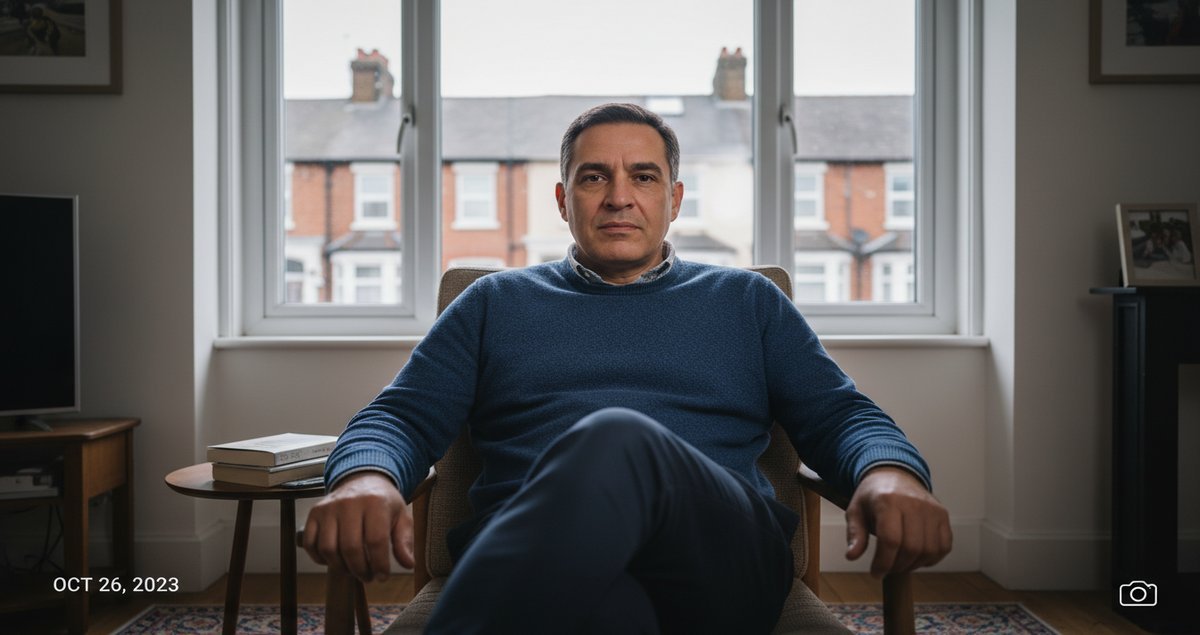
I started paying attention to chairs because I was tired of feeling like I was always being interviewed rather than talking. Chairs are ordinary and boring and exactly why they work. How chair position affects your sense of control in conversations is not some gimmicky body hack. It is a small-scale scene setter that nudges who speaks next who interrupts and who ends up with the last word. You notice it only when it goes wrong which is the best time to study it.
Why a seat is more than a seat
Think of a meeting room or a kitchen table. The chair you choose before a conversation begins is the first argument you make without a single word. Did you pick the chair with its back to the window or the one facing the doorway? Did you sit slightly forward or fold into the cushion? These are choices that frame intent. Often we call them posture or body language and move on as if that explains everything. It does not.
Control is relational not theatrical
Control is a live negotiation. It exists between people not inside a solitary spine. That means the same chair position can feel commanding with one interlocutor and apologetic with another. Height and angle matter. Facing someone directly invites confrontation or intimacy depending on the tone. Angling away can create distance or a polite opening. The person who arranges the chairs usually gets the upper hand, but the person who occupies the most comfortable seat most decisively maps the conversation’s tempo and boundaries.
Small shifts with outsized effects
In a badly organised meeting I once moved a single chair two inches and watched a colleague stop interrupting. Will that always work? Of course not. But the phenomenon was instructive. That two inches changed the sightline and made it slightly harder for him to lean over my lap to cut in. It made me lean back and breathe. Micro changes are where chair position reveals value because everyone ignores them.
Orientation over posture
We obsess over posture as if it is the only lever. Chair position includes orientation. Sitting at ninety degrees to someone signals that you are not fully available. It politely disarms heavy demands. Sitting dead opposite is a binary decision. It says this is a transaction or a negotiation depending on whether your knees are under the table or an inch forward. Orientation calibrates conversational permissions more reliably than a pep talk about standing tall ever could.
Real research that matters
Psychology has wrestled with power and posture for a decade. The idea that body stance can alter feelings of power reached a wide audience thanks to publicised work from social psychologists. That conversation has since been messy because replication and nuance matter. Still there are usable insights: how you position yourself in relation to others alters your subjective sense of agency. That subjective sense is the thing we trade in when we negotiate, persuade or simply try to be heard in the office chaos.
“You don’t want to go in and be totally dominant. But do make yourself as big as you can in a way that feels natural.” Amy Cuddy Professor of Social Psychology Harvard Business School.
That instruction is both blunt and practical. It does not promise hormonal miracles. It asks you to consider how your embodied presence reads to others. Positioning the chair so you are neither overtly aggressive nor wholly receding is the hard middle. This is where control becomes plausible and not performative.
Design choices that decide conversations
Not all chairs are equal. Swivels invite distraction. Fixed chairs make commitment visible. A chair with arms offers a barrier. A stool asks for vulnerability because you cannot fold into it. Choosing a chair is not about comfort alone. It is a strategy. When you want to resist being dominated move to a chair that lets you orient yourself quickly and maintain subtle distance. When you want to invite a candid confession choose a low backed chair that makes the exchange feel less formal.
The tyranny of the head seat
Everyone knows the head of the table exists. But the head seat is often a symbolic trap. People who sit there expect to lead and others expect them to lead. Sometimes that suits the conversation. Often it stifles candour. If you are trying to flatten power disparities move away from the head. But if you are intentionally steering someone toward a firm decision you can use the head seat to contain the debate. It is a blunt instrument and you should wield it with awareness rather than habit.
Practical windows not formulas
I will not hand you a checklist because checklists become dogma. Instead notice what the space invites. Where do eyes fall when you sit here? Who will block the light? How easy is it for someone to reach across the table and drop a file on top of you? These sensory facts shape mental maps of control. Use them.
And sometimes, disrupt. If a conversation feels scripted swap seats. Change a chair mid-meeting and see how the rhythm shifts. That one change can dislodge an entrenched pattern of interruptions or enable quieter voices to lean in. It will feel petty at first. It is not. It is tactical scene management.
When being obvious is useful
There are moments when you should make your choice loud. If you want to state authority quietly pick a central seat and leave one adjacent chair empty. The absence creates an invitation and a boundary at the same time. If you want to be disarming pick a lower seat and wait while the other person claims a taller one. That act of refusal to compete for height often dissolves bravado. You will feel exposed doing this but exposure is a credible tactic. It signals you are not playing the usual game.
Why most advice misses the point
Most popular articles reduce chair choices to posture aesthetics or confidence hacks. They insist that standing with arms wide transforms outcomes. That misses the relational architecture that makes chair position meaningful. The point is not to posture your way to dominance. The point is to shape the architecture of interaction so your ability to influence is proportional to your intent.
Personal confession. I tilt my chair slightly when I want to slow someone down. It feels petty and it works. I do not recommend petty as a philosophy. But I do recommend being intentional. Intention beats autopilot every time.
Summary table
| Element | Effect on control | When to use |
|---|---|---|
| Orientation toward interlocutor | Determines proximity and willingness to engage | Use direct facing for clarity use angled seating to create polite distance |
| Chair height and form | Signals dominance comfort or vulnerability | Choose higher chairs to steer conversations choose lower or armless seats to invite candour |
| Position in room | Controls sightlines interruptions and perceived authority | Sit central to moderate sit off to the side to decentralise |
| Movement flexibility | Swivel and wheels can distract fixed seating stabilises focus | Use mobility to exert presence use fixed seating when you need steadiness |
FAQ
Does choosing a certain chair guarantee I will be in control?
No. Chairs are one part of an ecology that includes tone subject matter relationships and prior history. The right seat can make your intention legible but it cannot substitute for competence or respect. It helps you get heard and hold space but it will not responsibly coerce agreement.
Should I always avoid the head of the table?
No. The head of the table is a tool. Use it when you need to centralise decision making. Avoid it when you want open dialogue and creative risk taking. What matters is choosing deliberately rather than by default.
How do I use chair position without seeming manipulative?
Be honest about your aim. If you want to calm a volatile meeting choose a seat that lowers escalation and explain you are trying to create better listening. Small transparent moves are more ethical than stealthy ones. People respond better when they sense the intention is to improve the exchange not to hijack it.
What can I do quickly in informal settings?
Small acts matter. Angle your seat to reduce direct eye contact if someone is aggressive. Slide slightly back to create breathing room if the conversation is moving too fast. If you want someone to open up mirror their angle subtly. These micro adjustments are quick to execute and often bypass resistance because they are barely noticeable.
Can chair position help in virtual meetings?
Yes because the same principles apply visually. Your camera angle backdrop and how you position your chair relative to the frame change perceived authority and availability. Sit slightly forward to show engagement sit back to create distance. Unlike a physical room you control every pixel so use that power carefully.
How do I practice awareness around seating?
Start by noticing. In three meetings this week record where you sit who moves and who interrupts. Pick one meeting and alter your seat by a small margin. Observe the difference. Practice is not performing it is learning the causal logic of these quiet moves.
Chairs are boring which is exactly why they change things. If you want control in conversation start with the one item you all touch before you speak. Small choices here scale to big differences out there.
